


Platform / Brand website

Five lanes, one website brief. Content, at scale.

Core pages. Offerings. Editorial. SEO. GEO.

We write five kinds of content for a company website. Core pages that tell a visitor who you are. Offering pages for every product, service and solution you sell. Editorial for the blog and the press room. SEO pages built to rank on Google. And GEO content written to get the brand quoted by AI answer engines.

All of it comes off a single brief. We work out what the site needs to say and how to lay it out, then we write every page. Design and code are the fast part now, mostly handled by AI. Content is the part we still write by hand, and it is what decides whether the site does its job.

Hong Kong + Shanghai / website content under one editorial director

A close editorial portrait of a hand holding a phone in warm rim light, the phone screen filled with a company website homepage, a top navigation menu, a large headline, a short paragraph of text and a call-to-action button visible. Platform work / Website

Why it matters

What we ship
into your website.

We handle five kinds of content for a company website. Core pages: the homepage, the about page, the story a first-time visitor reads to size you up. Offering pages: a clear page for each product, service and solution, written for the buyer. Editorial: the blog, the news, the longer think pieces, the resource library. SEO content: pages built to rank on Google. And GEO content: short, quotable passages written so AI Overviews, ChatGPT and Perplexity cite you by name.

The work starts before anyone writes a sentence. First we settle the shape of the site: what each page has to say, and the order a visitor runs into it. Design and code are quick now, mostly AI. The writing is the part we own, and one editorial direction sits over all five lanes. So the homepage and the newest blog post sound like the same company.

A wide editorial shot of two designers at a daylit studio table, four laptop screens lined up showing a company website homepage, an about page, a blog article and a search results page with an AI answer panel, one per content lane.
Five lanes, one editorial direction

One brief covers all five lanes. The same writers handle every page, from the homepage to the SEO library, and a first draft is back inside two days.

0 Lanes we ship Core, offerings, editorial, SEO, GEO
0+ Pages from one brief A full site plus the content library
0h Brief to first draft On a single page or article

The work, defined

Five lanes, one brand line.

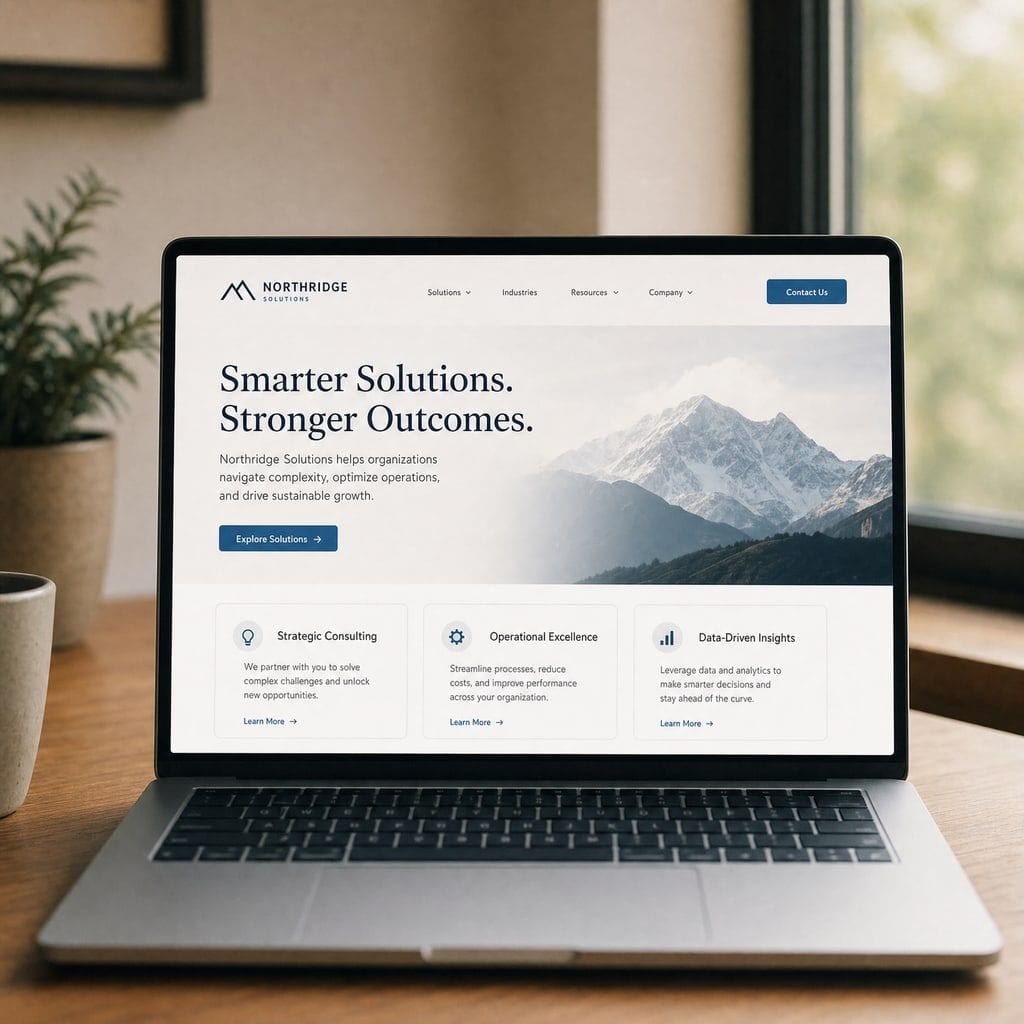
An open laptop on a studio desk, the screen filled with a company website homepage, a top navigation menu, a large headline, a short intro paragraph and a call-to-action button.
Core pages lane

Lane

Core pages. Who the company is.

The handful of pages a first-time visitor reads to figure out who you are: the homepage, the about page, the brand story.

Most company sites bury the one thing a new visitor came to find out. What does this company do, and why should I care? We write the core pages to answer that in the first screenful. The homepage leads with the offer instead of a tagline. The about page tells a real story, not a mission statement that trails off. The team and culture pages show actual people doing actual work.

We settle the messaging order first: the single idea the site has to land, then the points that back it up. A creative director signs off on it. After that the same voice carries from the homepage all the way to the contact page, and the site finally holds together as one company.

In scope

  • Homepage
  • About page
  • Brand story
  • Mission and values
  • Team and culture
  • Messaging hierarchy
  • Site navigation
  • Contact page
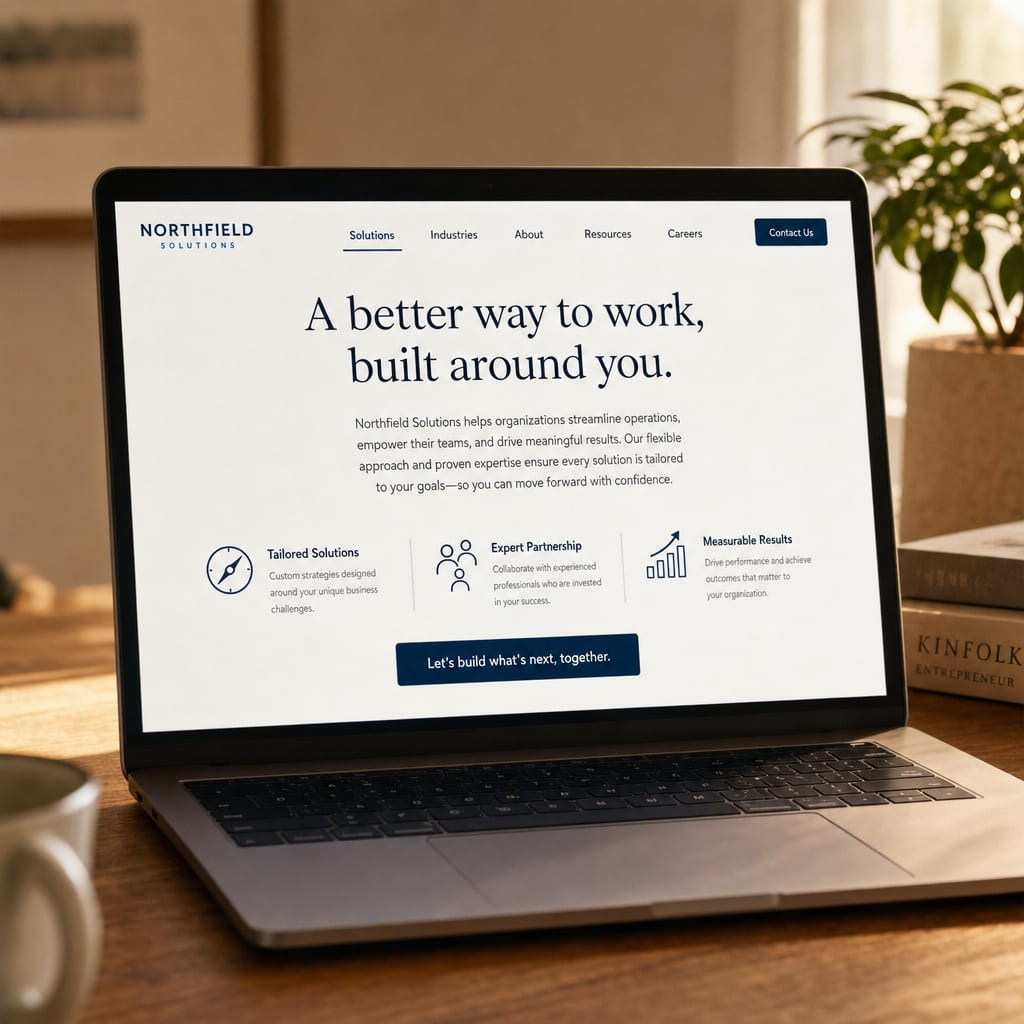
An open laptop on a studio desk, the screen showing a company website service page, a headline, a block of explanatory text, a row of feature points and a call-to-action button.
Offerings lane

Lane

Offerings. Products, services, solutions.

A clear page for everything you sell, written so the right buyer gets it fast.

Every product, service and solution gets its own page, and every page is built around the buyer instead of the org chart. What it is. Who it is for. The problem it takes off their plate. What working with you looks like. We write feature pages that explain rather than list, use-case and industry pages for buyers who only recognize their own situation, and comparison pages for the ones already shopping around.

Three offerings or three hundred, each one gets the same depth and the same page shape, so a buyer can move between them without learning a new layout every time.

In scope

  • Service pages
  • Product pages
  • Solution pages
  • Use-case pages
  • Feature explainers
  • Comparison pages
  • Industry pages
  • Buyer FAQs
An open laptop on a studio desk, the screen showing a company website blog, an index of article cards each with a headline and a short summary, the top navigation menu visible above.
Editorial lane

Lane

Editorial. The blog, the news, the journal.

The content that keeps the site alive after launch: the blog, the news, the think pieces, the resource library.

A site that never changes after launch tells visitors the company went quiet too. Editorial is what keeps it moving. Articles on a real calendar. Company news written so it is worth reading. Longer pieces that show how the company thinks. Case studies. A resource library that pulls in links and repeat visits.

It runs off a published calendar, not off whoever happens to remember. We plan topics a quarter out, draft against the brief, and hold every piece to the standard of the homepage. The blog stops being an afterthought.

In scope

  • Blog articles
  • News and press
  • Insight pieces
  • Case studies
  • Resource library
  • Newsletters
  • Editorial calendar
  • Thought leadership
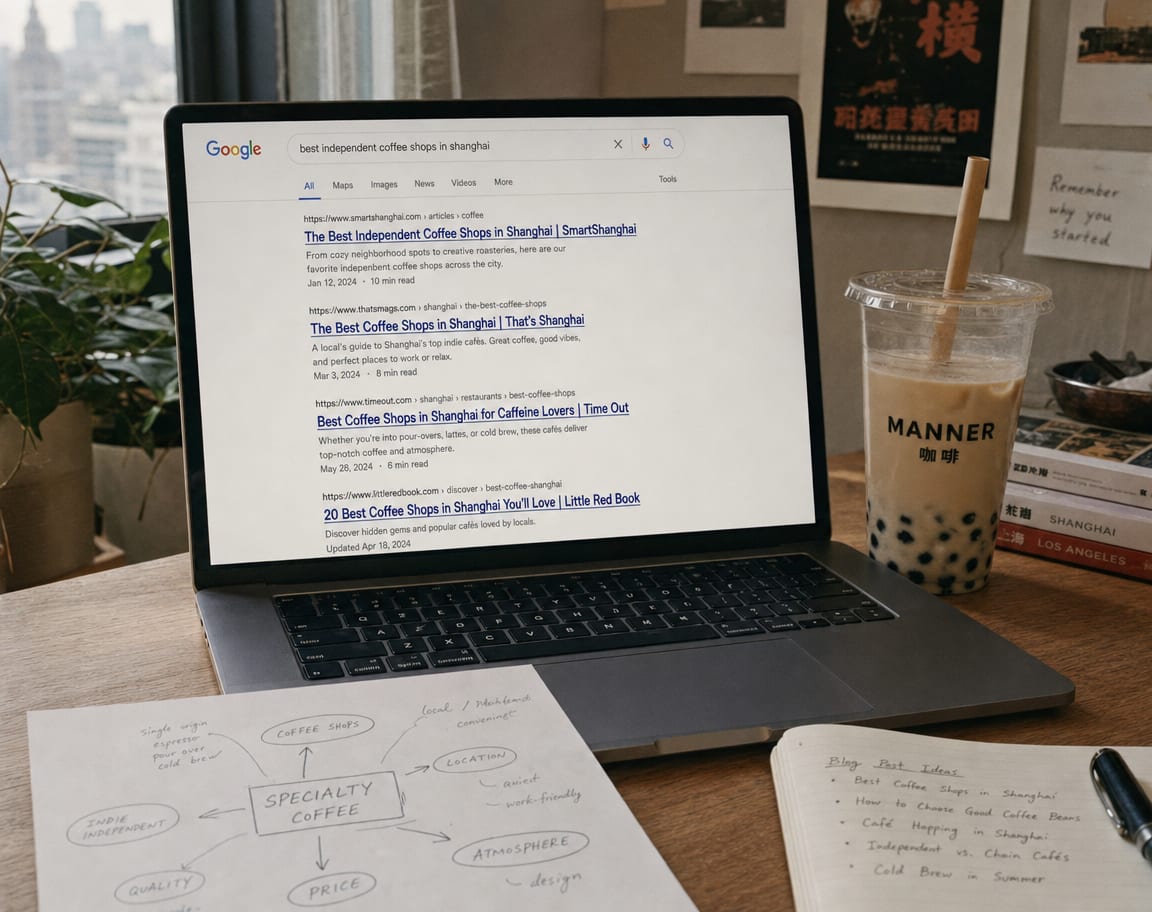
An open laptop on a studio desk, the screen showing a Google search results page, a list of blue link entries with titles and gray snippet text, a search box at the top.
SEO content lane

Lane

SEO content. Pages built to rank.

Pages and articles engineered to rank on Google, mapped to the terms people actually search and written for a person anyway.

We map the queries you should own, then build the pages to win them. Pillar pages on the core topics. Clusters of supporting articles linked underneath. Long guides that answer the question instead of circling it. The comparison and alternative pages buyers type in by name. Titles, meta descriptions, headings and internal links all get set on purpose, not handed off to a plugin.

None of it reads like SEO, which is the whole point. The structure underneath is for the crawler. The words on top are for the reader, because Google spent a decade getting good at telling those two apart.

In scope

  • Pillar pages
  • Topic clusters
  • Long-form guides
  • Keyword landing pages
  • Titles and metadata
  • Internal linking
  • Schema markup
  • Comparison pages
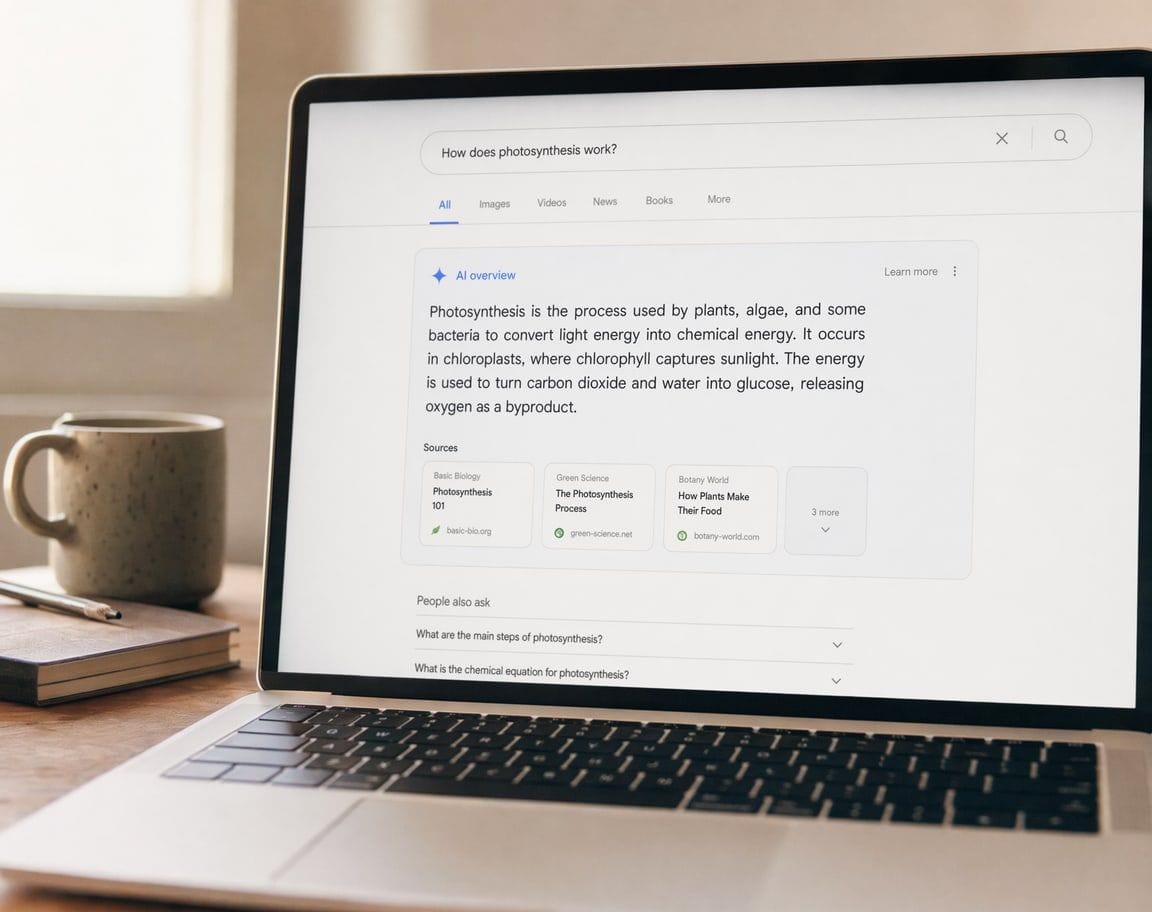
An open laptop on a studio desk, the screen showing a search results page with an AI-generated answer panel at the top, a block of answer text followed by a row of small cited source link chips.
GEO content lane

Lane

GEO content. Quoted by the AI engines.

Content built to get quoted, not just ranked, so AI Overviews, ChatGPT and Perplexity name the brand in the answer.

Search is splitting into two halves. One still ends in a blue link. The other ends in an answer the reader takes and never clicks past. GEO content is written for that second half. We shape passages as clean, self-contained answers, add the FAQ and definition blocks the models tend to lift, publish numbers worth citing, and get the structured data and llms.txt in place so the crawlers read the site straight.

The thing that decides it is the naming. The brand has to sit inside the quotable passage, not just somewhere on the page. Miss that and the engine paraphrases your answer and credits nobody. We write the passage so the credit lands with a name on it.

In scope

  • Answer-led passages
  • FAQ blocks
  • llms.txt
  • Citable statistics
  • Definitional content
  • Structured data
  • Entity consistency
  • Quotable headings

Contact sheet

Selected frames.

A few frames from recent website work: homepage, article, search and answer-engine. Each one is written and built for the exact page it runs on, never stretched to fit.

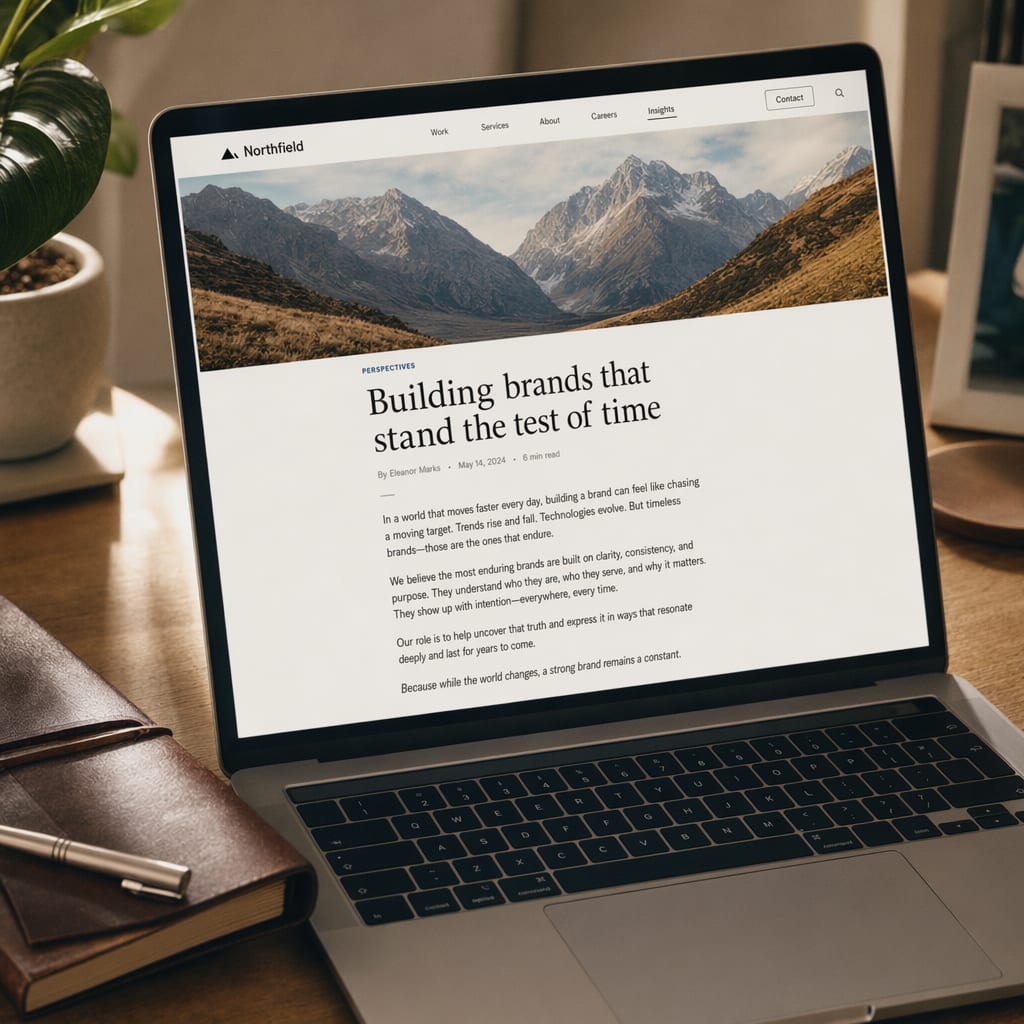
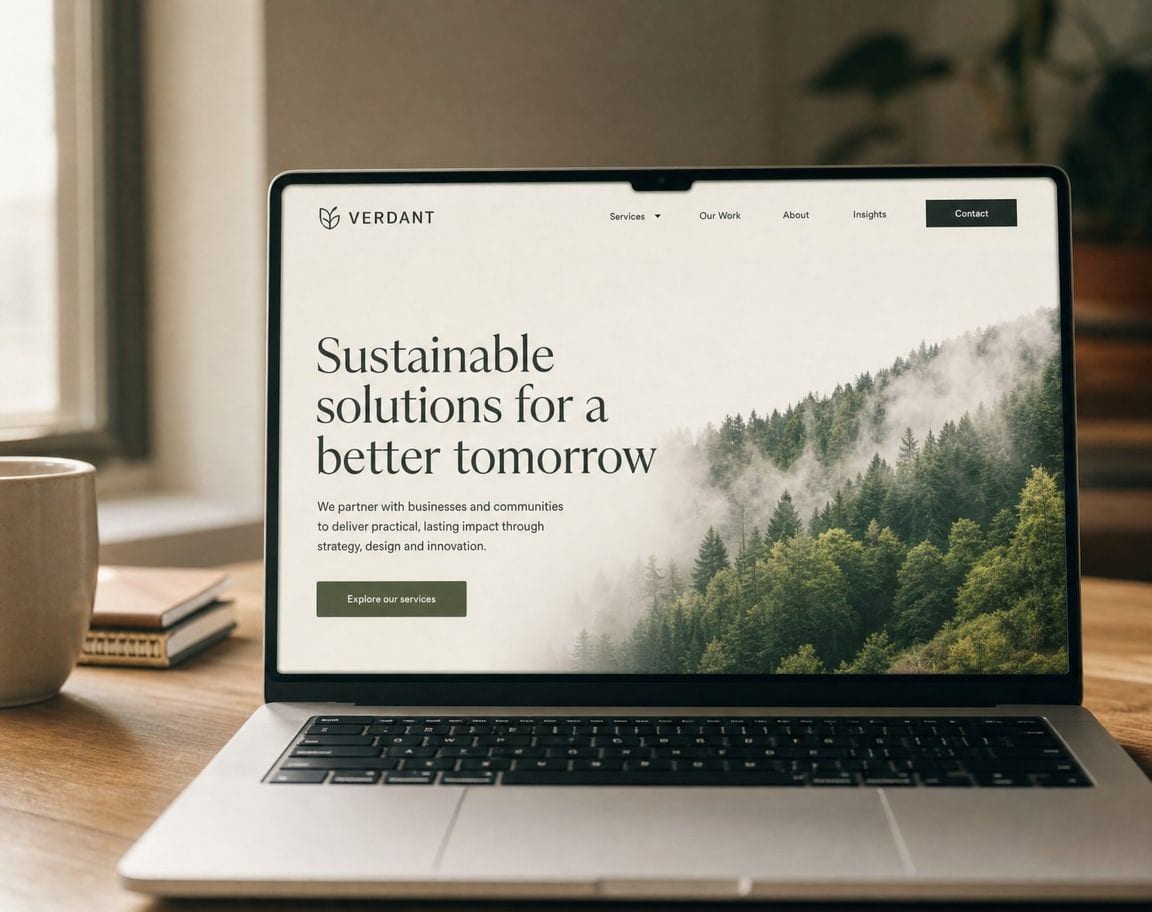
A laptop screen filled with a company website homepage, a top navigation menu, a large headline, a short paragraph and a call-to-action button, a band of feature cards below.
Core pages · Homepage
A laptop screen showing a company website solution page, a headline, a block of explanatory text, a row of three feature points and a call-to-action button.
Offerings · Solution page
A laptop screen showing a company website blog article, a large headline, a byline line and a single column of body text below a wide header image.
Editorial · Journal article
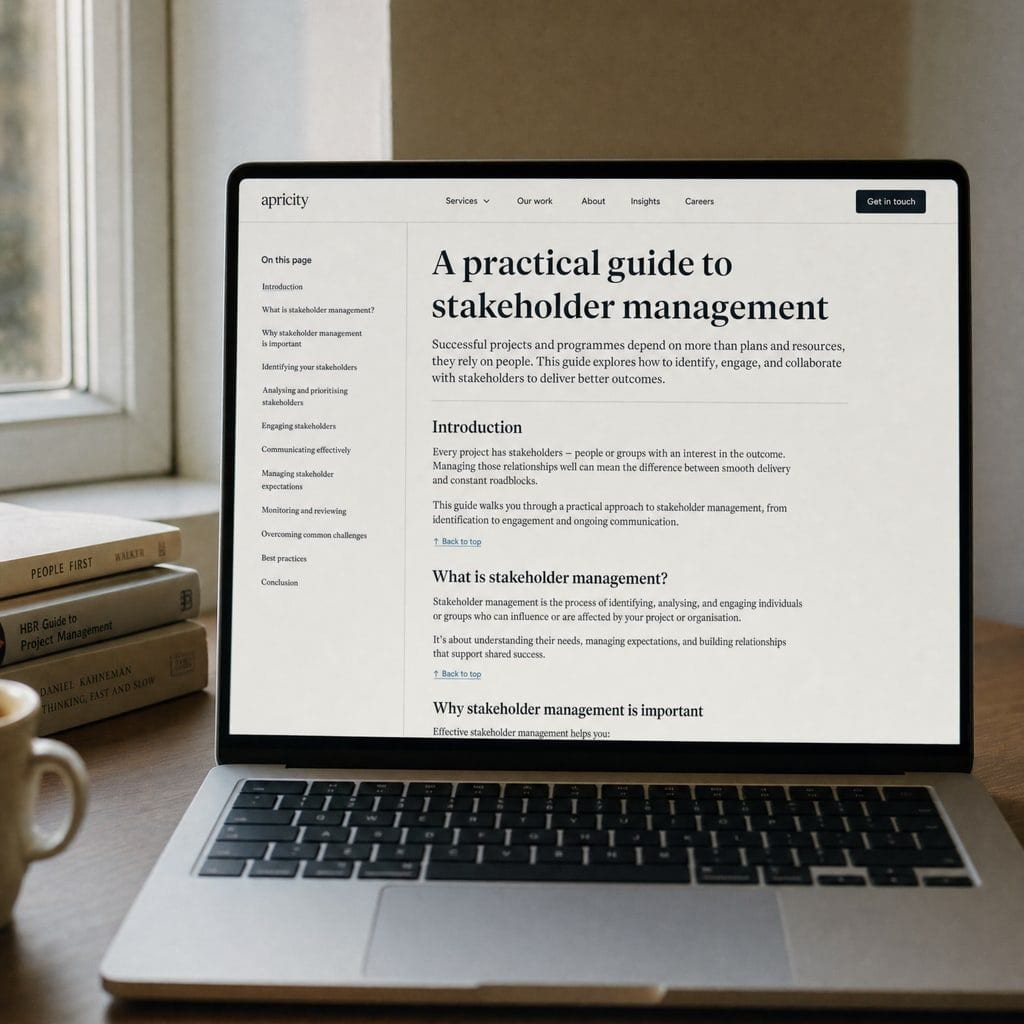
A laptop screen showing a long-form guide page on a company website, a headline, a table-of-contents list on the left and a column of body text with subheadings on the right.
SEO content · Long-form guide
A phone held vertically, the screen showing a search results page with an AI-generated answer panel, a paragraph of answer text and a horizontal row of small cited source link chips beneath it.
GEO content · AI answer
A producer at a wide reference monitor showing a company website admin view, columns of page previews for the homepage, the offering pages, the blog and the SEO library arranged in a grid.
A close cinematic detail of a hand holding a phone vertically against a soft cream background, the screen filled with a company website homepage, a headline, a short paragraph and a call-to-action button.
1 brief Five lanes, every page, every market

Partnership

Authored content, AI volume.

The company sites still gaining traffic in 2026 are not the ones with the slickest design. They are the ones that worked out what to say, and kept publishing it long after launch.

That is the gap we work in, between the editorial and the technical. Content strategists, editors and writers on one side. The AIGC pipeline, the SEO and GEO tooling, the CMS build on the other. Design and code move fast because AI does the heavy lifting. The writing is done by people, and the same people sign off on page one and page two hundred.

  • Private GPU infra
  • NDA & DPA
  • EU AI Act
  • Data sovereignty

It all runs on our own infrastructure. Hosting sits in mainland China, Hong Kong, the EU or the US, wherever your data rules say it has to. Any model we train on your brand voice is yours, and you can take it with you if we ever part ways.

Some companies hand us the whole site. Others just want the SEO and GEO lanes. Both are fine by us.

How a website build runs

One brief,
every page.

All five lanes share one editorial direction and one process. The lane changes the format. It does not change how the work gets made. And the calls that matter most get made early, well before launch day.

The first two steps decide the site. Everything after is execution.

A Chinese creative director and a Chinese brand lead at a studio table, a laptop between them showing a website sitemap diagram alongside printed page layouts.
Where it is won

Discovery and brief.

One working session. We pin down what the site has to do, who it is for, and the one thing it has to make a visitor believe. You walk out with a one-page brief and a sitemap: every page the site needs, sorted by lane and tied to the moment in the visit it serves.

A storyboard wall with five columns of page sketches labeled Core pages, Offerings, Editorial, SEO and GEO, each column anchored by a printed mock of that page.
Where it is won

Editorial direction across the five lanes.

We set the voice, the messaging order and the content model: how a page is built, what each template has to carry, the keyword and query map behind the SEO and GEO lanes. References go up on the wall. The tone gets a name. We pick the AI models for each lane. This is the step that makes the site sound like you and nobody else.

A Chinese editor at a calibrated workstation, the main monitor showing a company website page draft in an editing view, the side panel showing a list of generated page variations.
The rest is execution

AIGC drafting and authored finish.

Now the content gets made, lane by lane, page by page. AI drafts the bulk of it and helps with the design and the build. Then an editor rewrites every page against the brief and the voice. Nothing goes near the CMS until it has cleared the edit pass and the brand check.

A Chinese web producer at a daylit studio desk, the calibrated monitor showing a CMS dashboard with a list of website pages and a publish panel.
The rest is execution

Launch. Page by page, lane by lane.

Finished content goes into the CMS in the structure the site expects, with the metadata, headings, internal links and structured data already in place. Navigation and page order follow the sitemap from the brief. The site goes live organized, not as a heap of pages someone will tidy up later.

A Chinese editor at a calibrated desk, the main monitor showing a company website blog article open beside a search ranking panel, a smaller side monitor showing an editorial calendar.
The rest is execution

Adapt. Refresh, expand, rerank.

A website is never really finished. New articles land on the editorial calendar. Core pages get refreshed as the company changes. The SEO and GEO lanes chase new queries as search itself moves. The brief still holds, though. You are adding to the site, not rebuilding it.

Five lanes of content, one studio. Core pages: the homepage, the about page and the brand story a first visit is built on. Offerings: a clear page for every product, service and solution. Editorial: the blog, the news, the think pieces and the resource library. SEO content: pages built to rank on Google. And GEO content: short passages written to get quoted by AI Overviews, ChatGPT and Perplexity. The five lanes share one editorial direction and one finishing pass, so you can hire a single lane or all of them and the site still reads in one voice.

That is the first thing we do, before any writing starts. In the discovery session we work out what the site has to achieve, who it is for, and the one thing it has to make a visitor believe. Out of that comes the sitemap: every page the site needs, in what order, each one tied to a stage of the visit. Honestly, deciding what belongs on a company website, and in what order, is the hard part. The writing and the build get easier once the shape is right.

GEO stands for generative engine optimization: writing content so AI answer engines quote it. More and more searches now end inside an AI Overview, a ChatGPT reply or a Perplexity answer, where the reader gets the response and never clicks through to a site. GEO content is shaped as clean, self-contained passages those engines can lift, with the brand named inside the passage so the citation carries the company with it. SEO still earns you the ranking. GEO earns you a place in the answer that is starting to replace the ranking.

The content is ours to write: what each page says, how the site is laid out, every word of it. The design and the front-end build are AI-assisted and fast, and we hand the finished content into your CMS, Webflow, WordPress, a headless stack or Astro, structured and ready to publish. Our take is blunt. In 2026 the code and the layout are the cheap part. What goes on the site, and in what order, is what makes or breaks it.

We price by project, and usually by lane, so a company can start with one and add the rest later. What a project costs comes down to how many pages are in scope, how much editorial volume you want each month, and whether we are training a brand-voice model from scratch. Send a brief and a rough scope and a quote comes back, with no obligation to go ahead.

Yes, and volume is where this model pays for itself. One site brief sets the master direction. After that, core pages, offering pages, articles and the SEO and GEO content all come off the same brief at a steady clip. The first page on a new brand is the expensive one. By the fiftieth, the cost per page is close to nothing, and every one of them still sounds the same.

The voice and the messaging order get set once, in the direction step, and a creative director signs off on them. From there, every page in every lane goes through the same editor and the same brand check. That shared finish is the reason a homepage, a buyer's solution page, a blog post and an SEO guide read like one company instead of five strangers who never compared notes.

For a company we already know, a single page or article runs from brief to first draft in 24 to 72 hours. A new brand needs a one-time setup first, to lock the sitemap, the voice and the page templates. After that, a weekly drop of pages and articles at production quality is a comfortable pace.

Every page is drafted with AI and then rewritten by an editor. We pull out the tells a reader senses even when they cannot name them: the hedging, the lists that always run to three, the openings that announce themselves, the words nobody says out loud. The draft is a starting point and nothing more. A person rewrites it against the brand voice before it ships, and that pass is the difference between copy a company can publish and copy a generator spat out.

Yes. A good share of our website content work ships under agency brands, with full white-label delivery and a confidentiality agreement in place. The agency keeps the client relationship. We supply the editorial and production muscle behind it.

You do. Every finished page, every article, every draft, and any custom model we train on your brand voice or your material, all of it belongs to you. Commercial rights for the AI outputs run through enterprise tiers that grant commercial use. The Copyright and AI guide covers the legal detail.

Try us

Send the website brief.
Back in 48 hours.

You get a sitemap recommendation, a scope broken down by lane, a rough timeline, and a couple of sample pages written for free, so you can see how we think before any budget is on the table.