
Design service / Brand Identity

Brand Identity Design.

One system. Every market. Every channel.

Most growth-stage brands already have a brand book. 184 pages, and almost nobody has opened it past page twelve. The PDF is not the system.

We ship the working layer too. Art directors from 4A backgrounds run the direction. Brand-trained image models keep rollout inside the system. One sign-off, faster to market.

Shanghai studio / Identity + optional rollout

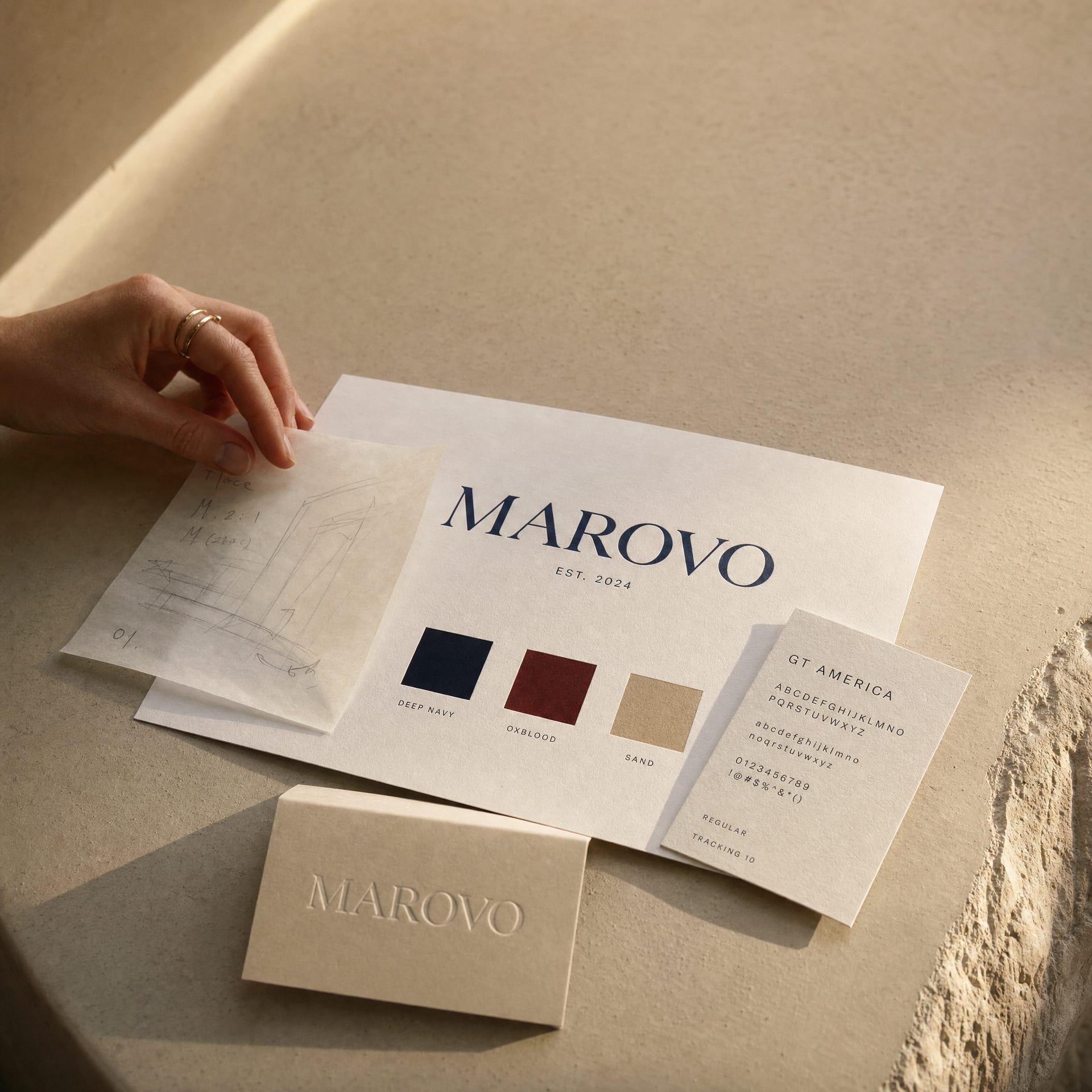
A printed brand identity board on a warm plaster ledge: ink wordmark, three colour swatches, type card and an embossed business card. Studio work / Identity board

Why it matters

The economics moved.
The bar moved with them.

Two things broke at once. Production got fast and cheap for everybody. The generative AI design market topped a billion dollars in 2025, on a 31% annual growth curve through 2030. And the standard for recognition got harder, because identities now have to hold across feeds, app icons, AR layers, motion intros and AI-generated context, all in seconds.

Companies that brought AI into identity work in 2025 reported design timelines down 40 to 60% and fewer revision rounds. The flip side, which we see in pitches almost every week now: when everyone uses the same base models, outputs converge. Designers call it AI sameness. The only defence is direction strong enough that the model amplifies your point of view instead of replacing it.

Identity work delivered for brands shipping across the US, EU, UK, Middle East, China and the rest of APAC.

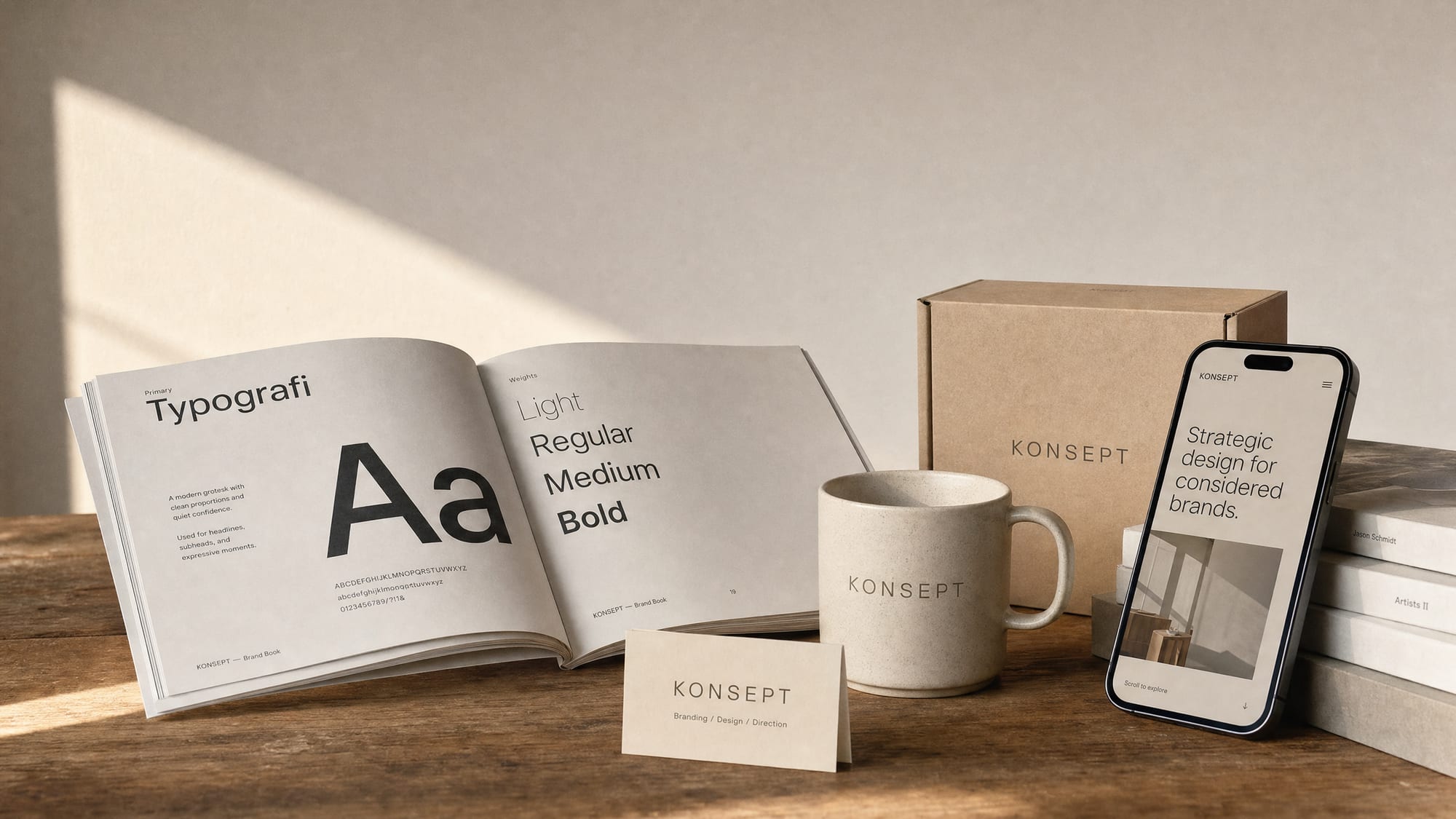
One coordinated brand identity carried across a brand book, business card, mug, carton and a website hero on a phone.
One identity, every surface

Across roughly thirty identity engagements in the last two years, clients reported creative approval rates lifted from 22% to 78%, content costs down 60%, and asset output 7x without a single new hire.

22% Creative approval rate Up from 22% before
0% Lower content cost On recent rollouts
0x Asset output No new hires

The work, defined

Two lanes, one brand system.

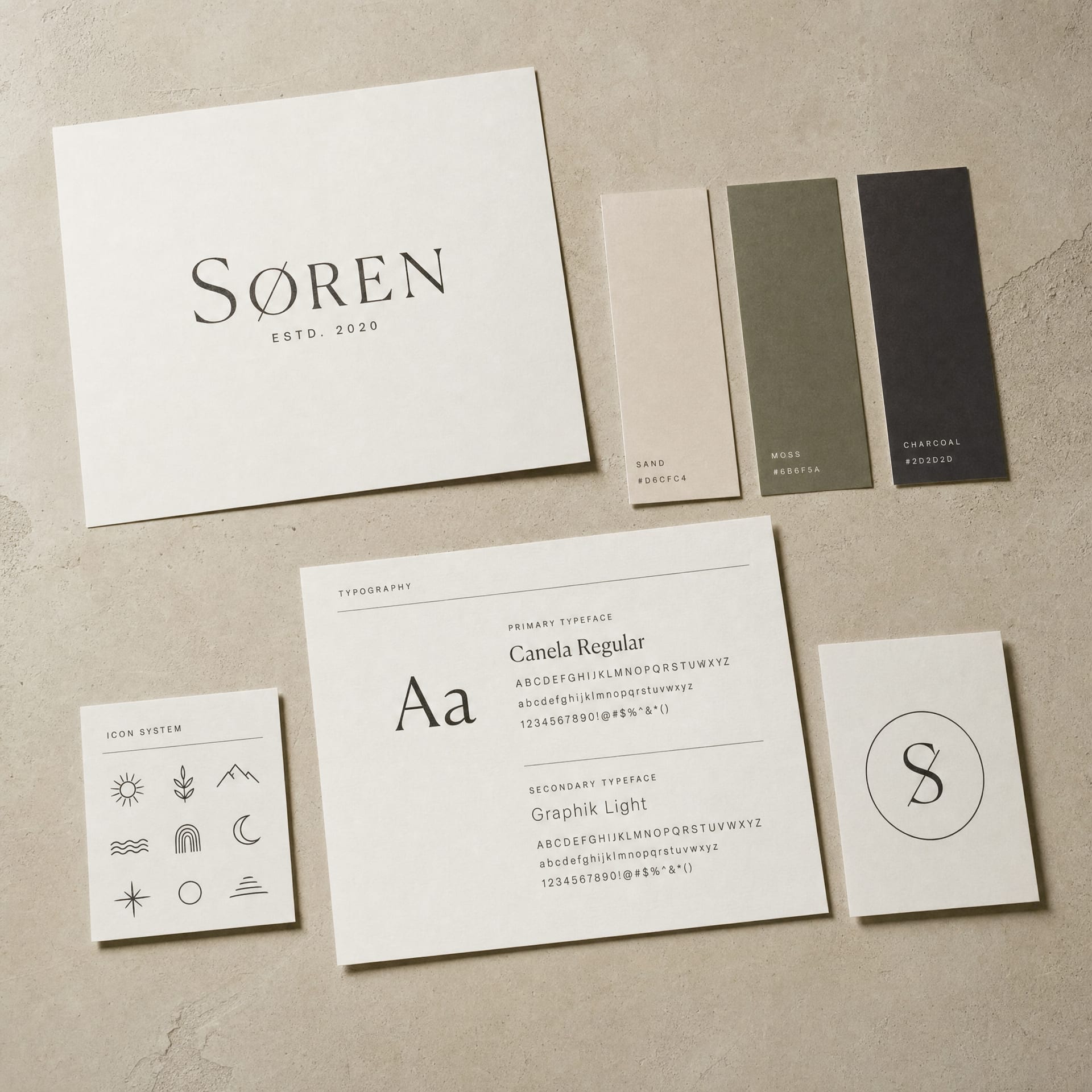
An overhead studio still life of a brand identity visual system: wordmark sheet, colour swatches, type specimen and monogram card.
Visual system

Coverage

The system, not the logo alone.

Logo system, colour, typography, imagery and motion as one coordinated brand. Primary mark, secondary marks, lockups and a monogram for small applications, built for 16 pixels in a browser tab and 16 feet on an OOH bulletin. Motion-ready masters so the mark behaves on video, app loaders and social.

Colour in HEX, RGB, CMYK and Pantone, coated and uncoated, contrast-tested for WCAG AA. Typography with hierarchy from H1 to caption, licensing covering the markets you ship into, and fallback stacks for the channels licensing cannot reach (email, certain ad networks, some Chinese platforms).

In scope

  • Logo system
  • Monogram
  • Lockups
  • Motion-ready
  • Colour tokens
  • Pantone
  • Type pairing
  • Licensing
  • Iconography
  • Imagery direction
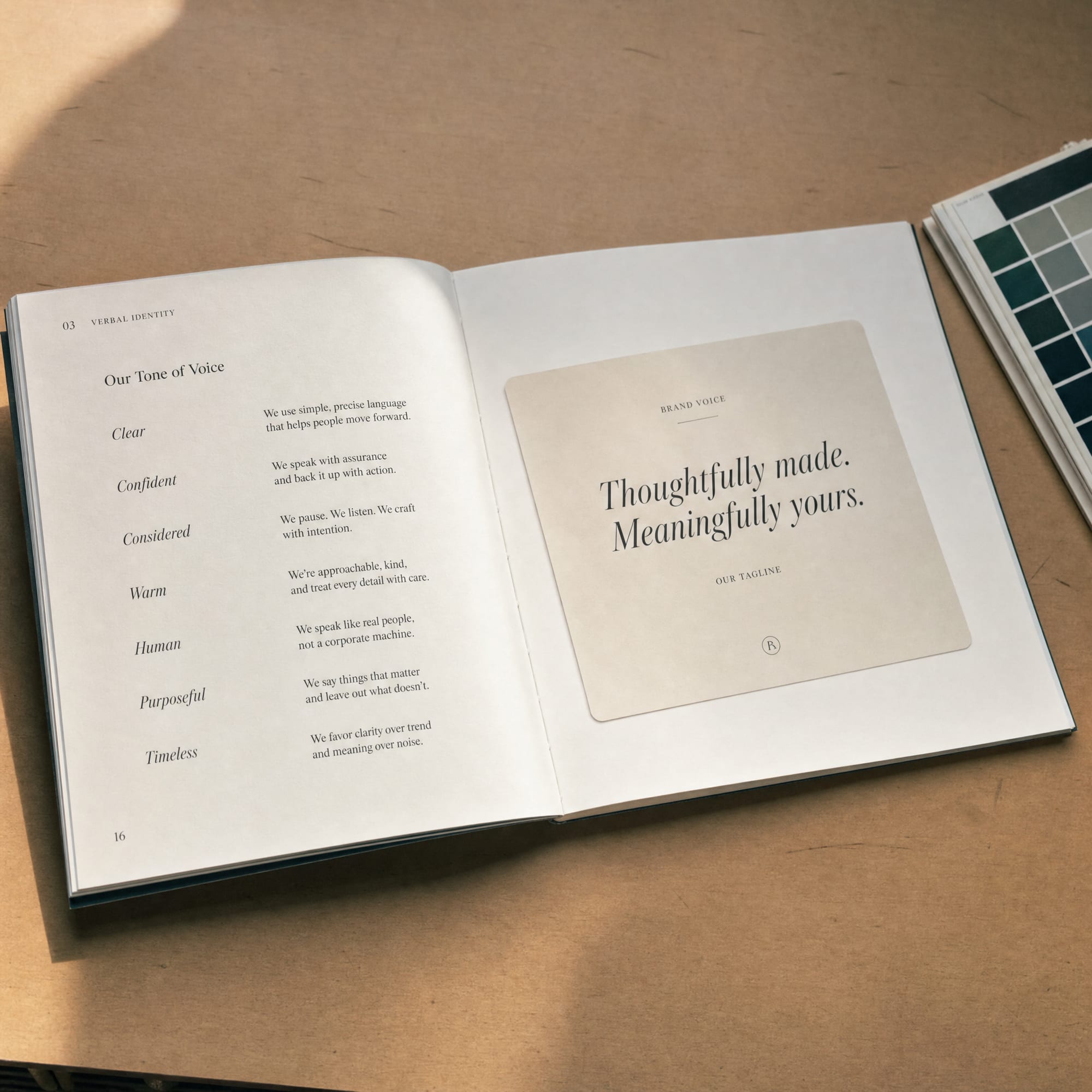
A printed brand book opened to a verbal-identity spread on a warm worktable, with a small colour chip book at the edge.
Voice, names and the working layer

Coverage

Verbal identity, guidelines and rollout.

A book nobody opens is not a system.

Brand name, tagline, voice principles, vocabulary do's and don'ts, messaging pillars, copy examples. For brands shipping into China, we run the Chinese naming brief in-house. Phonetic and semantic fit, dialect screening (Cantonese can carry meanings Mandarin does not), and the trademark search at CNIPA, the Chinese trademark office, that catches the names that look great until your IP counsel reads them.

Around 95% of companies have brand guidelines. The number with a working brand system people actually use is much smaller. So guidelines ship as two things. The reference document, yes, the PDF brand book your CMO can present to the board. And the working layer underneath: a Figma library with logo lockups, colour tokens and type styles set up as components, plus templates for the formats your team ships every week.

In scope

  • Brand naming
  • Chinese naming
  • CNIPA search
  • Voice principles
  • Messaging pillars
  • Figma library
  • Tokens
  • Templates
  • Brand book
  • Trained image model

Contact sheet

Selected proofs.

Identity studies and photoreal mockups, generated and finished in the studio. Every frame is authored work, not a stock pull.

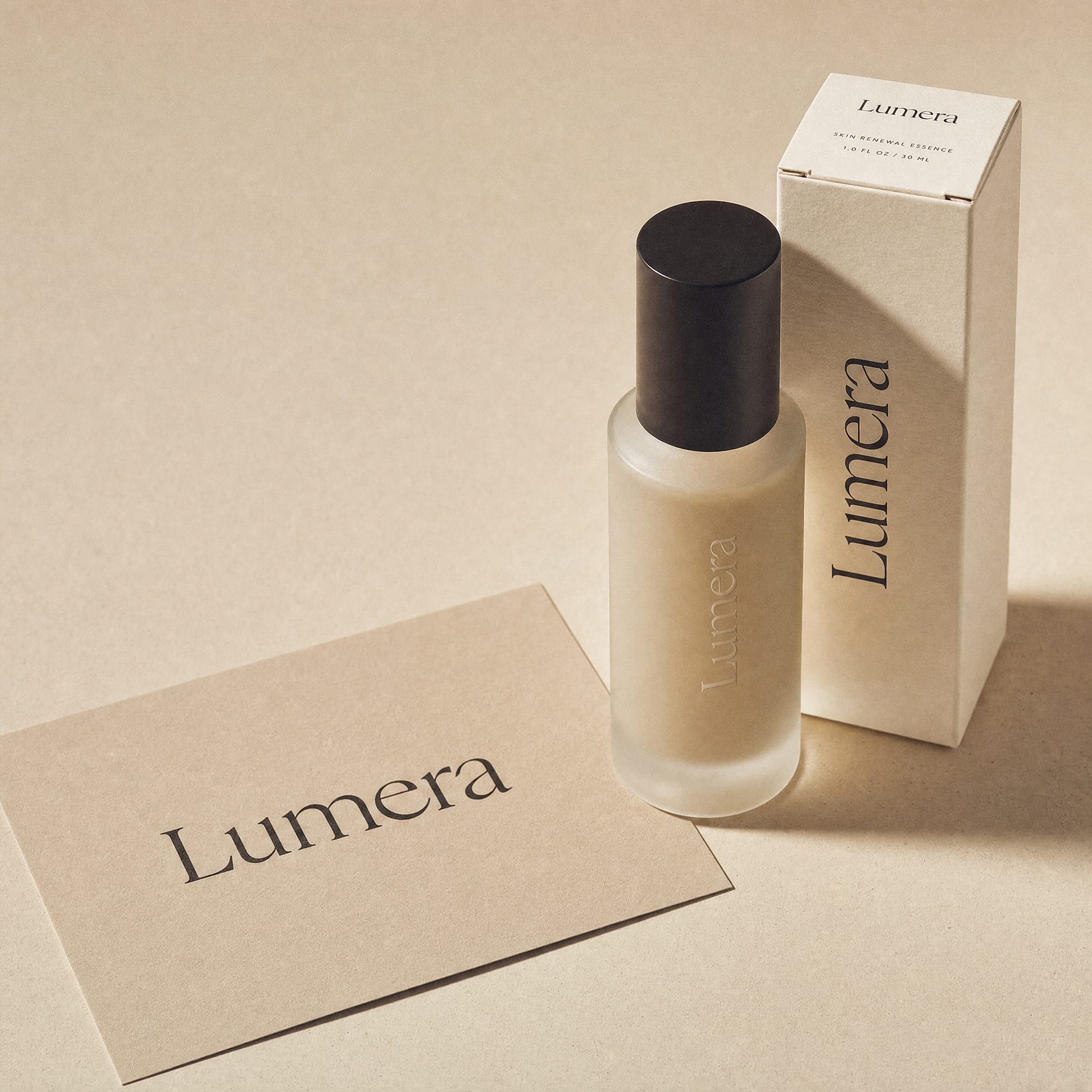
Sand-toned printed wordmark card for Lumera beside a frosted bottle and an ivory carton, all carrying the same mark.
Lumera Beauty global refresh
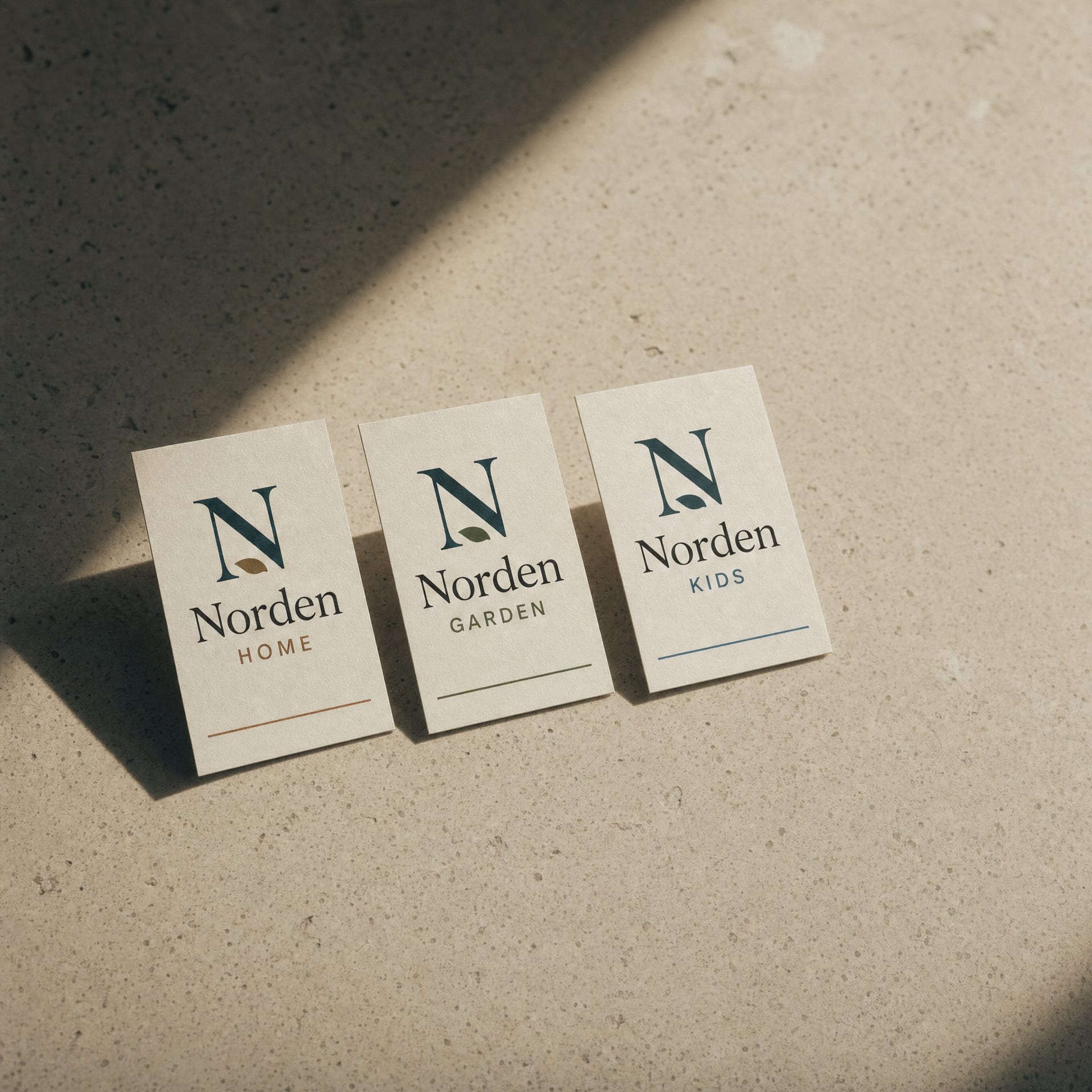
Three printed identity cards for Norden Home, Norden Garden and Norden Kids sharing the same monogram device.
Norden FMCG sub-brand system
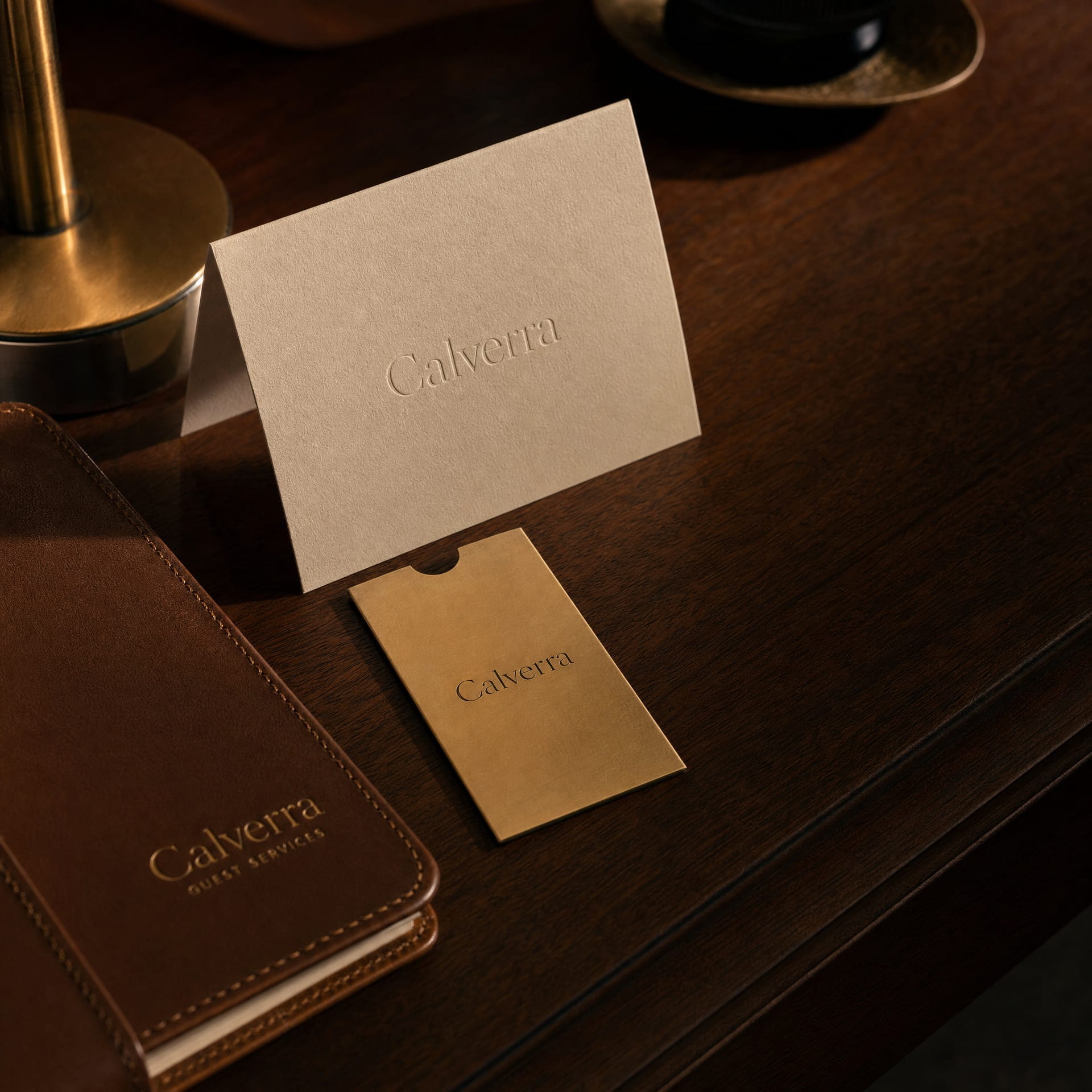
A folded ecru linen card embossed with the Calverra wordmark on a dark walnut hotel desk beside a brass keycard sleeve.
Calverra Luxury hospitality
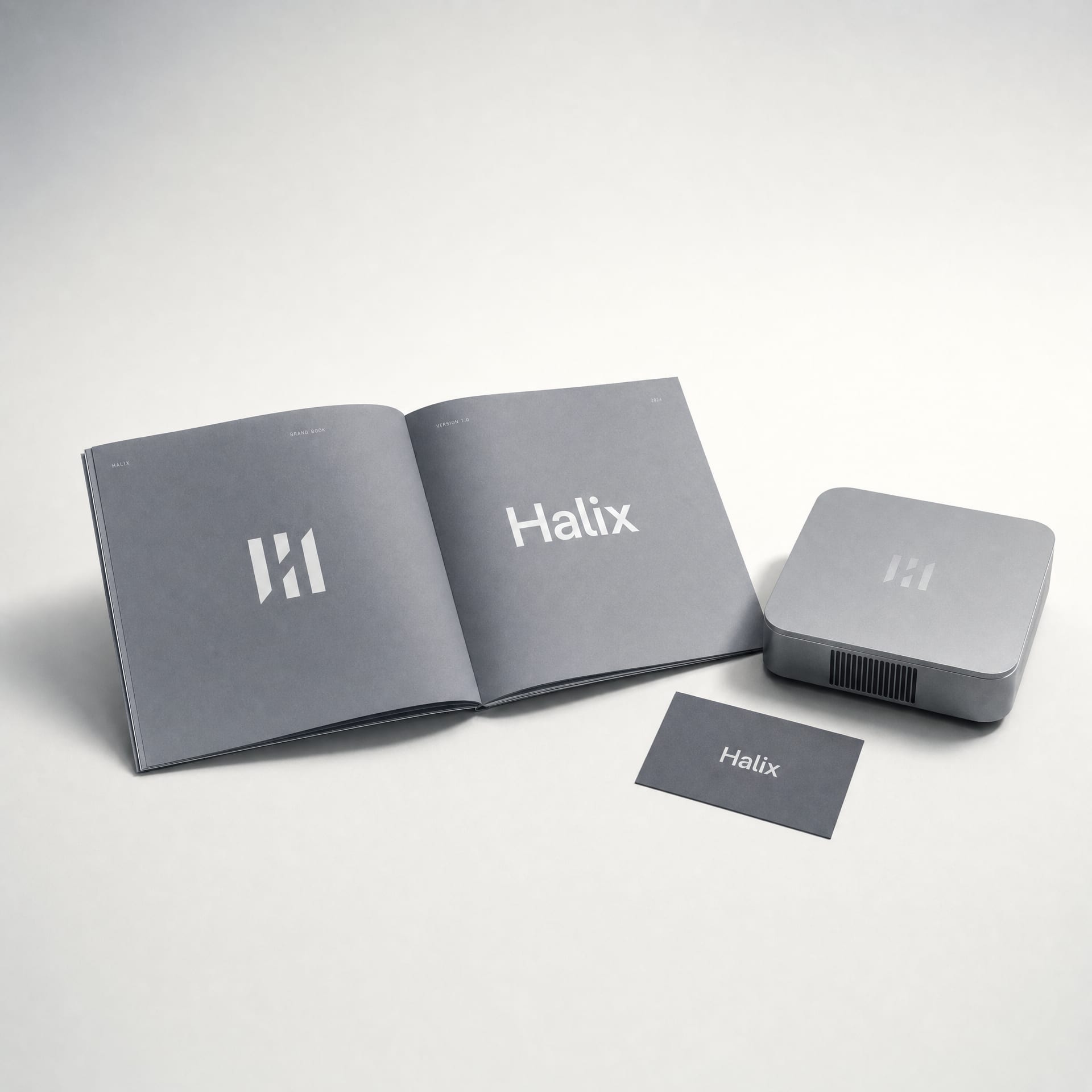
A cool-grey Halix brand book opened to a monogram spread beside an anodized aluminium device on a studio table.
Halix Consumer tech B2B
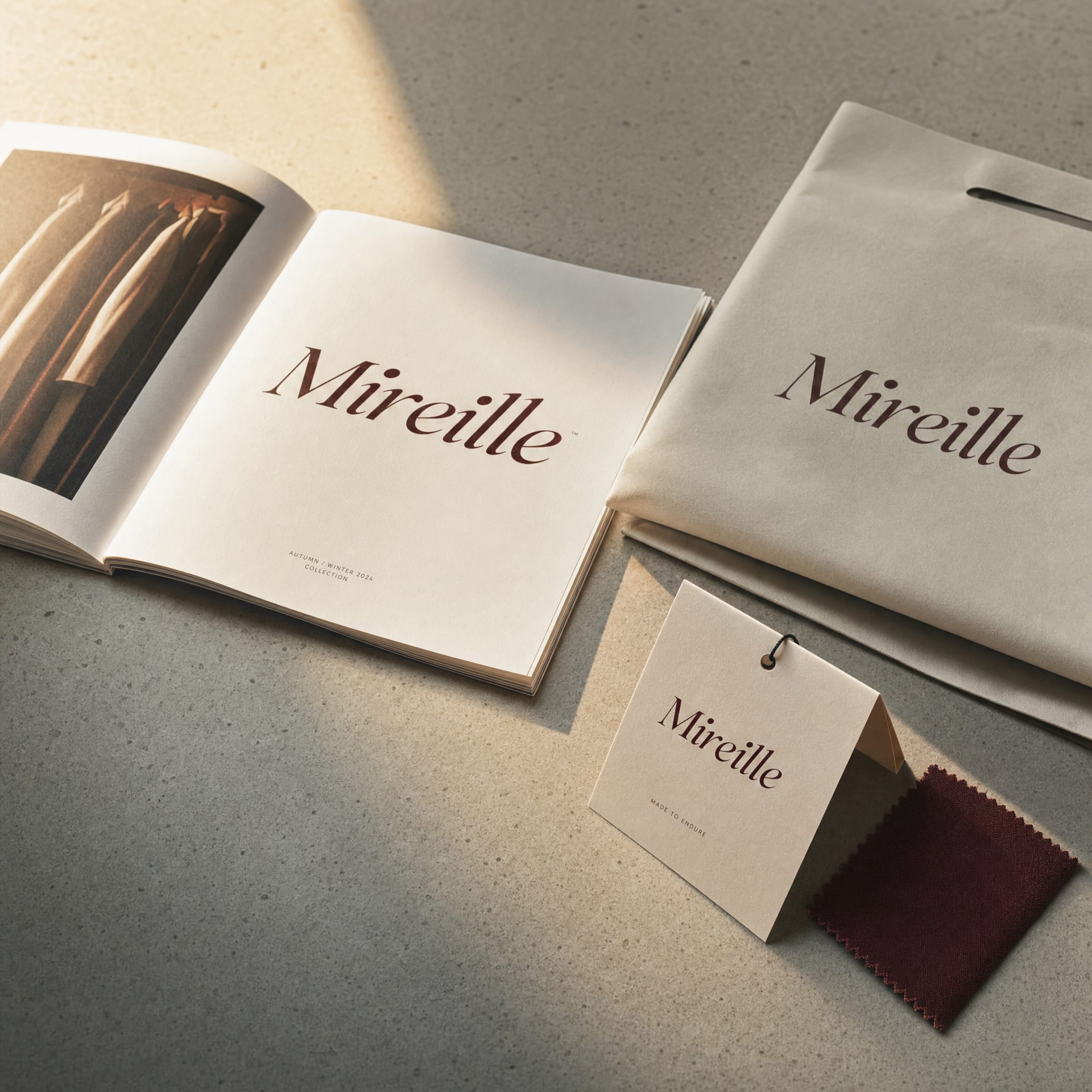
A Mireille lookbook spread, a folded ivory garment-bag tag and an oxblood fabric swatch on a worktable.
Mireille Fashion DTC launch
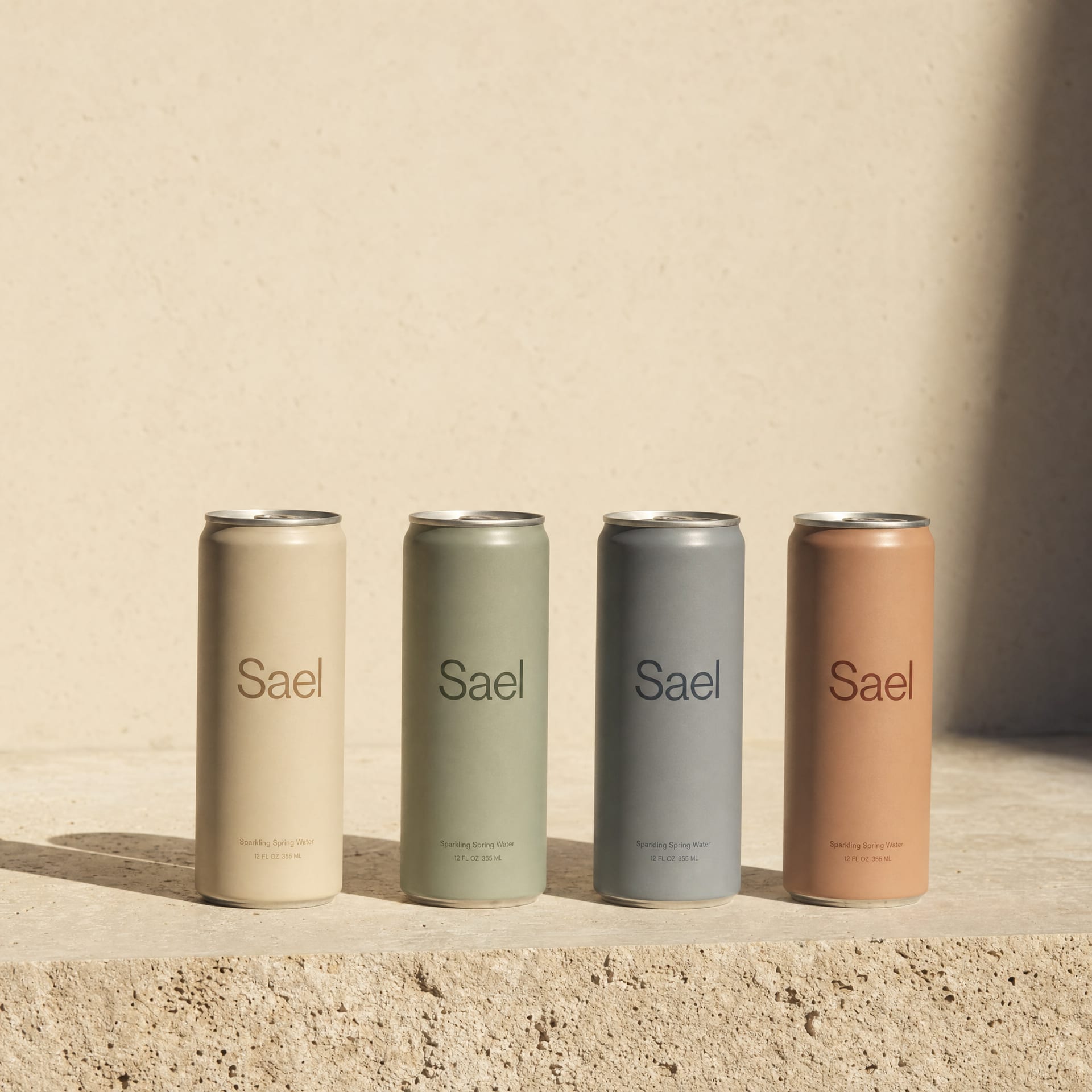
Four aluminium cans in a row carrying the Sael wordmark in four secondary palette tones, on travertine.
Sael Beverage, four markets
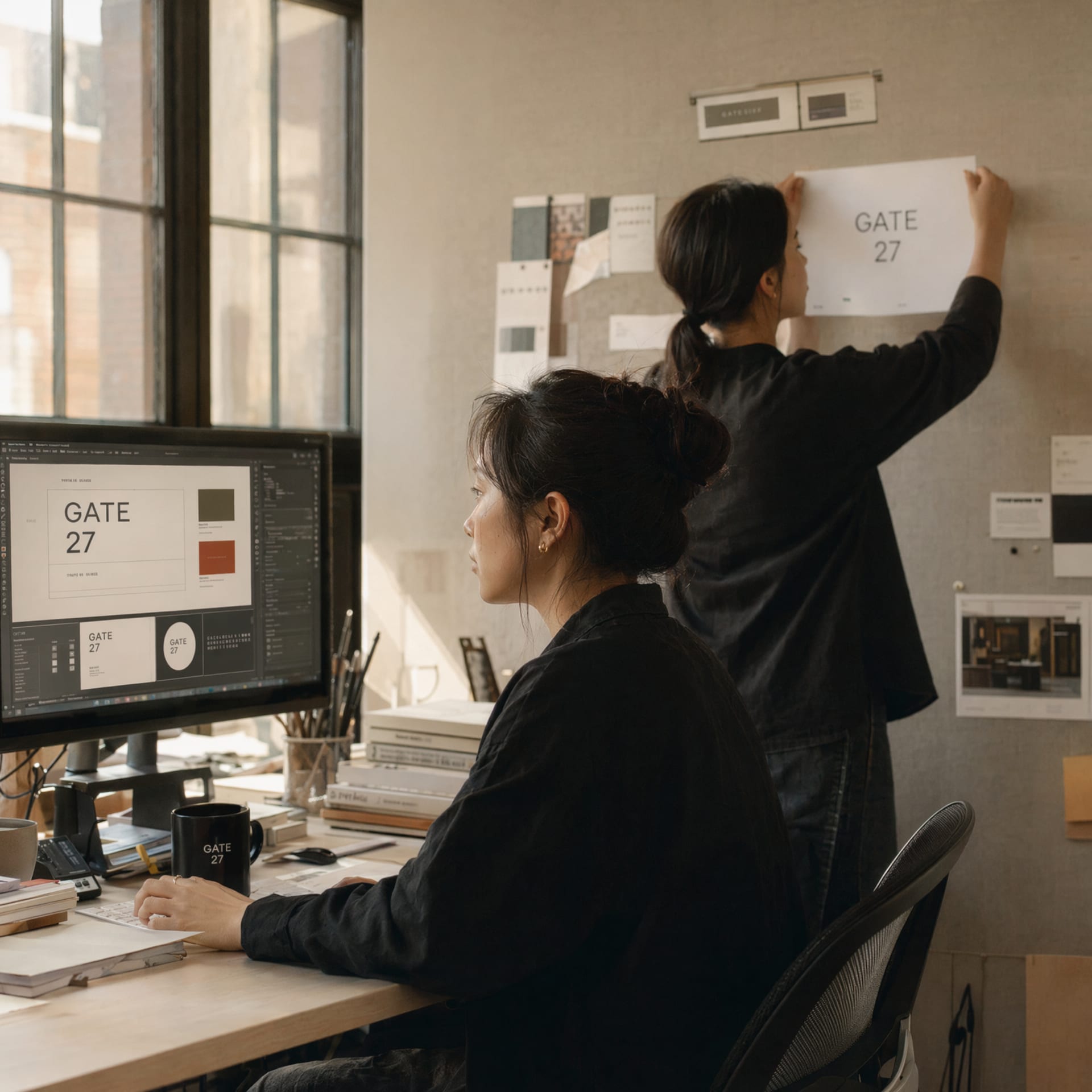
A designer at a monitor reviewing a brand identity layout, another designer pinning a printed proof to a fabric board behind them.
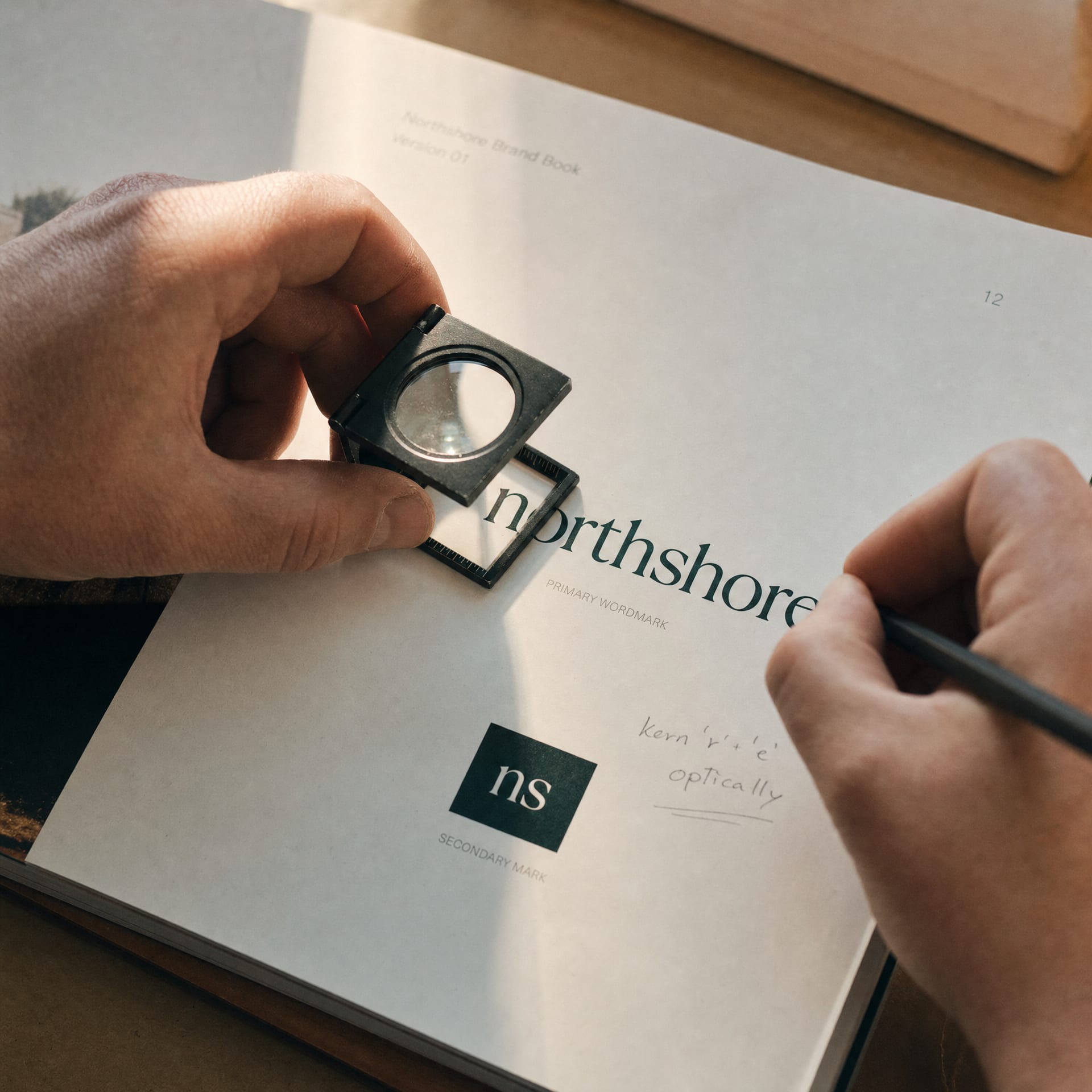
Two hands reviewing a printed brand book proof: one holds a loupe over a wordmark, the other a pencil margin note.
6–10 wks Strategy to delivered system

Optional capability

Need the rollout too?
We can produce it.

This part is optional. Most clients use the identity work as the foundation and roll it out through their existing studio or agency network. The brand book and Figma library are built to be picked up by another team on day one.

If you would rather we run production alongside the creative, we do that too. Packaging artwork, website assets, social templates, ad creative, retail collateral, presentation systems, coordinated through one team using the same brand-trained models that built the identity. The advantage is consistency. The same art director who approved the imagery direction is still on the work six months in, instead of a new freelancer trying to reverse-engineer the brand from the PDF.

  • Figma library
  • Frontify
  • Bynder
  • Lingo

Brand systems delivered into a Figma library by default, or handed off into Frontify, Bynder, Lingo or whichever DAM the client already uses. The trade-off is real: running production with us means depending on us for the rollout, which some clients prefer to avoid for resilience reasons. Both setups work.

Source files (Figma, Illustrator, InDesign, the trained image model) are yours on day one either way.

Our process

Creative direction first.
Production scale second.

AI made the production side fast for everybody. Picking the visual direction that is actually worth scaling is the part still hard, and where most of our hiring budget goes.

First two steps are where it is won or lost. The rest is execution.

A strategy session table with a printed audit grid, a positioning matrix marked up in pencil, tear sheets and colour chips.
Where it is won

Strategy and audit.

Positioning, audience, competitive landscape, personality, plus a clear-eyed audit of whatever identity exists already.

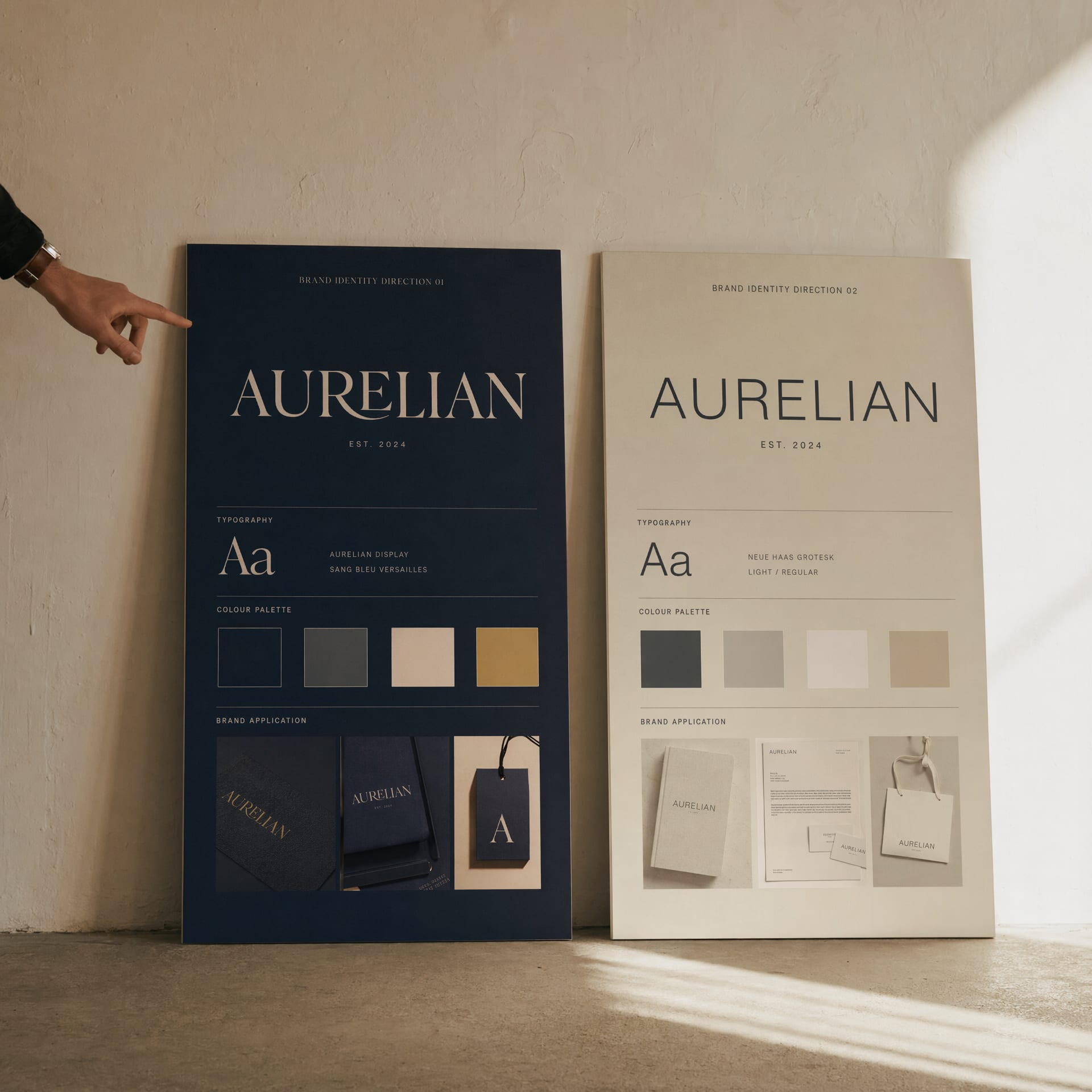
Two distinct identity direction boards leaning side by side against a plaster wall, a hand pointing at the left one.
Where it is won

Creative direction. The step that matters most.

Art directors set two or three distinct directions. Each comes with logo system, colour, type and imagery worked through enough that you are choosing between strategies, not moodboards.

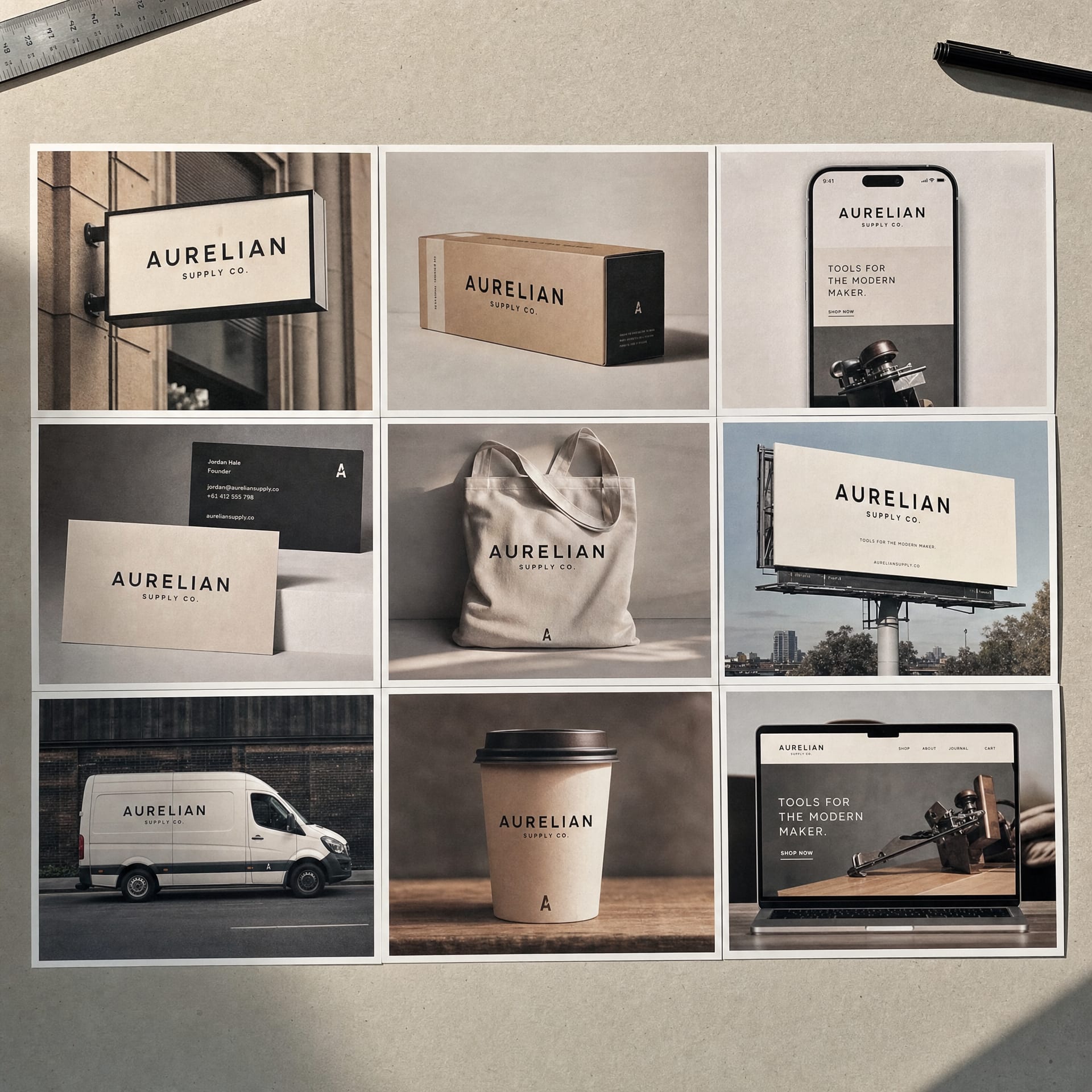
A flat contact-sheet grid of nine printed variations of the same wordmark applied across nine real-world contexts.
The rest is execution

AI exploration in context.

Hundreds of applications generated in parallel: packaging mockups, website hero, OOH at distance, social grid, retail signage, motion. You see the identity in real environments before anything locks.

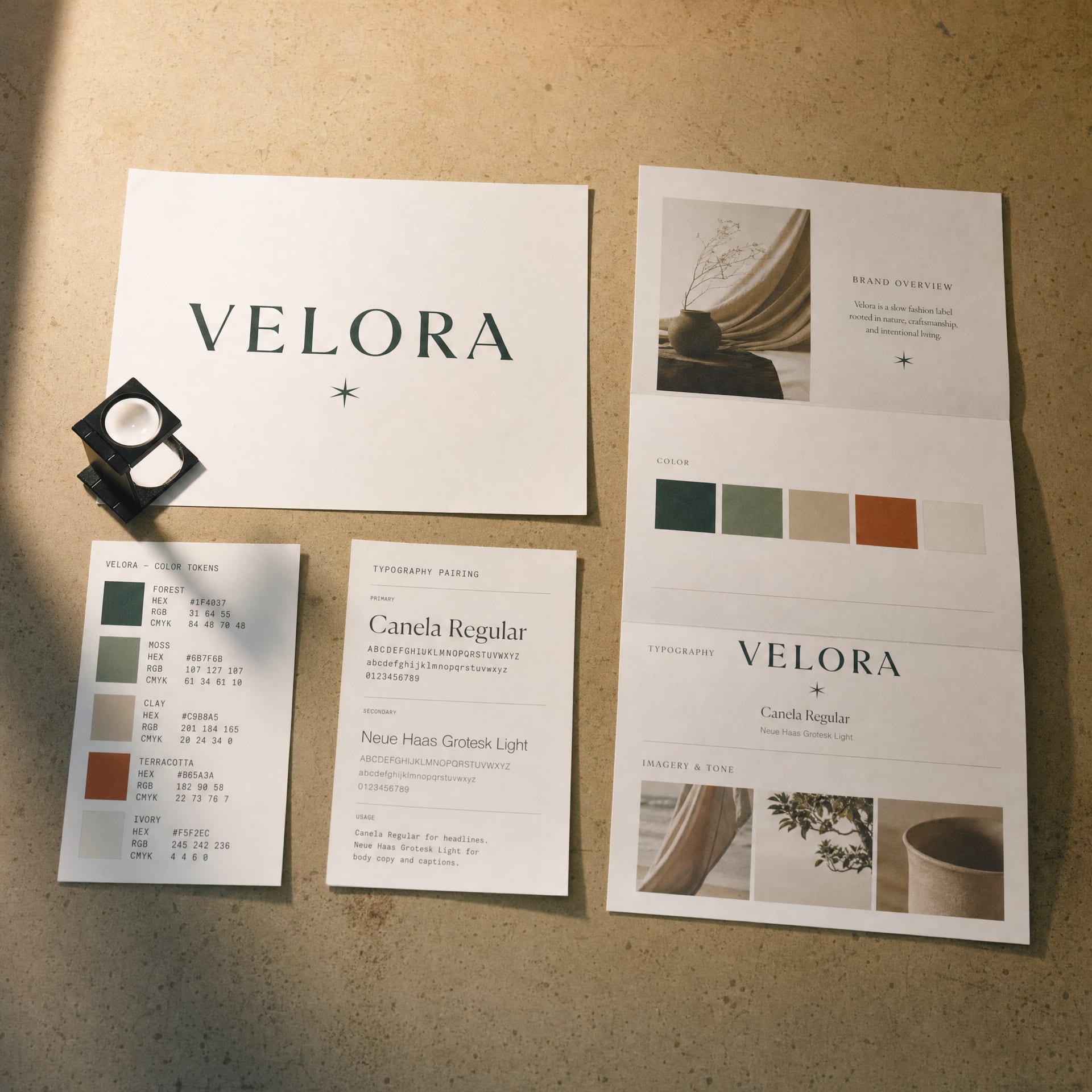
A refined printed wordmark on a worktable beside a colour-token sheet, a type-pairing specimen and a loupe magnifier.
The rest is execution

Refinement and system build.

Logo refinement, type pairing finalised, colour tested for accessibility and print, master files, Figma library, brand book.

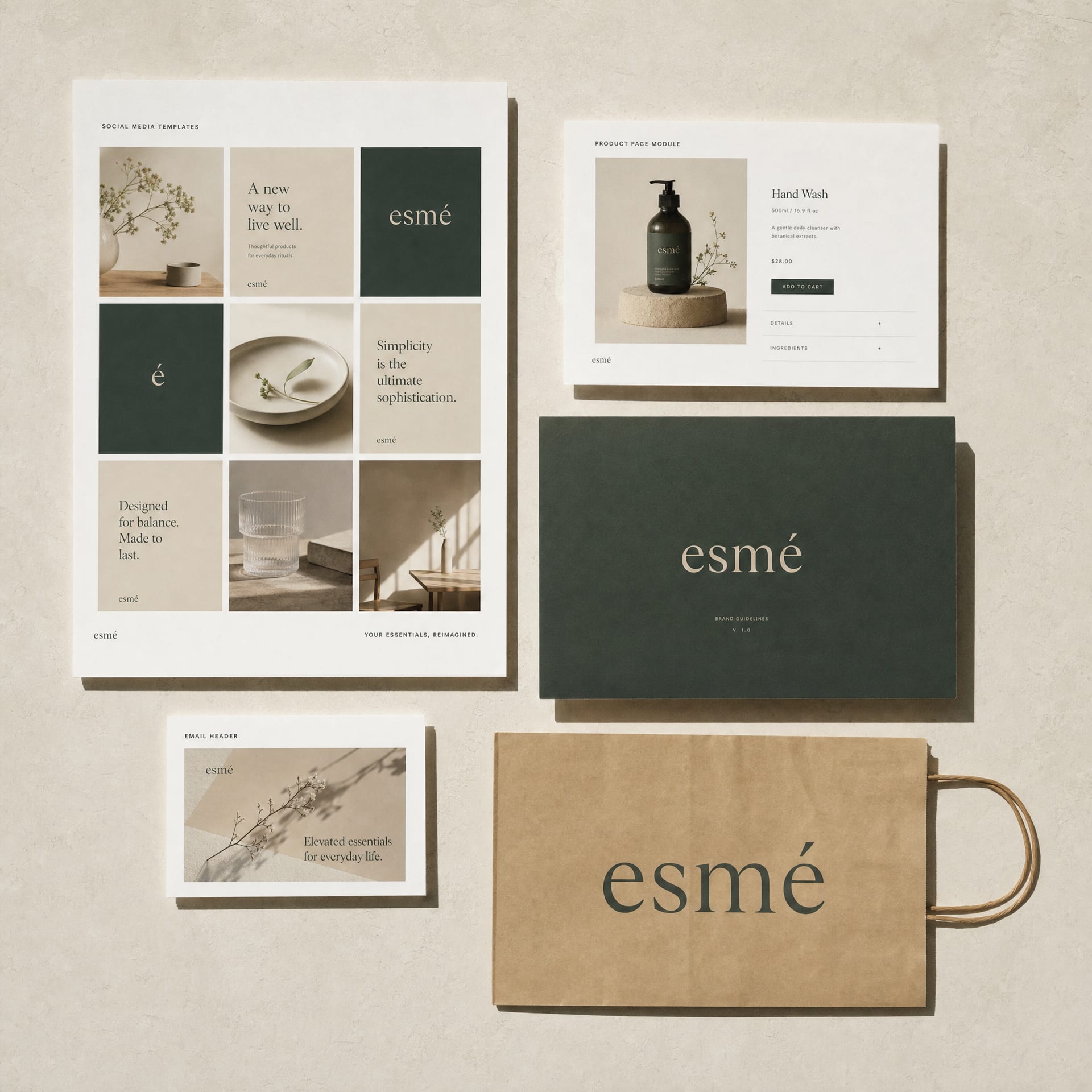
A flat-lay of brand rollout assets: social templates, product page module, deck cover, email header card, carrier bag.
The rest is execution

Rollout kit.

Templates for the formats your team ships every week, plus, if needed, a brand-trained image model so the visual direction holds as you scale.

The new math

How AI changes
the math.

A growth-stage client lands with a full identity brief: strategy, logo system, colour, type, imagery and a working brand book. The same scope, run two ways.

The agency workflow Sixteen weeks
Strategy Four weeks Direction Five weeks System & guidelines Seven weeks

Mid-tier agency timeline: four weeks for strategy and audit, five for direction, then seven on system, guidelines and first-round rollout. Three rounds of revision, partner time billed at full rate, junior teams running production. Heritage consultancies stretch the same scope across six to twelve months.

Our workflow Six to ten weeks
Strategy to delivered system Six to ten weeks

Two or three directions worked through enough to choose between strategies, not moodboards. Hundreds of applications generated in parallel so you see the identity in real environments before anything locks. Refinement, master files, Figma library and rollout kit, art-director-led the whole way.

Six to ten weeks for a full identity from strategy to delivered system. Three to four weeks for a focused refresh. Faster on a sub-brand extension. Most agencies quote eight to sixteen weeks for the same scope, and global consultancies routinely run six to twelve months on enterprise rebrands. The compression is real, but it comes from AI making the production fast, not from skipping the thinking.

Different model. Heritage consultancies sell deep, partner-led engagements that often run two quarters or more. The output is excellent and the price reflects it. We sell faster, more production-heavy work: art-director-led creative direction plus AI-driven exploration and rollout that traditional studios cannot match without doubling headcount. If you want a brand book that wins design awards and you have nine months, hire one of them. If you want a system that ships, plus a team that can produce six months of campaign assets through it, we are a better fit.

Three situations. A one-week logo for an internal project is over-engineered for us. A category-defining transformation that needs six months of stakeholder workshops and CEO-level positioning work probably needs a strategy consultancy instead. And if AI in the creative process is a non-starter for your team, we will not be a fit, because AI sits in our production layer.

Yes. Every editable master file (Figma, Illustrator, InDesign, the brand-trained image model) gets handed over at the end of the project. There is no licensing trap where you would lose access if you stopped working with us. The system is yours.

That is most of our work, actually. Full rebrand is the smaller share of identity projects we run, and the rebrands that sever continuity of equity are the ones that tend to fail. More often it is a refresh: tighter logo system, modernised type, evolved colour, new imagery direction, and a brand book someone will actually open. Evolution usually beats starting over.

Art directors from 4A agency backgrounds (Publicis, Ogilvy, WPP) lead creative direction. AI specialists handle the production scale. Strategy is run by people who have done brand work for the markets we are building for, not by junior teams reading a template. No outsourced hands on creative direction.

Like you. The AI handles volume. Art directors handle direction. The brand-trained image model is fine-tuned on the chosen visual direction, so output stays inside your system, and the work that lands in front of your customer was approved by a human who has been at this for more than a decade. AI sameness is a real issue in the market. The only defence is creative direction strong enough that the model amplifies your point of view instead of replacing it with whatever the model defaults to.

Yes. We brief Chinese naming in-house: phonetic, semantic, dialect screening, cultural fit, plus the CNIPA trademark search to catch the names already squatted on. This matters more than most foreign brands realise. Trademark squatters watch Xiaohongshu and Weibo for consumer-coined Chinese names of foreign brands and will register them faster than the brand can. We also build identity systems that flex across Western and CJK visual conventions without splitting in two.

You own the final deliverables, including the brand-trained image model. We document which models touched which assets so your legal team has a clear record. For the full position on copyright and AI, see our Copyright and AI guide .

Yes, and we increasingly default to it. Static-only marks are outdated for any brand shipping into app icons, video, AR layers or social-first contexts. We deliver responsive logo behaviour (full mark, simplified, icon, motion) plus the rules that govern when each appears.

Try us

Send us your
identity brief.

Two strategic directions and a priced proposal inside two weeks. No retainer, no commitment, and whatever we produce is yours.