
Design service / Presentation

Presentation Design.

Built for the room. In every language.

Friday afternoon. The biggest renewal of the quarter pitches Monday. The deck is the same template recycled for three years, forty-six slides, two about the prospect. The team is on its third emergency rebuild this month. The renewal gets pitched on the old deck anyway. It does not close.

We hear that story most months. So we run presentation design as a production line, not a craft hobby. Senior designers own the narrative, AI handles the volume, and the brand system holds up when six people edit the same deck at once, which they will.

Shanghai studio / PowerPoint & Keynote, 35+ markets

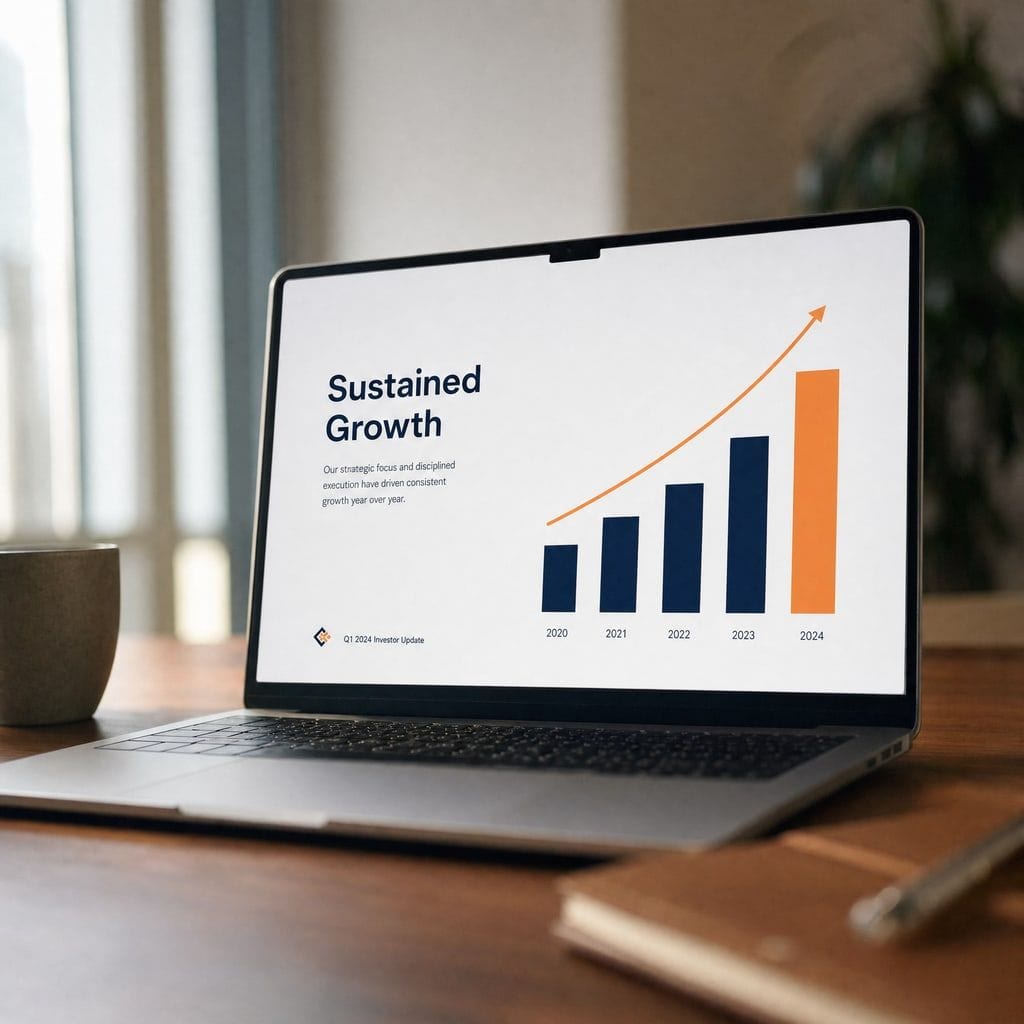
An open laptop on a warm walnut desk showing a single clean deck slide with a minimalist growth chart, lit by afternoon window light. Studio work / Nimbus

Why it matters

The room hasn't
gone away.

Buyers do most of their research before talking to a sales rep. The meeting still happens though, and the deck still walks into the buying committee.

Storydoc found that 82% of viewers who get through the first three slides finish the deck, and personalized decks get shared internally 2.3 times more often than generic ones. Gartner has the average B2B decision running through six to ten stakeholders. Your champion almost never signs.

The deck is what walks into the room after your call is over, and it either sells the meeting you just had or undoes it. We have sat through win-loss reviews where a deal got marked down to "price" when the actual reason was that the competitor's deck made them look like the safer hire. That cost shows up nowhere on the scoreboard.

Coverage so far: SaaS, industrial OEM, QSR, luxury, fintech and pharma.

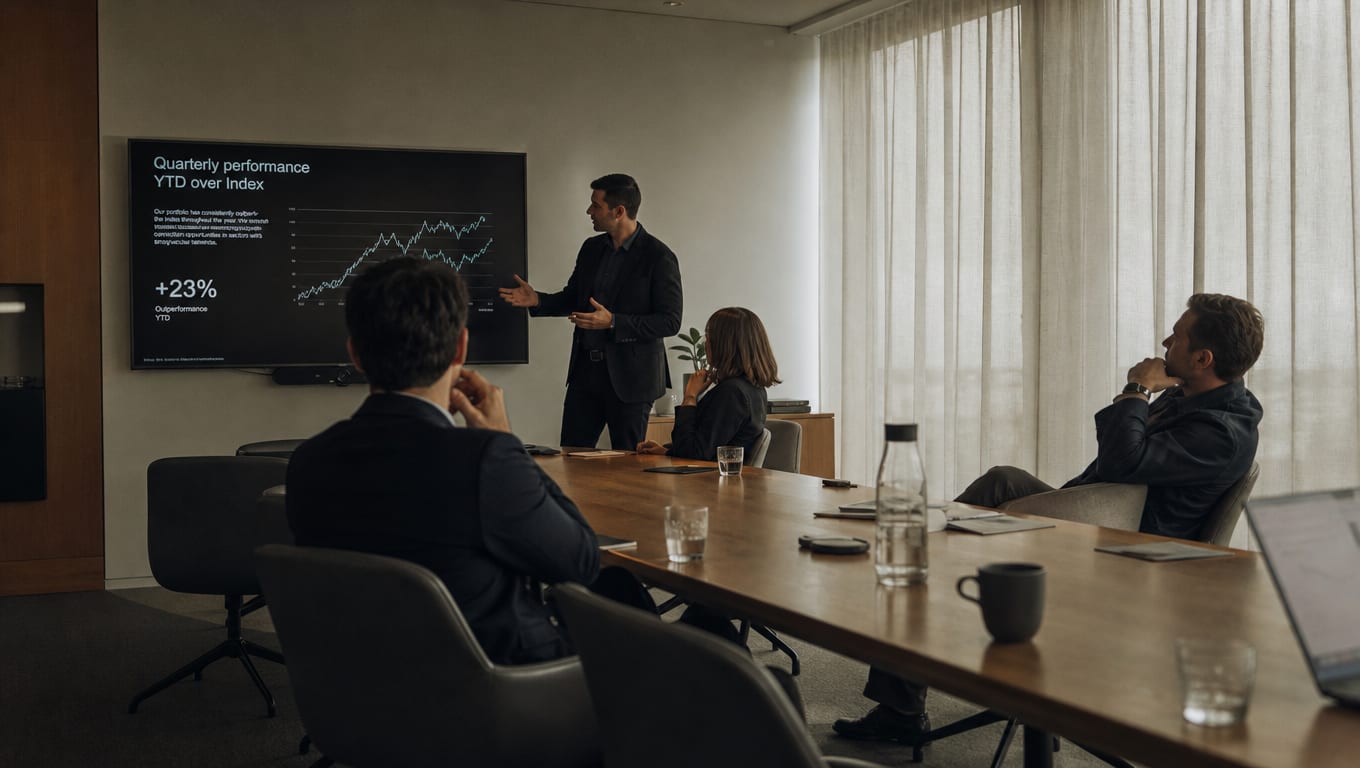
A corporate boardroom from the side, four people watching a deck on a wall-mounted screen at the end of the long oak table.
The room still wins

Across the deck work we have shipped over the last eighteen months, the projects where clients tracked outcomes show a consistent pattern: first-round approval rose from 22% to 78%, deck cost fell 60% versus per-slide agency rates, and we shipped seven times more variants per quarter without losing brand integrity.

22% First-round approval Up from 22% on rushed builds
0% Lower deck cost Versus per-slide agency rates
0x More variants shipped Same brand integrity

The work, defined

Two lanes, one brand system.

A twelve-slide investor pitch and a ninety-slide training library share almost nothing in their craft. One is theater. The other is a reference document. We staff each lane with designers who have done it before.

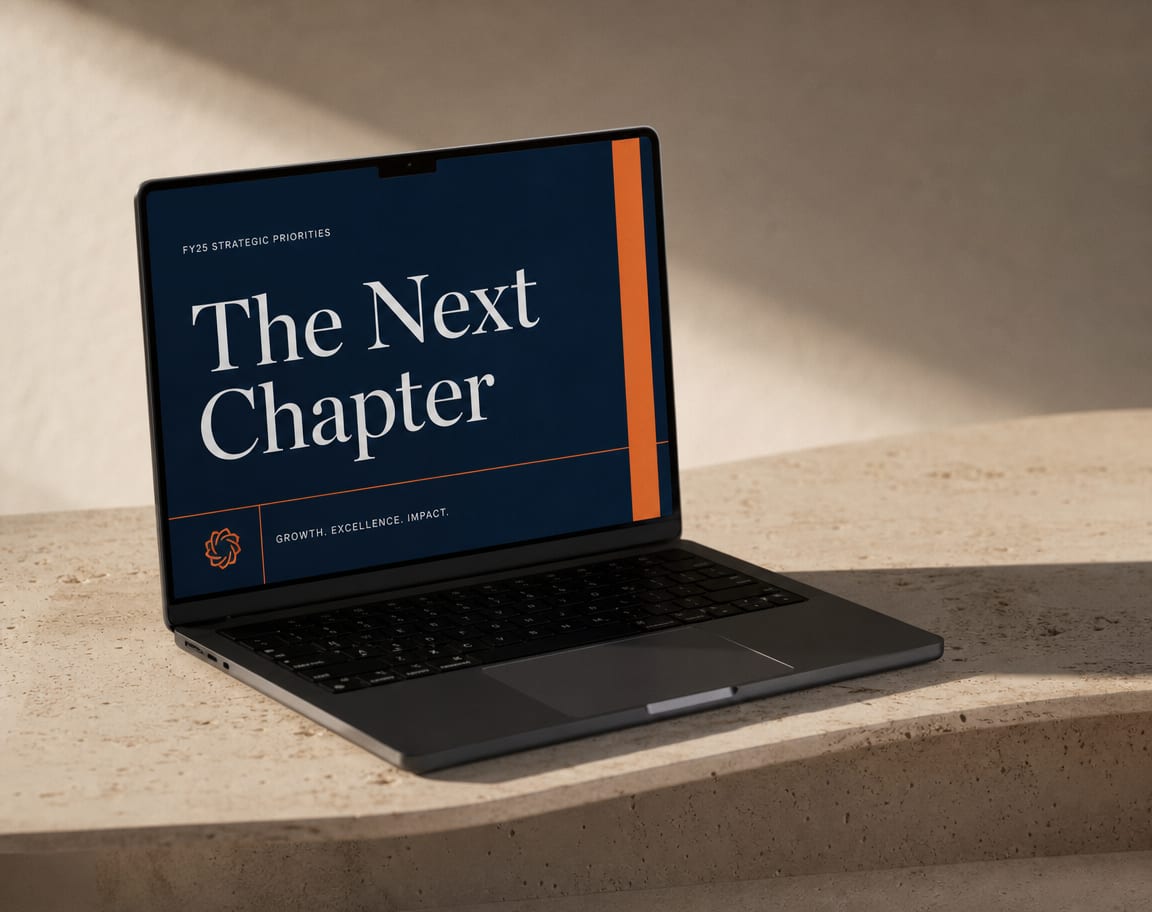
A dark slate laptop on a travertine surface showing a clean pitch deck title slide in deep navy with a warm orange accent.
Pitch decks

Coverage

Pitch decks built for the room.

Theater. Sales decks, investor pitches, keynote stage decks.

Sales pitch decks built on the Pyramid Principle: lead with the answer, three supporting points, evidence on demand. Most land between ten and fourteen slides. That is not doctrine about length, that is where the data on completion rates sits.

Investor decks are the work most founders dread, and not without reason. Seed through Series C have different demands, the financial slides need actual scrutiny rather than rubber-stamping, and there is usually a CFO involved by the second round. NDAs signed before the brief if you want them.

Keynote stage decks for sixteen-foot LED walls: presenter pacing, full-bleed photography, one idea per slide. We design for the back of the room, not the front of the laptop.

In scope

  • Sales pitch decks
  • Investor decks
  • Seed to Series C
  • Keynote stage decks
  • Pyramid order
  • Action titles
  • Full-bleed photography
  • Presenter pacing
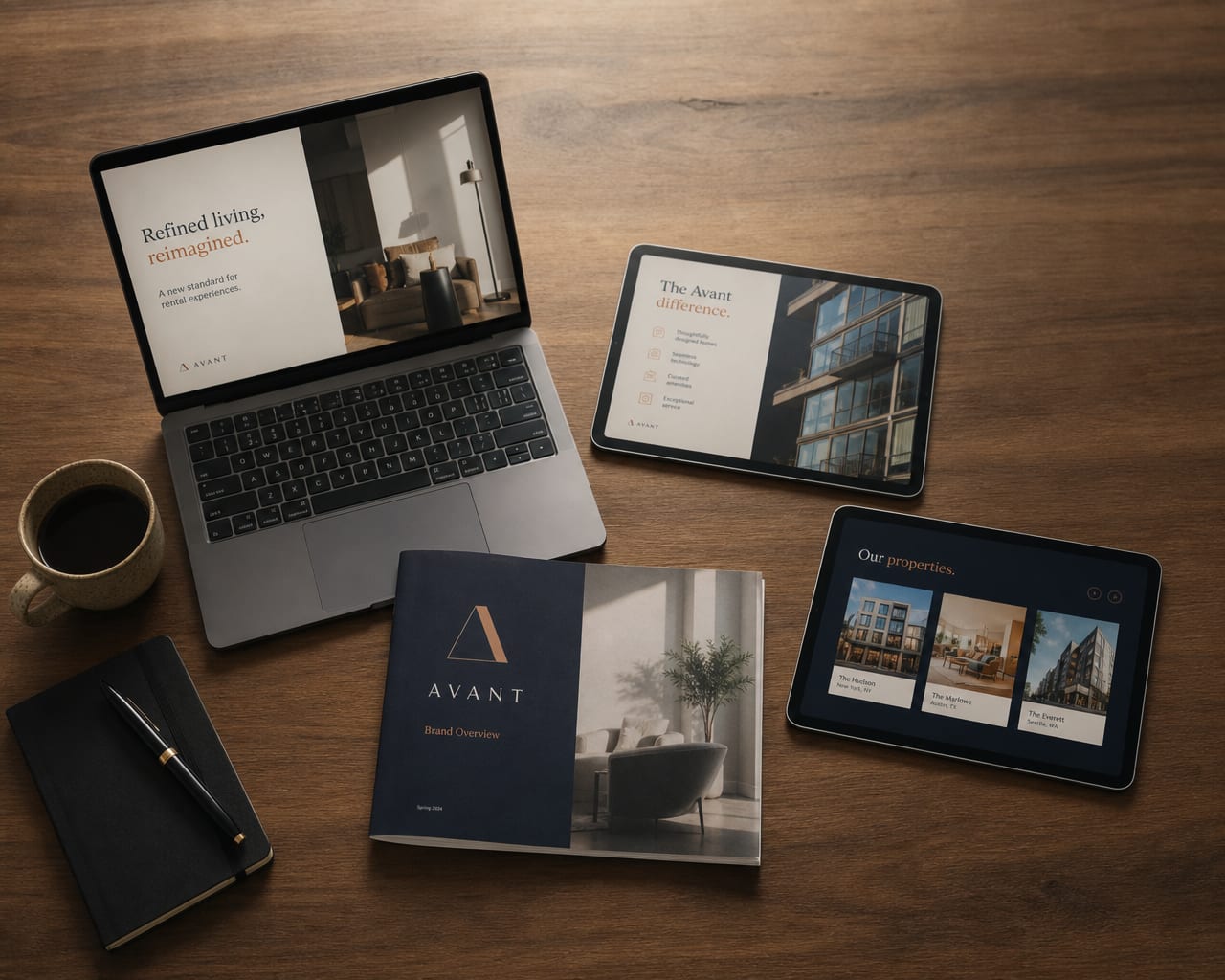
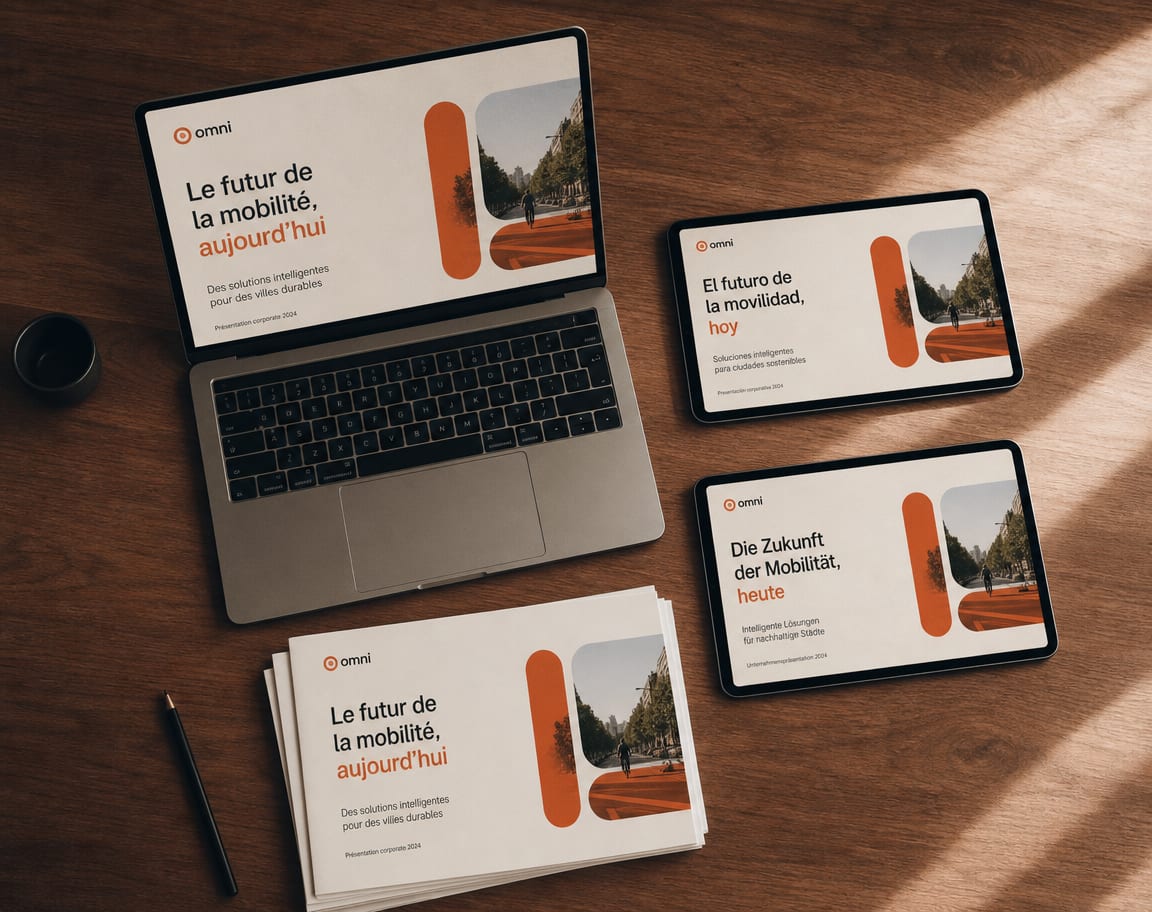
Top-down view of a laptop, two tablets and a printed deck booklet on a walnut desk, each showing a different slide layout in a consistent palette.
Programs

Coverage

Programs that hold up under daily use.

Reference. Sales enablement libraries, board decks, QBRs.

Sales enablement libraries are the long tail of the business. Battlecards, persona one-pagers, objection decks, QBR templates that reps actually open. The hard part is not the design, it is governance: who edits what, how variables get locked, where the master file lives, and what happens when a product team updates pricing without telling marketing.

Board decks and QBRs with linked Excel tables, footnoted assumptions, and an executive summary that lets a board member skip to slide four without losing the thread. Every slide ships on a master with proper placeholder hierarchy and theme fonts that survive Mac to PC.

In scope

  • Sales enablement
  • Battlecards
  • QBR templates
  • Persona one-pagers
  • Objection decks
  • Board decks
  • Linked Excel charts
  • Footnoted assumptions

Contact sheet

Selected proofs.

Studio decks for invented brands across the six categories we ship most. Every frame is authored work, not a stock pull, and every slide is editable on the original master.

Open laptop on a sunlit desk showing a clean Nimbus investor deck title slide with a single data visualization.
Nimbus SaaS Series B investor deck
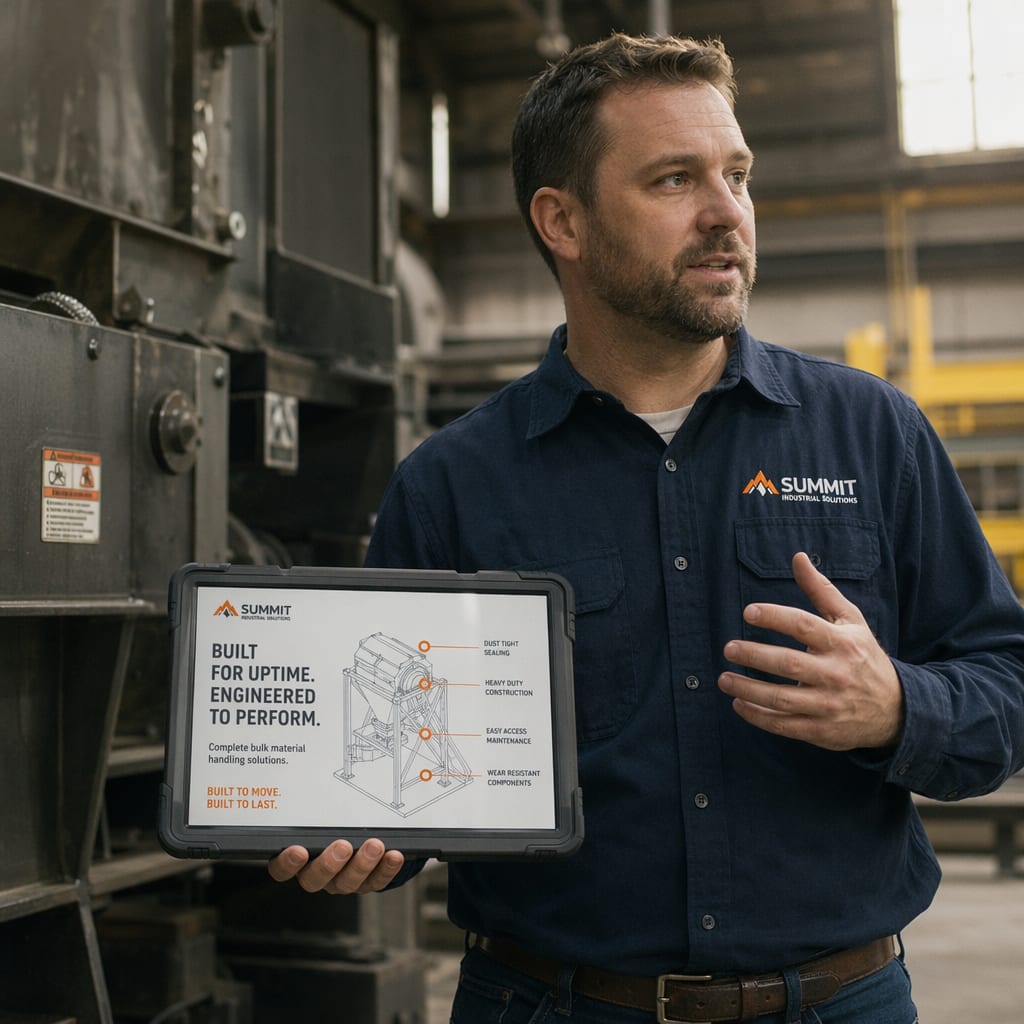
A sales engineer in a daylit factory holding a rugged tablet with a Ferran sales slide and a technical diagram.
Ferran Industrial OEM sales enablement
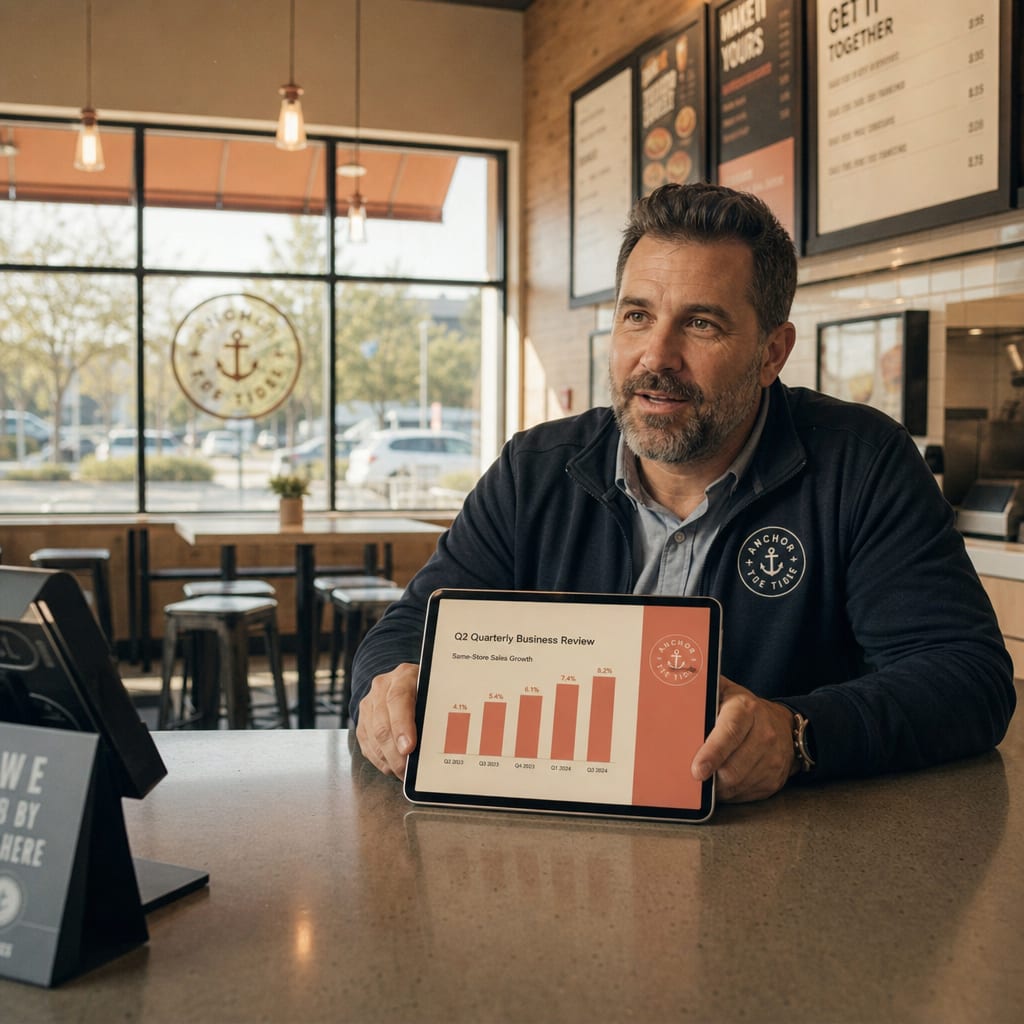
A franchise owner reviewing a Tako quarterly business review slide on a tablet at the counter of a small restaurant.
Tako QSR franchise QBR
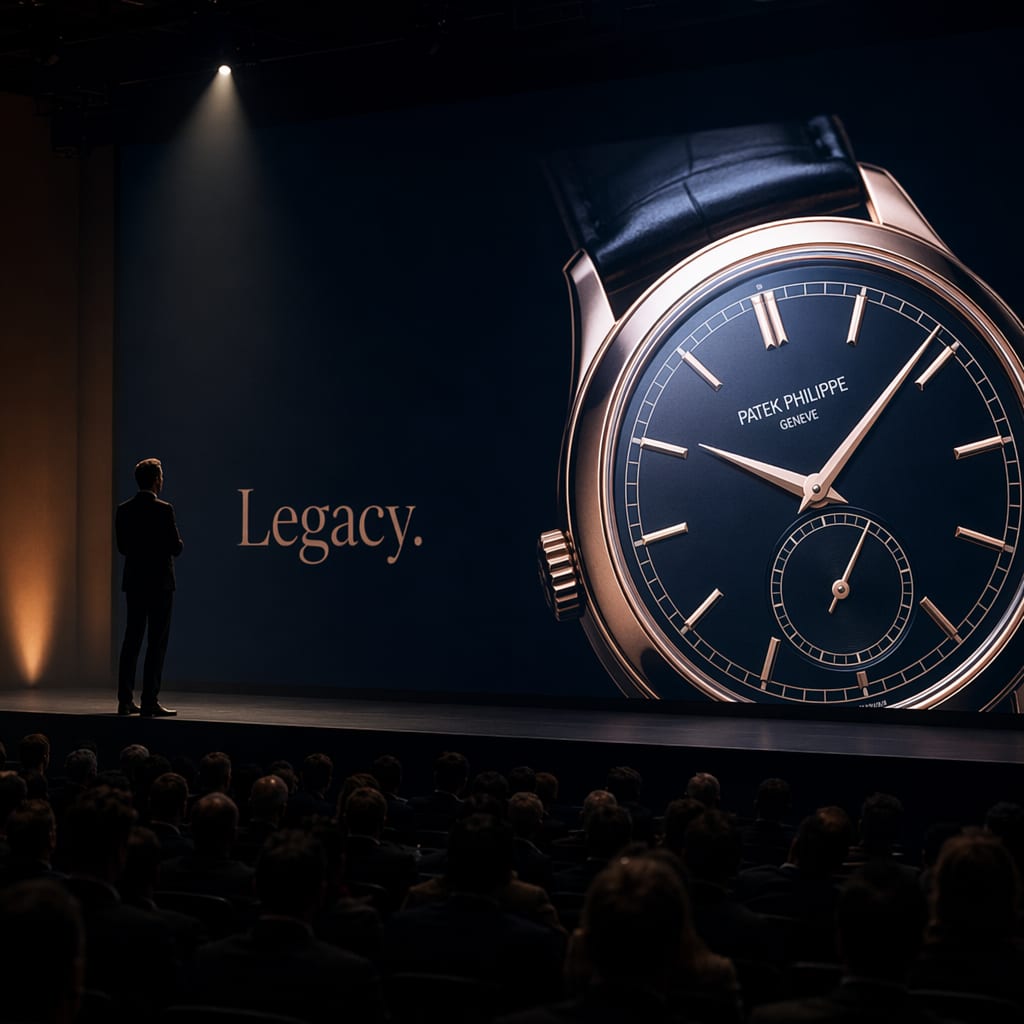
Dark keynote hall with a single LED wall showing a Verge watch hero slide and a presenter silhouette at the edge.
Verge Luxury watch keynote
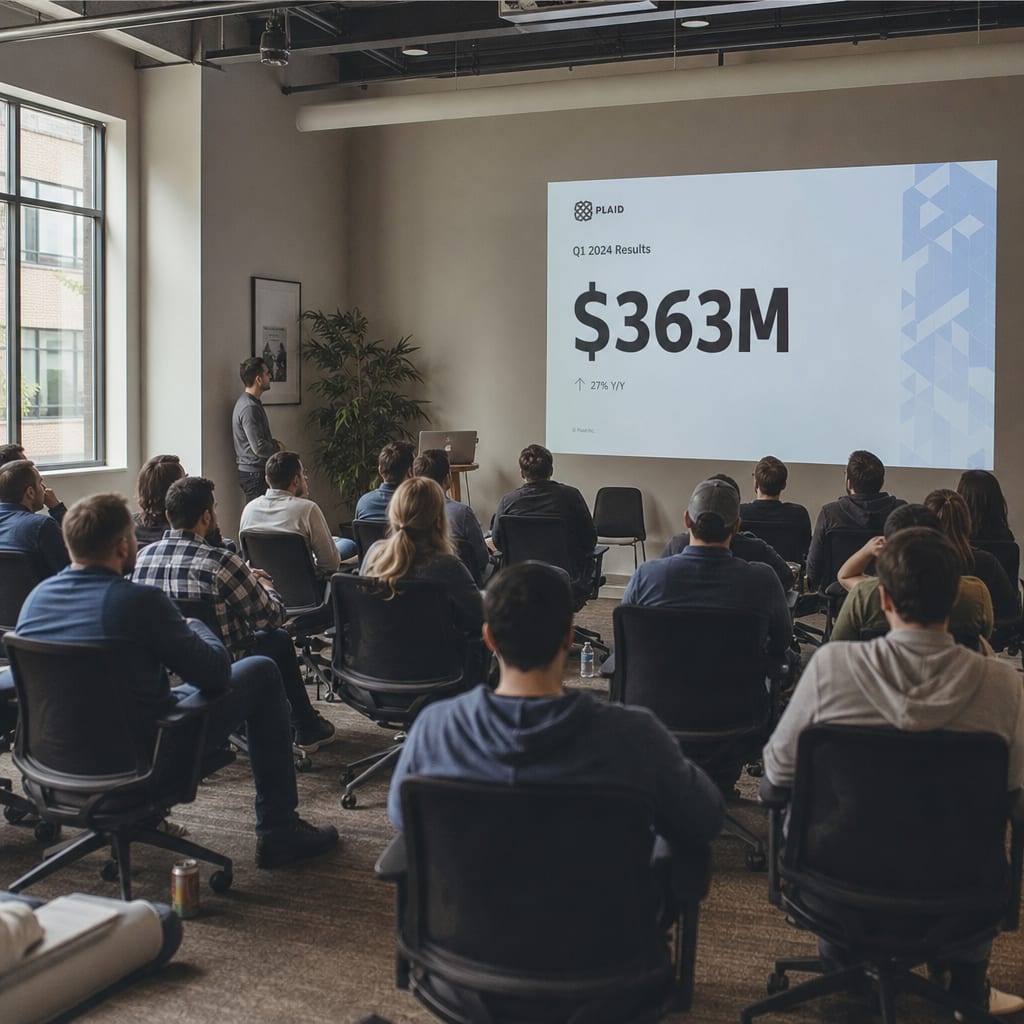
A Lumeo all-hands meeting room with employees facing a projected quarterly results slide on the front wall.
Lumeo Fintech all-hands
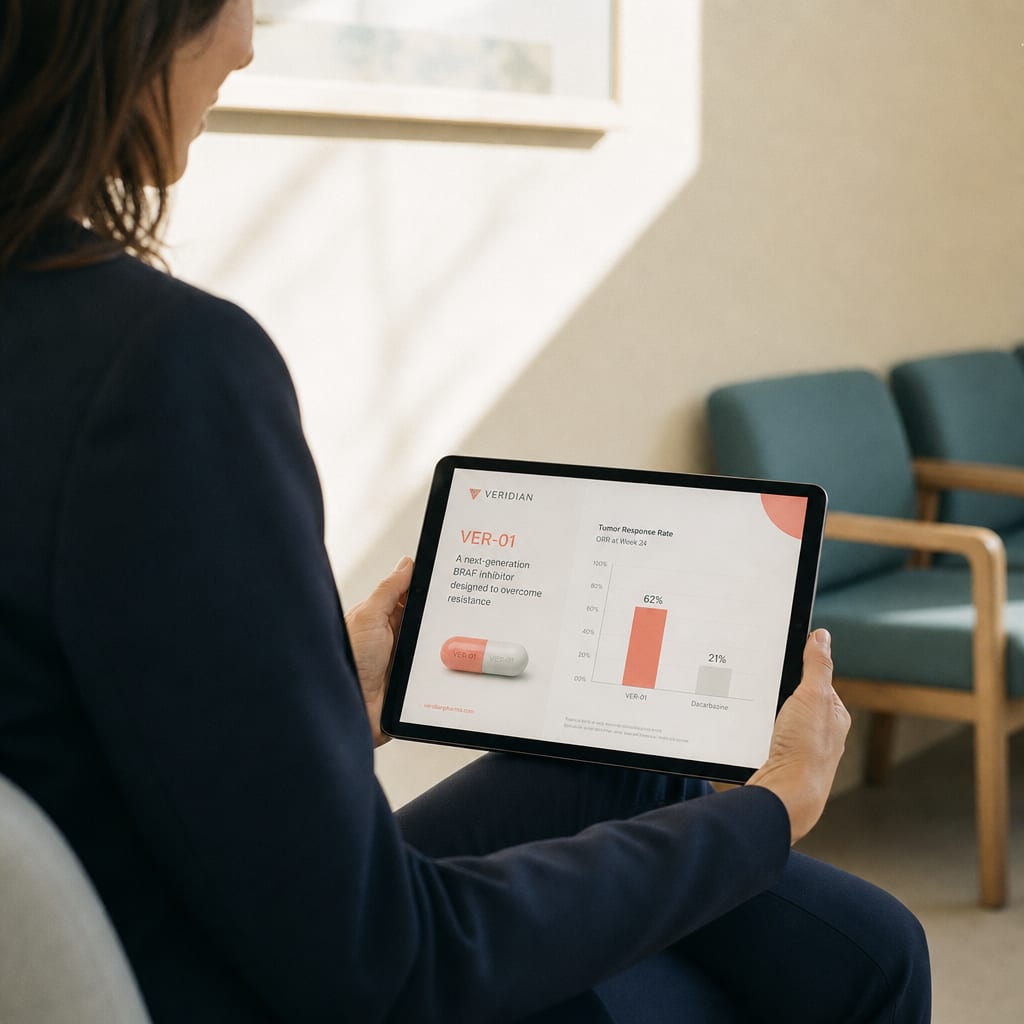
A pharmaceutical sales rep in a clinical lobby reviewing a Helia product slide on a tablet held in her lap.
Helia Pharma sales kit, EMEA
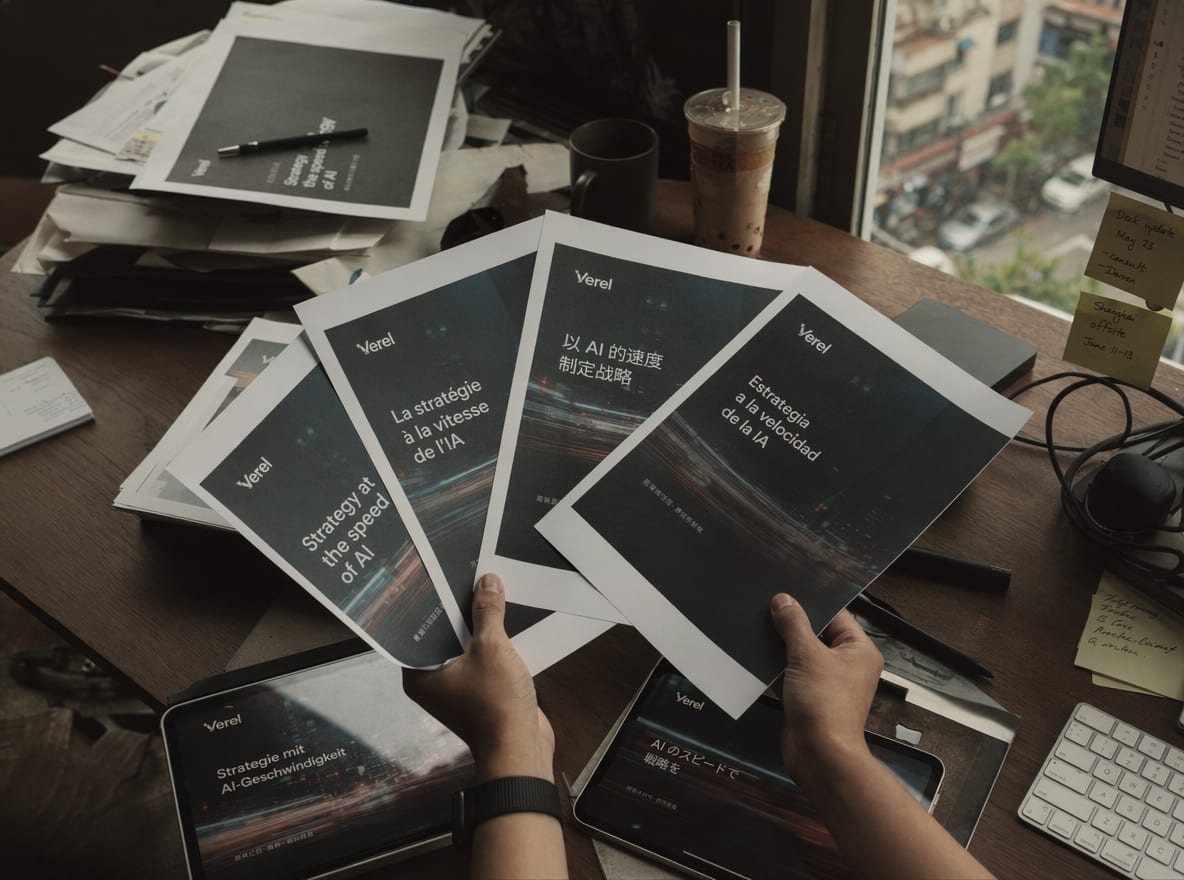
A laptop, two tablets and printed proofs on a walnut desk showing the same deck slide laid out in different languages.
Hands holding a tablet showing a localized slide in a non-Latin script.
35+ mkts Editable files in every language we ship

Built-in capability

Need it in fourteen markets?
Same team.

Most brands run language work through a separate translation agency. Three weeks, two contracts, a deck that no longer reads like the brand by the time the local sales team gets it.

We run the language work in-house. Mandarin, Japanese, Korean, Arabic, right-to-left layouts. In-region writers, not a single translation pass. The deck reads like it was authored in the market. Layouts and fonts rebuild for character width and reading order without breaking the master.

  • Editable .pptx & .key
  • RTL ready
  • In-region transcreation
  • NDA in place

The biggest engagement we have run is a sales enablement library across fourteen EMEA markets with localized imagery, properly transcreated copy and four aspect-ratio variants per slide. The smallest is a single twelve-slide pitch deck.

If you already have a translation partner, no problem. We hand over editable masters and step back.

Our process

Narrative is where
it's won.

The technical side of slide-making is cheap now. Building a narrative that survives twelve stakeholders and three rounds of legal is the part that is still hard, and it is where we spend most of our hiring budget. Most agencies treat a deck like a deliverable and brief Monday, draft Friday in brand colors. Then forty-seven edits come back, somewhere around edit thirty the narrative spine breaks, and what ships is a mess. We invert that whole thing.

First two steps are where it is won or lost. The rest is execution.

An open notebook, a fountain pen and a printed agenda sheet on a warm walnut desk under late afternoon window light.
Where it is won

Brief and discovery.

Audience, decision needed in the room, biggest objection, brand guidelines, existing deck library. A forty-five minute call and a shared Drive folder.

A whiteboard covered in handwritten action titles in marker, organized as a slide outline with arrows and short notes, photographed at an angle in studio daylight.
Where it is won

Narrative lock. The step that matters most.

A senior art director and a senior copywriter write the action-title outline with the client lead. One title per slide, complete sentences, Pyramid order. No design starts until the outline is signed off.

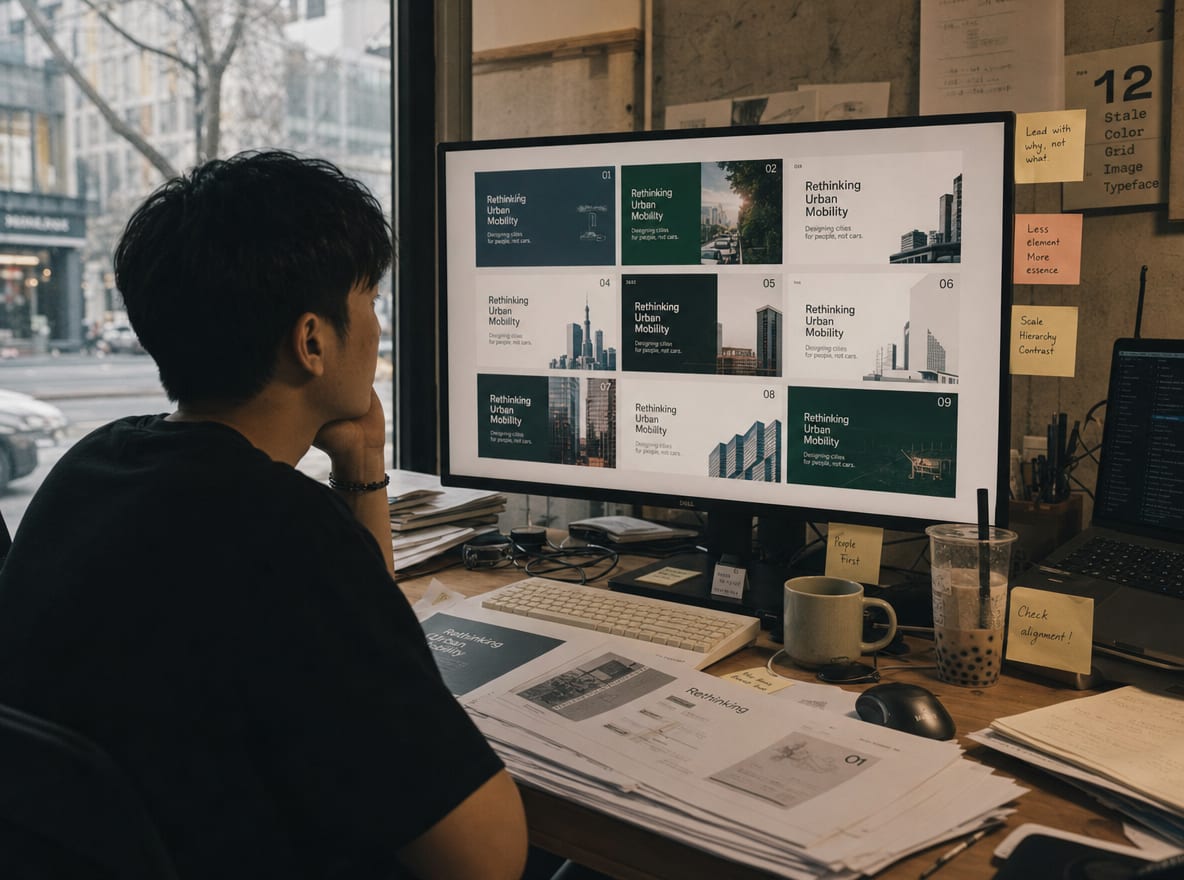
A wide studio monitor displaying a grid of nine slide layout variations of the same title slide.
The rest is execution

AI exploration.

Three to five visual directions generated in parallel using Midjourney, custom LoRAs and Beautiful.ai. The client picks one from a short PDF, not from a live tool.

A designer at a workstation with two studio monitors, a slide deck in progress on one and a linked Excel sheet on the other.
The rest is execution

Production and QA.

Senior designer builds the master in the chosen direction. Charts linked back to source data. Fonts embedded properly. Cross-platform QA runs on a Mac, a Windows machine and at least one mobile preview before anything goes out.

Four printed deck proof sheets and two tablets arranged in a soft fan on a warm walnut desk, each showing the same slide in a different language and aspect ratio.
The rest is execution

Adaptation at scale.

Multi-language versions plus market variants. Aspect-ratio swaps for the stage cut, the print version and the social cutdown. Edge-case slides to cover the sales team's awkward outliers.

What changed

Three shifts that
changed deck design.

The deck-design business has changed more in 2024 and 2025 than it did in the previous decade. Three shifts in particular shape what we charge for now, and where the work actually adds value.

Microsoft Copilot

Narrative Builder went mainstream.

Microsoft shipped Narrative Builder inside PowerPoint Copilot in late 2024 and rolled it broadly into enterprise tenants through 2025. It generates an outline from a Word brief, then populates layouts using imagery from the client's SharePoint asset library. Templafy, which works alongside it, has reported investor-deck build cycles dropping sharply on accounts running both tools together.

Gamma 3.0

Variant generation got cheap, and obvious.

Gamma launched 3.0 in September 2025 and repositioned itself from "AI slides" to a full visual storytelling platform. The headline feature, Gamma Agent, is an AI design partner that restyles decks through natural-language prompts. Enterprise adoption followed, then the reviews started catching up: Capterra has it at 3.7, Trustpilot at 2.0. The pattern is consistent: output starts to look the same after the third or fourth deck. Which is exactly the problem dedicated design still solves.

Beautiful.ai + Claude

Iteration replaced one-shot generation.

Beautiful.ai integrated Anthropic's Claude models last year and rebuilt its Create with AI workflow around iterative refinement: low-fidelity outline first, lock the structure, then commit to design. The shift matters because it admits something the first generation of these tools got wrong. Nobody nails the deck on the first try, and the value sits in the second pass or the third.

The fastest I could create a solid PowerPoint for a client was five days. Now it is cut in half.
Templafy customer testimonial AI Pitch Deck whitepaper, 2025

The tools shortened production. They did not shorten the thinking. That is what we still sell.

A ten to twenty-slide deck is five working days from signed brief. Multi-market sales enablement libraries with 80+ slides and language variants run two to three weeks. Same-day rush is possible on smaller decks. We will be honest about whether it is realistic before we quote.

It depends on scope, format range and language coverage, which is the honest answer though we know it is not the satisfying one. We do not price per slide because the narrative work does not scale that way, and we do not publish a rate card because no two briefs cost the same. After a forty-five minute call we send a firm quote built from the actual brief, not from a template. If the budget does not fit, we say so quickly rather than waste your time on the back and forth.

Three rounds in the standard project quote. Most decks close in two because the narrative locks before any slide is designed. Beyond three rounds we quote hourly, and we flag when a project is heading that way before the bill arrives.

Brand guidelines, your master template if you have one, two or three recent decks you have shipped, the audience for the pitch and the decision you need them to make in the room. If brand guidelines do not exist, we work from your website and recent ad creative, and we build a system as part of the first project.

A senior art director with 12+ years of agency or in-house experience leads every brief and writes the outline themselves. Production designers build under their direction. AIGC engineers handle imagery and the LoRA training when the project needs it. No junior teams running the brief alone, no offshore production farms. The briefs that go sideways always go sideways at the same point: when the senior leaves and the junior takes over. We do not staff that way.

Like you. We train on your brand assets at the start of the engagement, and the master template gets locked before slide design begins. If you do not have a strong brand system, we build one as part of the first project and hand the master file over so your internal team stays on brand after we are done.

You own the deliverables outright. We use commercially safe models (Midjourney Pro, Flux Pro, custom-trained LoRAs on your assets), and the generation workflow is documented in a one-pager that travels with the file in case legal asks. Our Copyright and AI guide covers the current state in detail.

Both. The smallest engagement is a single twelve-slide pitch deck. The biggest we have run was a sales enablement library across fourteen EMEA markets with localized imagery, properly transcreated copy and four aspect-ratio variants per slide. The language work happens in-region, not in a single translation pass.

Editable .pptx and .key files, with master slides, layout variants, embedded fonts and linked data sources where charts pull from Excel or Sheets. PDFs only if you specifically request export-only delivery. Your team can edit on the first pass.

Production teams in Shanghai and the Philippines, with senior creative leads in Paris and Hong Kong. The overlap between those four locations means there is working coverage across roughly fourteen hours of every weekday. We ship into around thirty-five markets, and where languages need cultural review (not just translation) we bring in-region reviewers rather than rely on a single linguist.

Three rounds of revisions are in scope, so if the first direction misses we still have room to course correct. Beyond that, if the pitch lands flat, the file is yours regardless. We would rather hear the feedback and learn from it than walk away with the kill fee.

Fine. We build on your master, match the system and step back. We can audit the existing template and flag what is broken if you want, but we do not push rewrites unless that is the actual problem you are solving.

Yes. Send one deck brief. Five working days later you get the finished deck and an estimate for the next one. No retainer, no commitment, and if it does not land you keep the file anyway.

Try us

Try it on a real
brief.

Send us a presentation job. Inside five working days you get a finished deck in editable PowerPoint and Keynote, with the source files and the linked data. No retainer. No commitment. Whatever we produce is yours.