
Design service / Illustration

Illustration Design.

One visual system, hundreds of usable variants.

A skincare brand called us on a Tuesday, six days before a regional launch. The hero illustration their freelancer had sent over was beautiful and unusable. Wrong aspect ratios, no localized variant, no layered source files.

We hear some version of that story most months. So the workflow is built to make that call unnecessary.

Shanghai studio / Illustration design

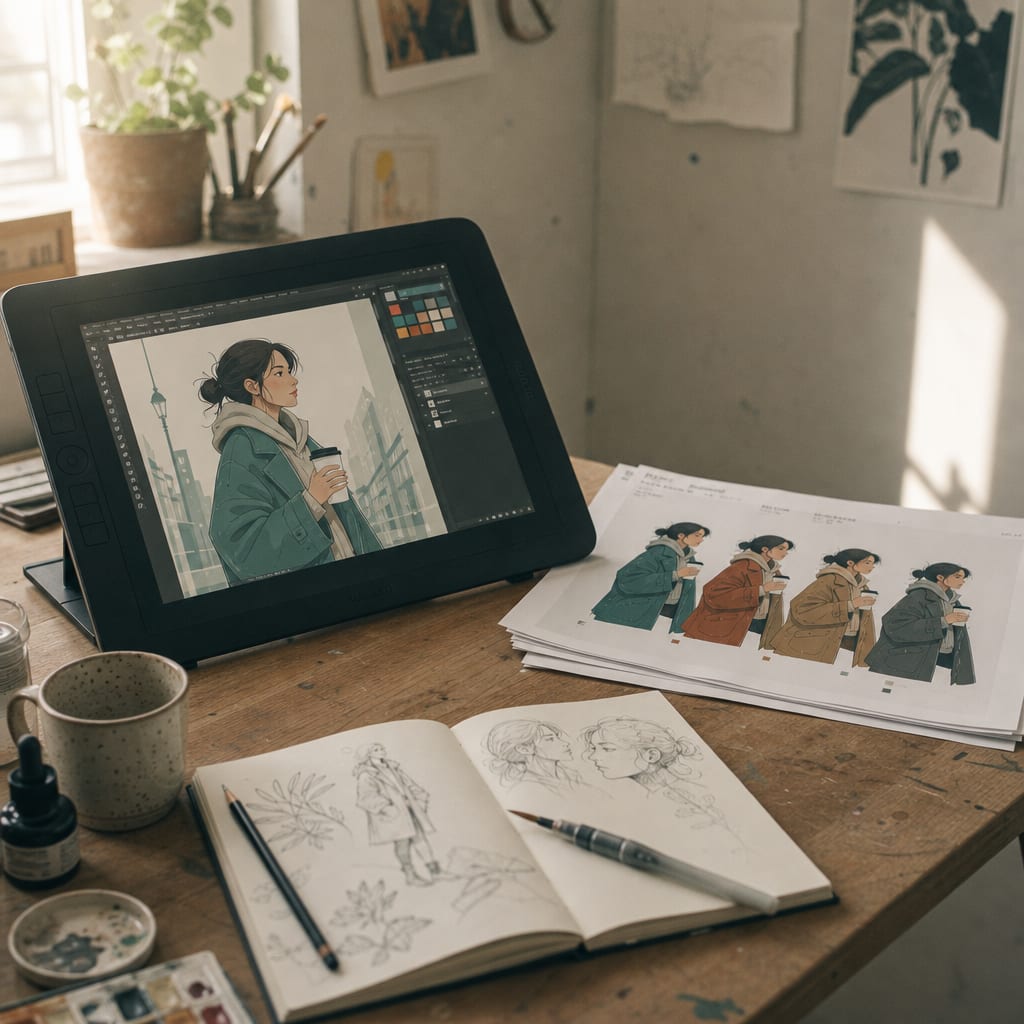
An illustrator's worktable in a sunlit studio: a graphics tablet displays a half-finished editorial illustration of a woman in a teal coat, beside a stack of printed colour variants and an open sketchbook. Studio work / Editorial

Why illustration earns its space

When everything looks AI, the brand that looks made wins.

The category shifted hard in the last eighteen months. Generic AI imagery flooded every feed, every brief, every other pitch deck. Audiences learned to scroll past it.

The brands taking ground are the ones whose visual world reads as authored. AI made polish cheap, which made craft expensive again, which moved real money back toward custom artwork.

40% of marketers now cite authenticity as a bigger concern with AI visuals than speed. Venngage, 2026 Design & Marketing Trends Report.

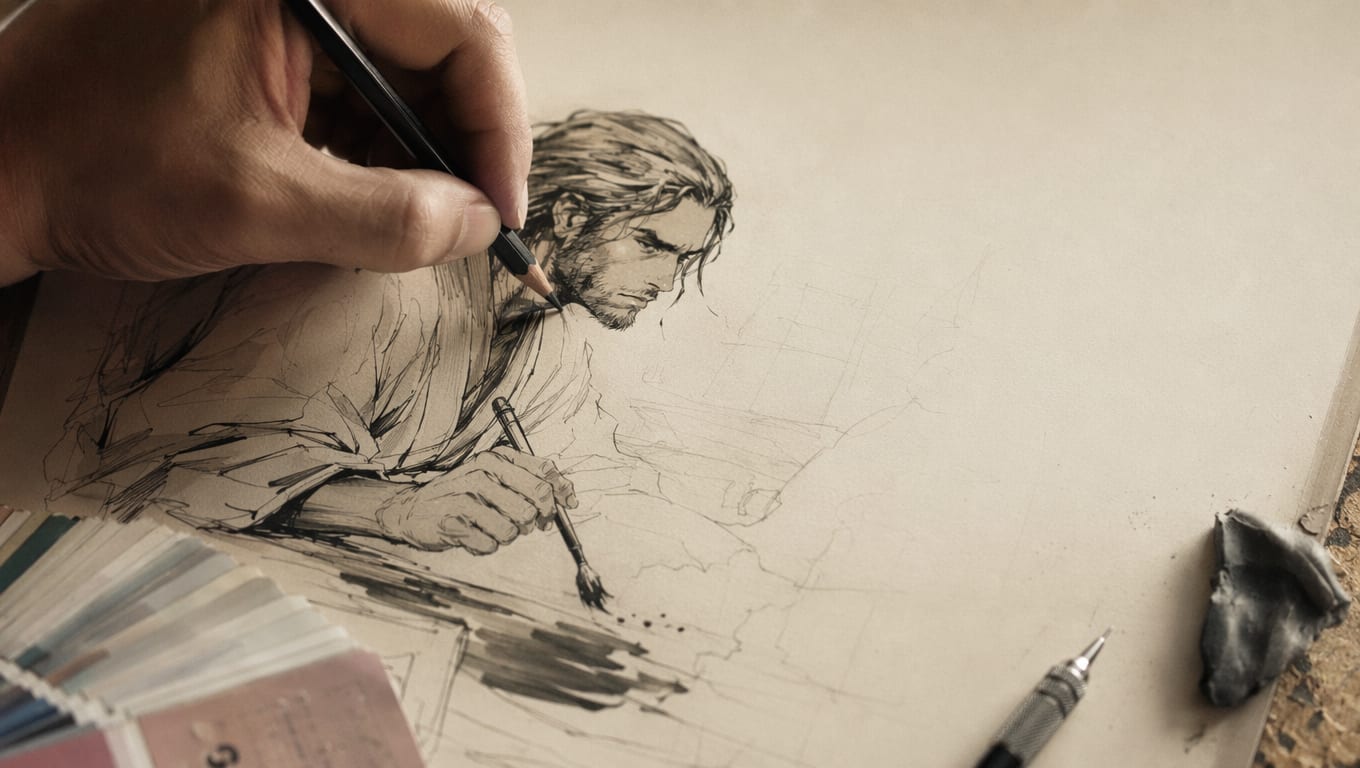
A close shot of an illustrator's hand drawing in pencil on a half-finished editorial illustration, with worn studio tools at the edge of frame.
The authored test

Across roughly 35 illustration engagements in the last two years: approval up from 22% to 78%, content cost down 60%, output 7x, with no new hires.

22% Creative approval rate Up from 22% before
0% Lower content cost On recent campaigns
0x Asset output Without a single new hire

The work, defined

Eight categories, one visual system.

The brief that lands is rarely "draw me one picture." It is usually forty drawings, six surfaces, three markets, by next month. The work is built around two lanes, with every named category surfaced as scope.

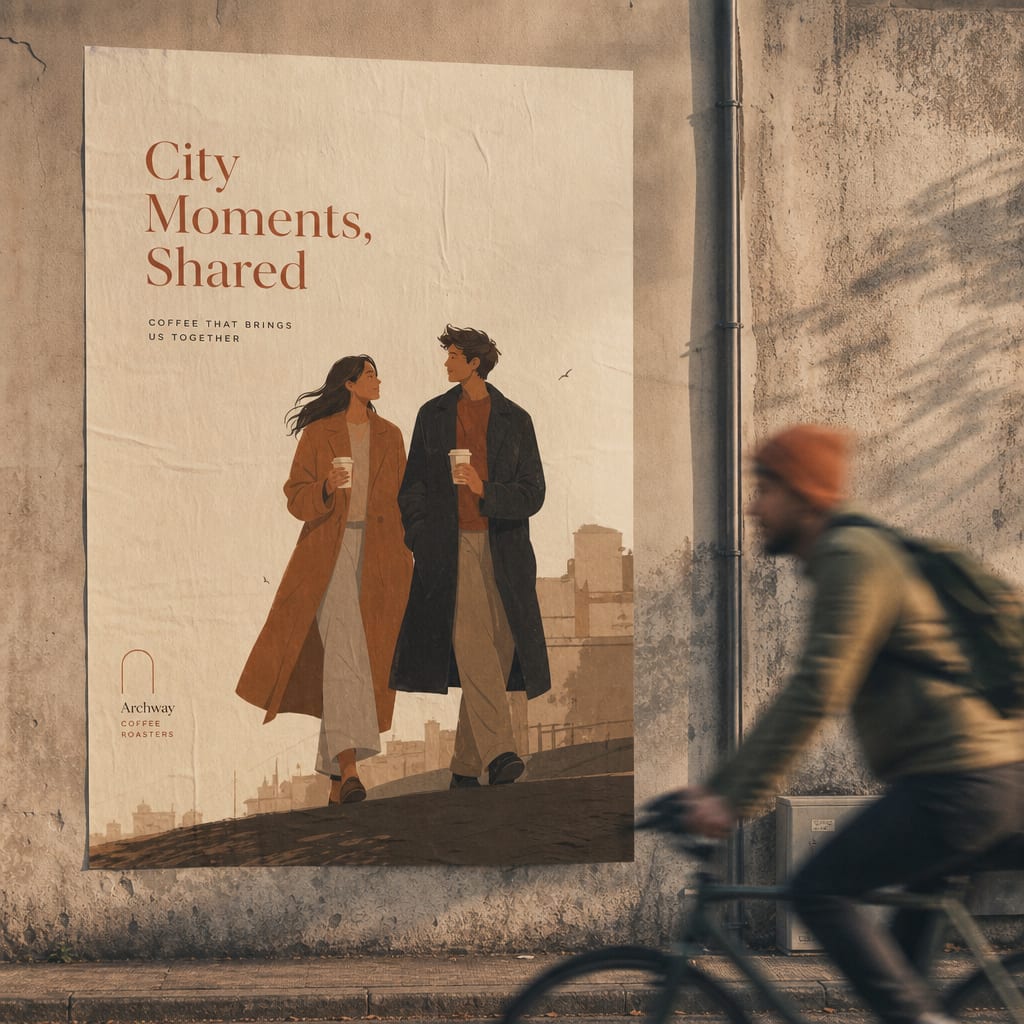
An illustrated out-of-home poster pasted to a weathered concrete wall on a quiet side street, a cyclist passing in soft blur.
Brand & commercial

Coverage

Brand-facing illustration that earns the buyer.

The work that has to land on a wall, in a hand, on a shelf.

Editorial and content libraries, paid-social and out-of-home hero artwork, illustrated packaging, mascot systems and character rigs. One concept gets adapted across square, vertical, horizontal and outdoor crops; the focal weight rebuilt for each canvas so nothing drops out at the edges.

Most briefs come in with forty drawings across six surfaces by next month. The system is built before the volume starts, so every piece reads as one hand.

In scope

  • Editorial spots
  • Campaign heroes
  • Out-of-home
  • Paid social
  • Packaging illustration
  • Mascot systems
  • Character rigs
  • Retail point-of-sale
  • Print collateral
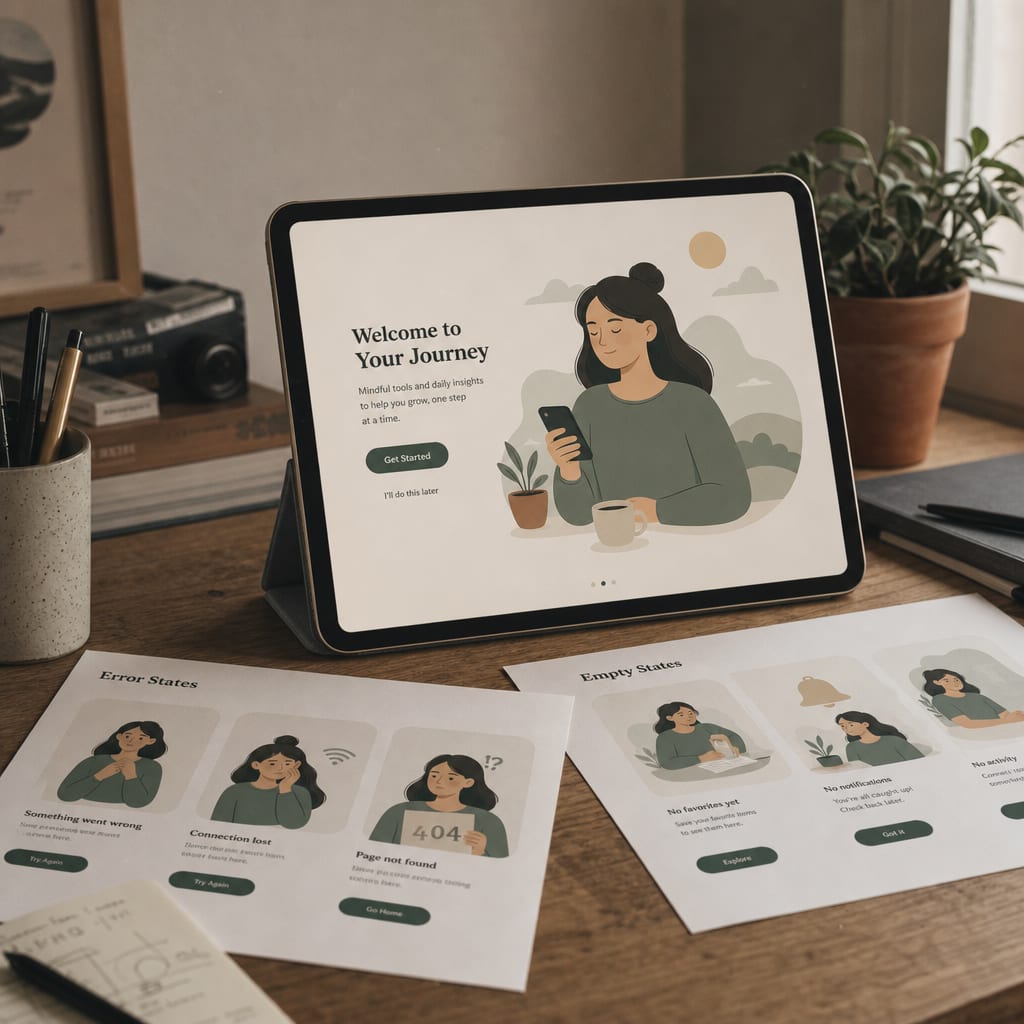
A tablet on a wooden desk displaying a flat-vector app onboarding screen with an illustrated character, surrounded by printed reference sheets for error and empty states.
Product, data & motion

Coverage

Inside the product, inside the feed.

Empty states, onboarding sequences, error pages, feature illustrations for product surfaces. Patient journeys, supply chain maps, annual report visuals, comparison charts. Looping social spots, animated stickers, Lottie files for screens that move.

Format constraints are tight (vector, scalable, palette-locked) and the asset count usually runs into the hundreds. The trained model layer keeps every piece inside the locked style.

In scope

  • UI illustration
  • Empty states
  • Onboarding sequences
  • Infographics
  • Data illustration
  • Annual reports
  • Lottie & motion
  • Animated stickers
  • Conference & event

Contact sheet

Selected artwork.

Concepts and finished pieces, authored in the studio. Each sample shows a different lane: packaging character, editorial library, retail point-of-sale, mascot, hospitality map, pharma infographic.

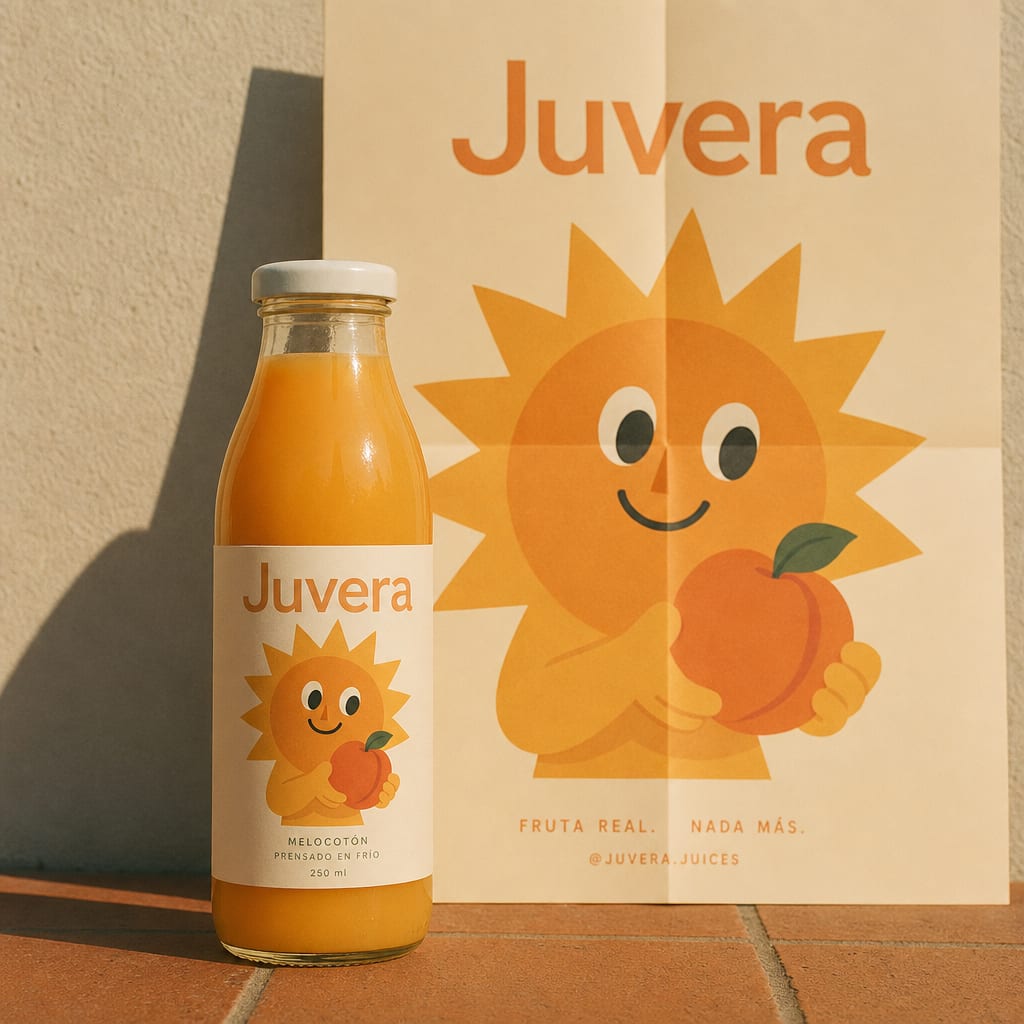
A glass juice bottle illustrated with a flat-vector sun character holding fruit, behind it a folded out-of-home poster of the same character.
Juvera Beverage character system
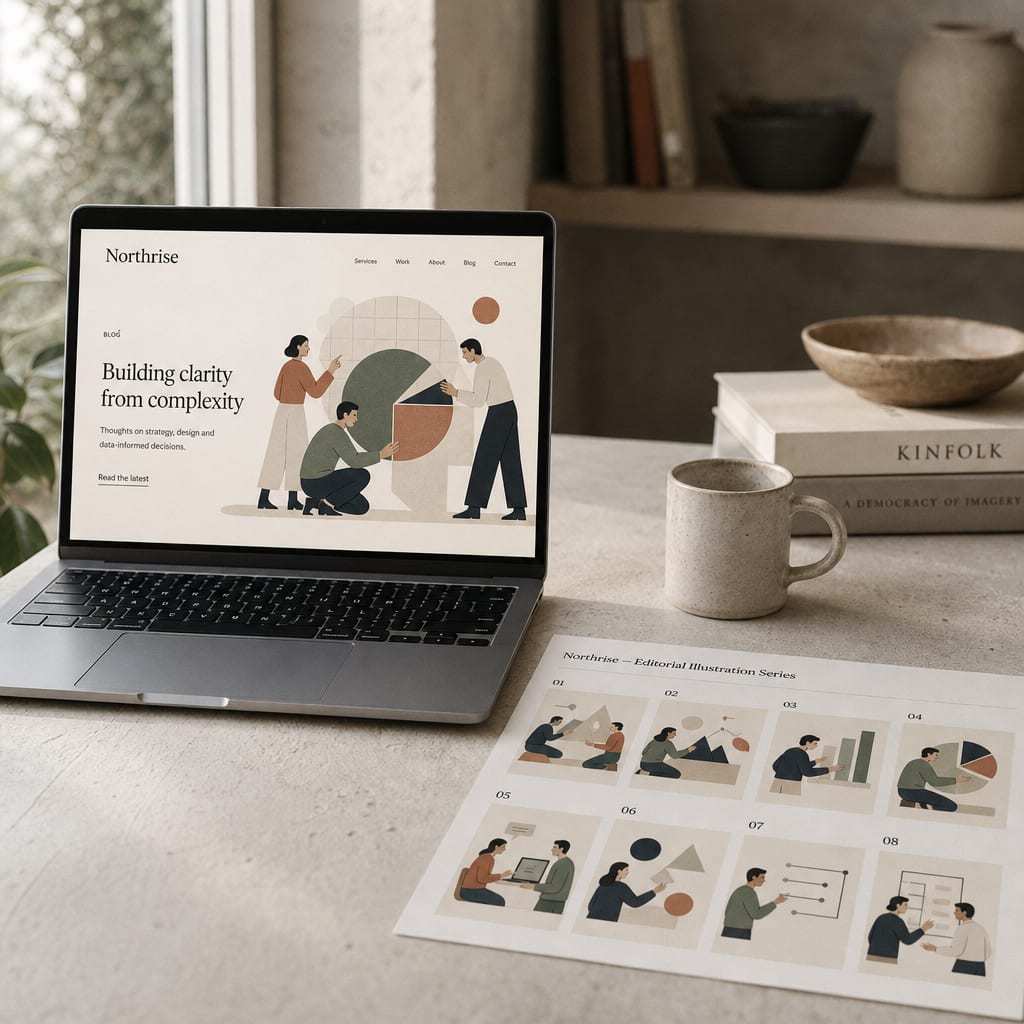
A laptop displaying a Northrise editorial illustration of figures around an abstract data shape, beside a printed contact sheet of related spot illustrations.
Northrise SaaS editorial library
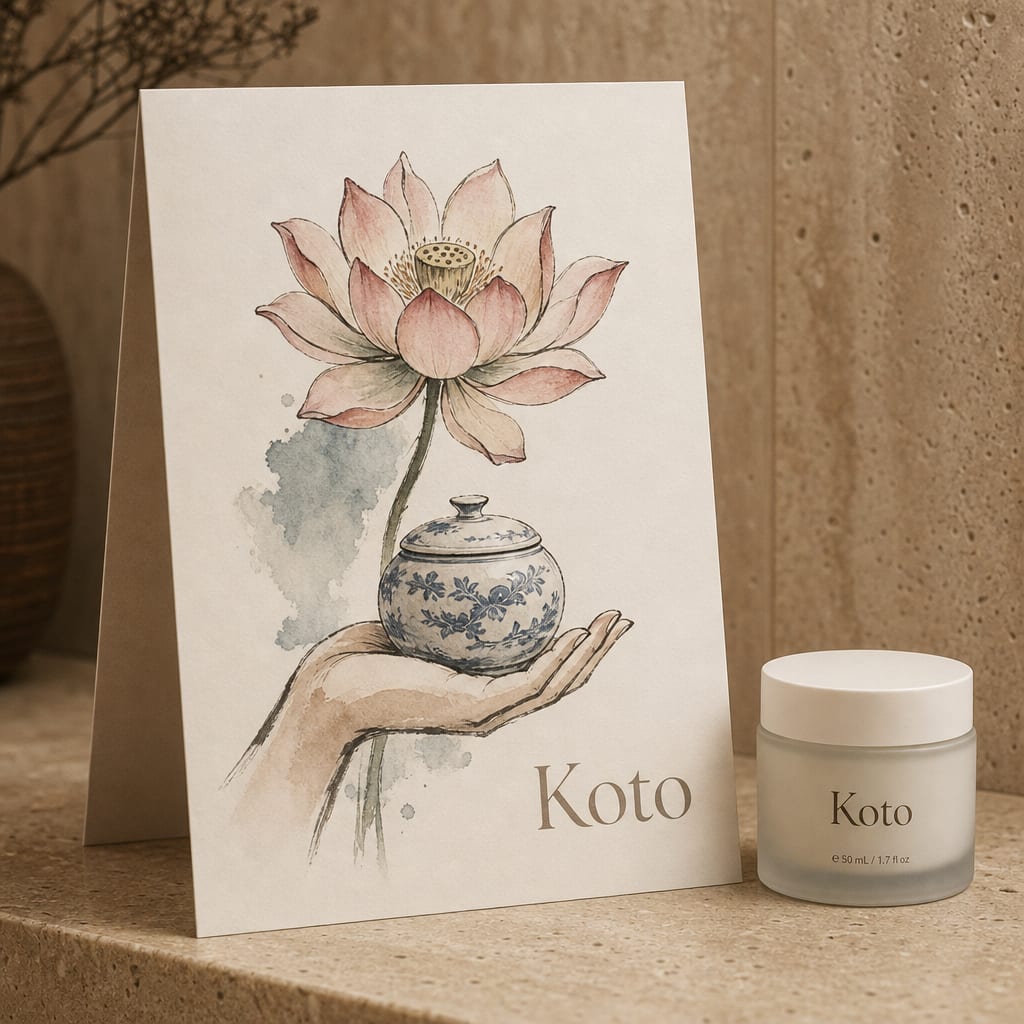
A retail point-of-sale poster on travertine, carrying a hand-painted ink-and-watercolor lotus and a hand cupping a porcelain jar, with the Koto wordmark.
Koto Beauty retail point-of-sale
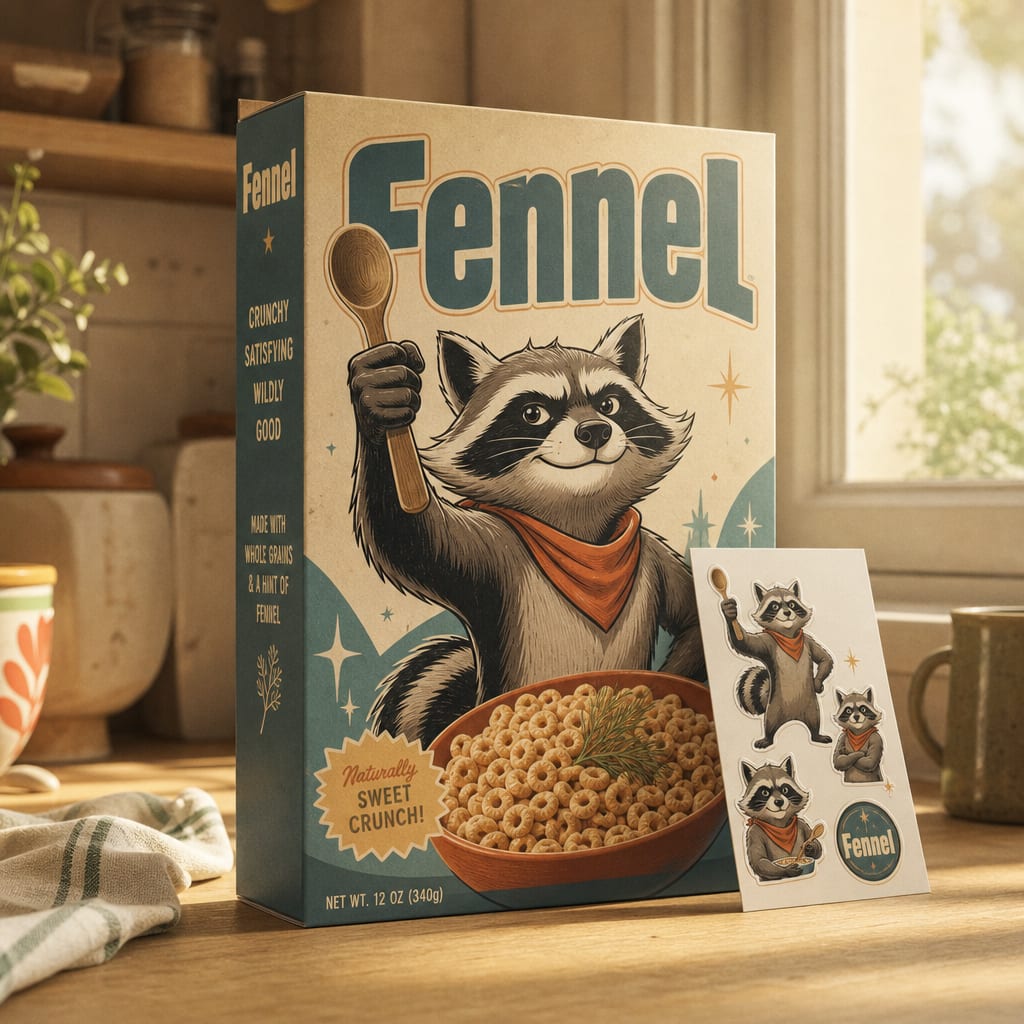
A cereal carton on a kitchen counter illustrated with a graphic-novel raccoon mascot raising a spoon, beside a sticker sheet of the same mascot.
Fennel FMCG mascot system
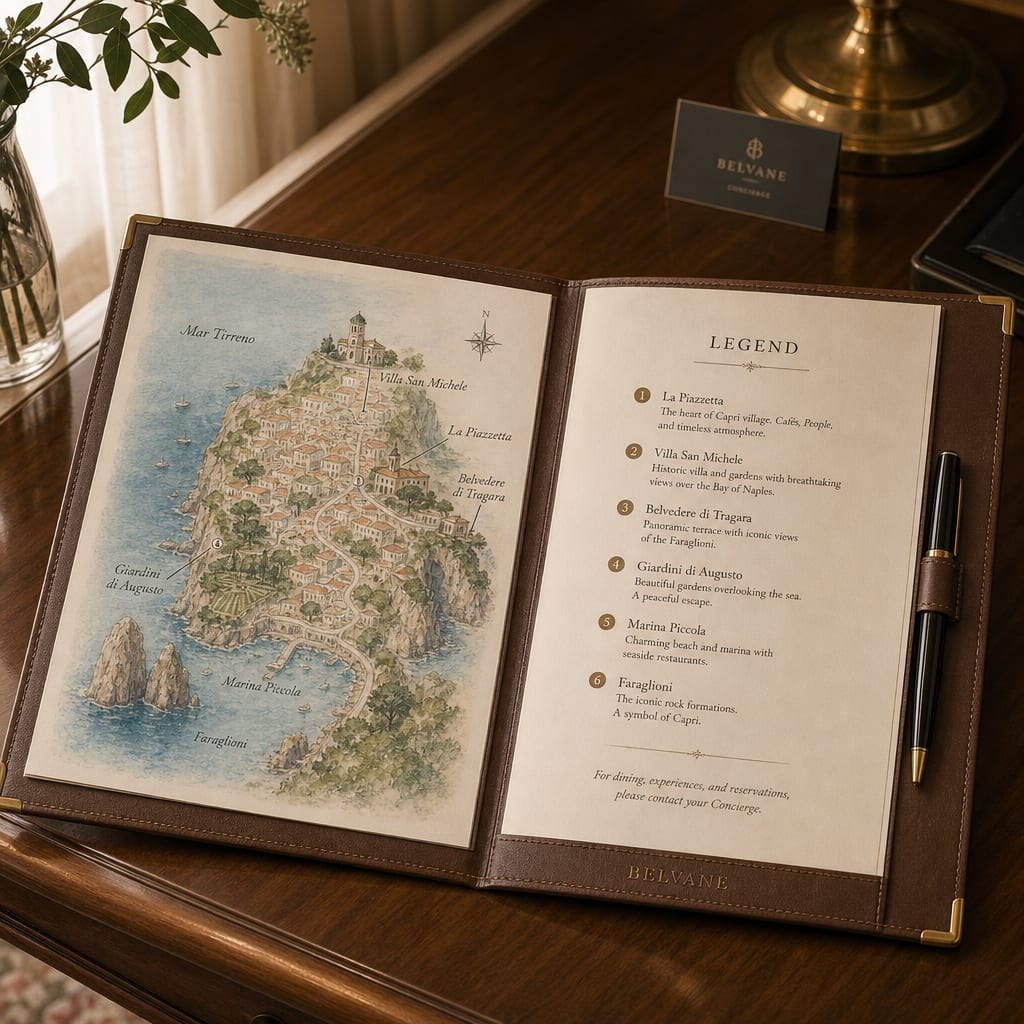
A leather concierge folder open on a walnut desk, the left page a hand-drawn watercolor map of a Mediterranean coastal town and the right page a serif key.
Belvane Hospitality concierge artwork
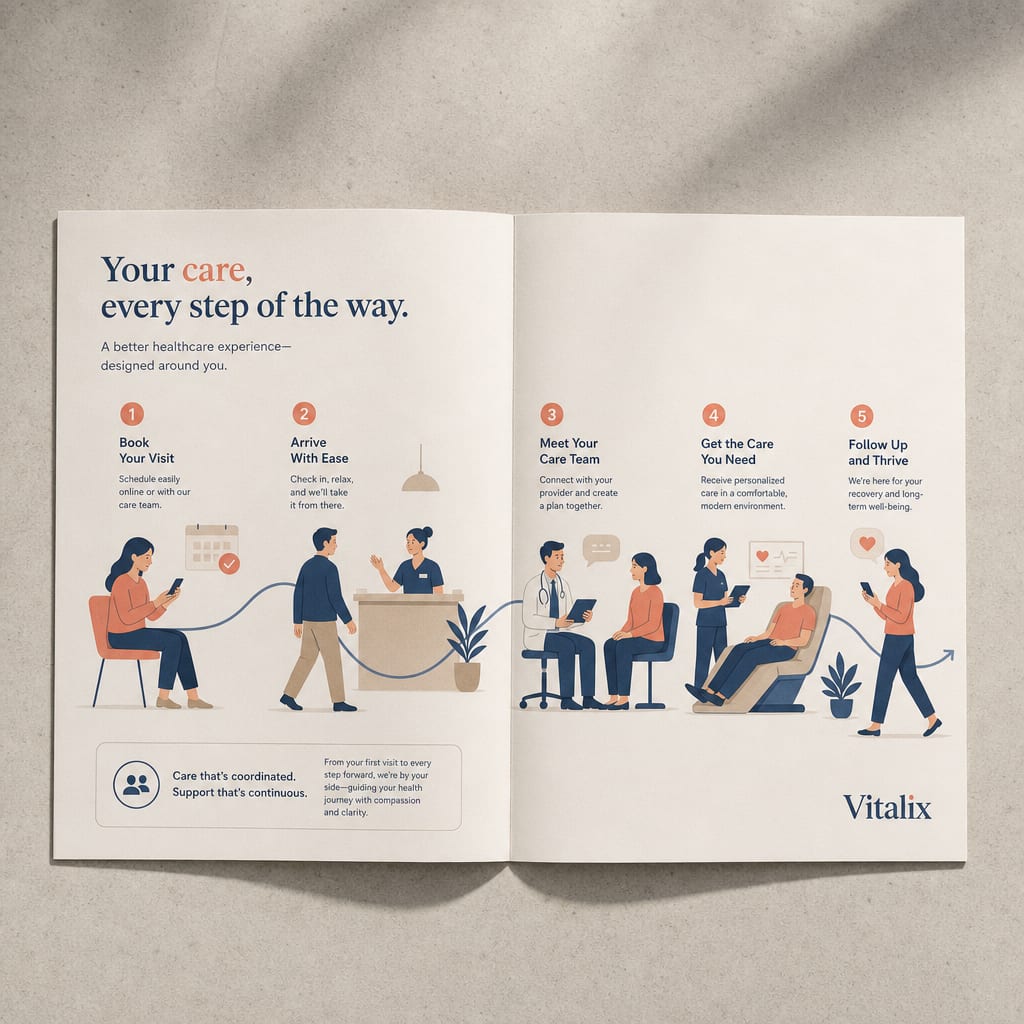
A printed brochure spread on pale concrete carrying a flat-vector patient journey: five visit stages connected by a soft curving line.
Vitalix Pharma patient-journey
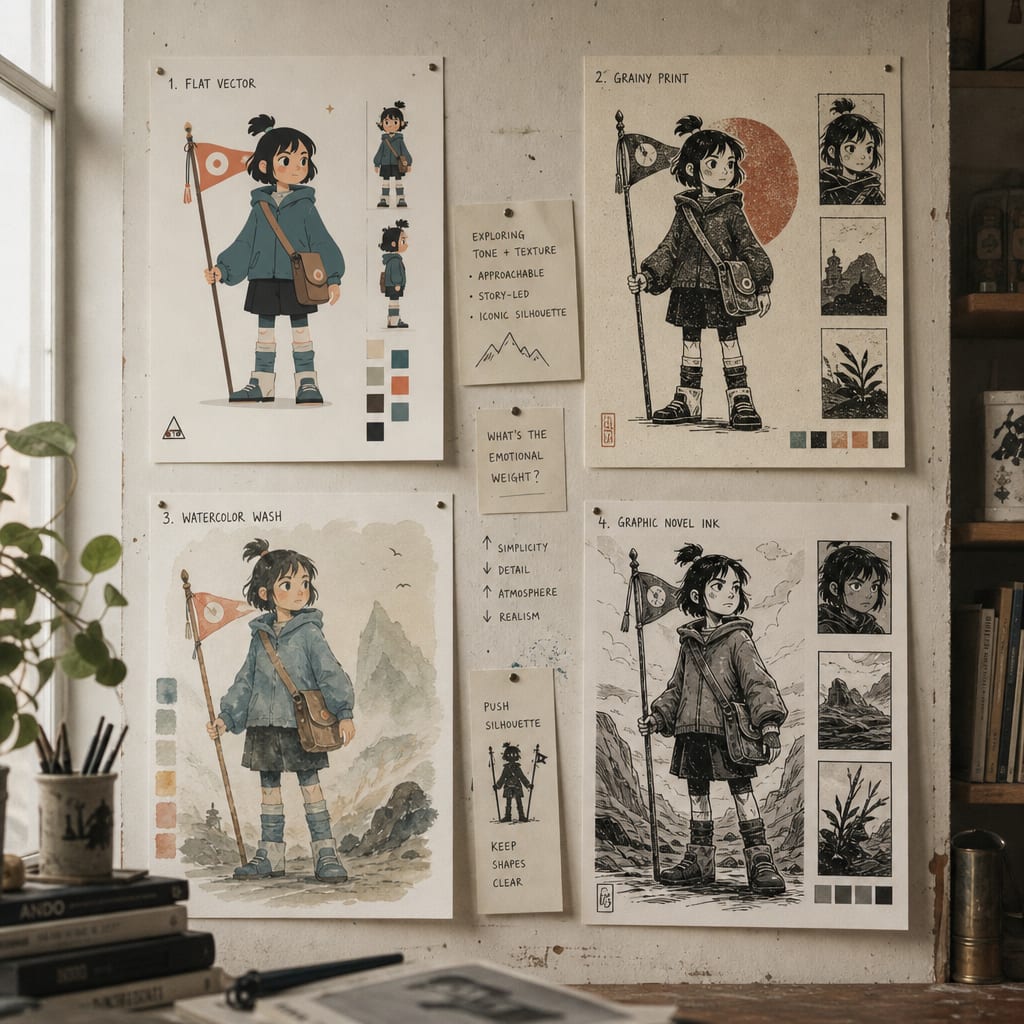
A studio wall pinned with four printed style-direction sheets for the same character, each in a different visual world.
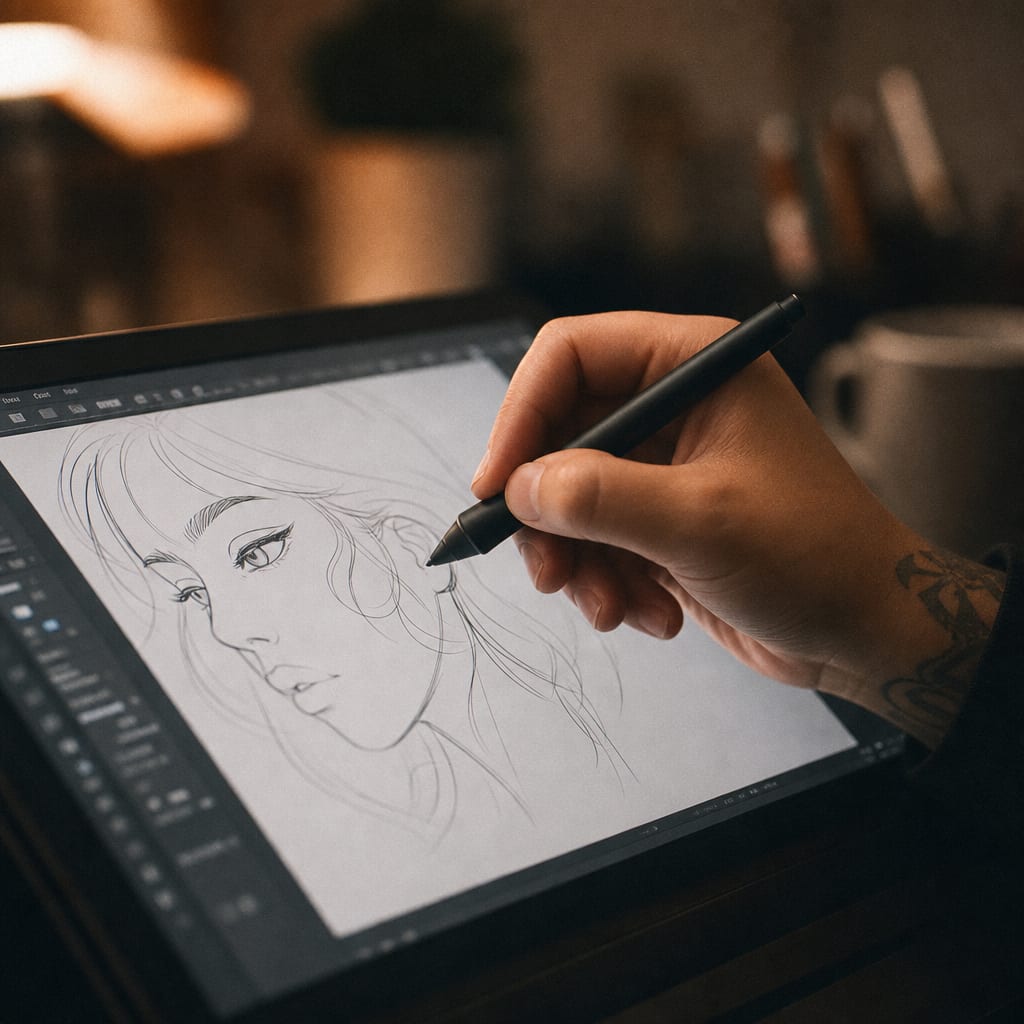
A close shot of an illustrator's hand holding a stylus over a graphics tablet, drawing a stylized face in line.
10 days First three style directions on a fresh brief

The craft

Style is the brief.
Volume is the engine.

The first artwork is not the deliverable, it is the spec. Once a senior illustrator nails the style, line weight, texture and character logic, that system generates the next two hundred pieces with everything still reading as one hand.

Style families on offer span flat vector, hand-drawn line, watercolor, gouache, painterly digital, comic and graphic novel, retro and printmaking, 3D stylized, paper-craft and collage, and editorial fine-line. Each brief is staffed with the illustrator whose hand the work calls for.

  • ComfyUI graphs
  • Nano Banana
  • Seedream v4
  • Midjourney
  • Hunyuan & Qwen
  • Illustrator
  • Procreate
  • Photoshop

ComfyUI as the production backbone, locking a style through node graphs that run hundreds of variants without prompt drift. The model choice moves with the brief: Nano Banana for photoreal integration, Seedream for line work, Midjourney for painterly mood, the Chinese models for graphic Asian aesthetics. Tool is not the religion, the result is.

The taste call upstream, the production economics downstream. That is the whole job.

Our process

Creative is where
it is won.

The shift AI brought to illustration is the one it brought to print and to photo. The technical floor collapsed. Anyone can generate a picture now. The bottleneck moved upstream, to taste and to the editorial call on which image is worth shipping.

First two steps are where it is won. The rest is execution.

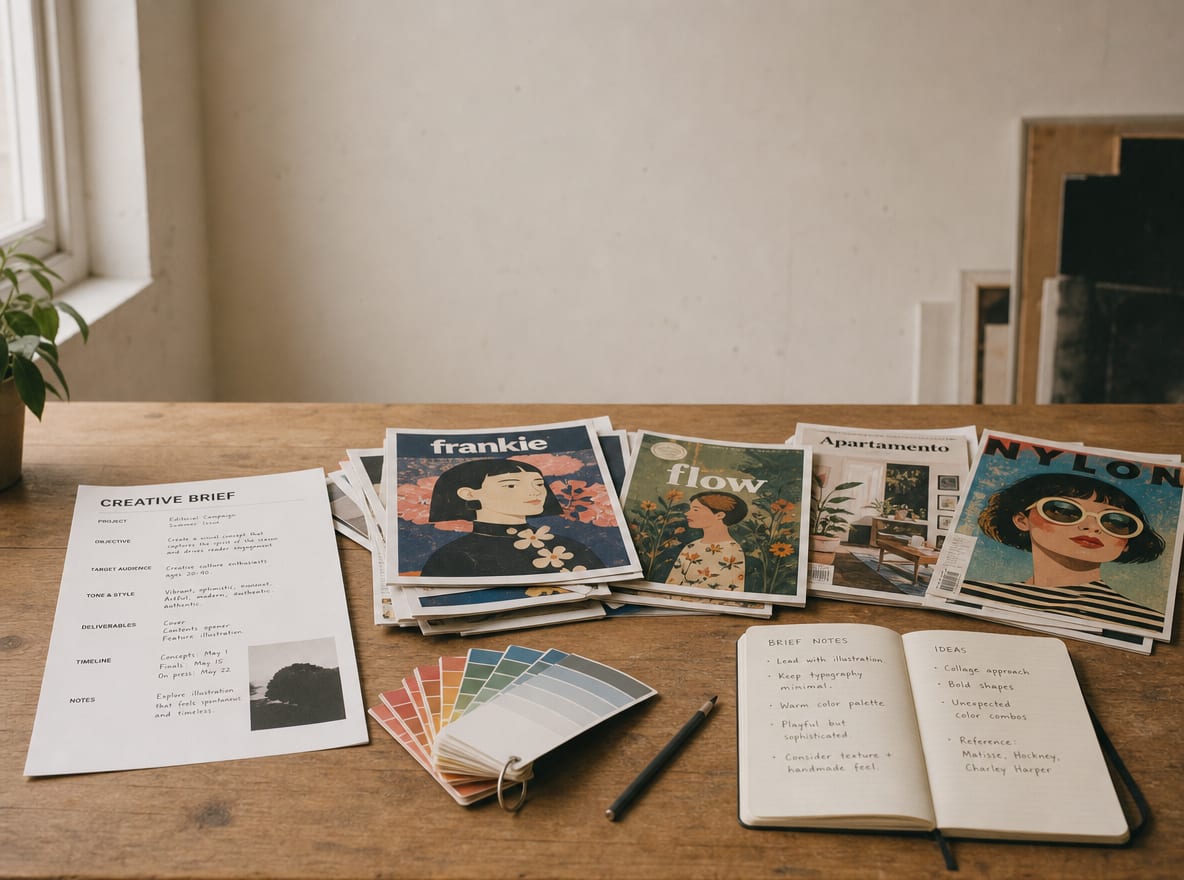
A studio worktable scattered with a printed brief, magazine tear-sheets of illustrated covers, a color swatch fan and handwritten notes.
Where it is won

Brief and visual world.

Audience, surfaces, brand mood, style references and exclusions, regulatory and accessibility constraints, deliverable count, market variants, timeline.

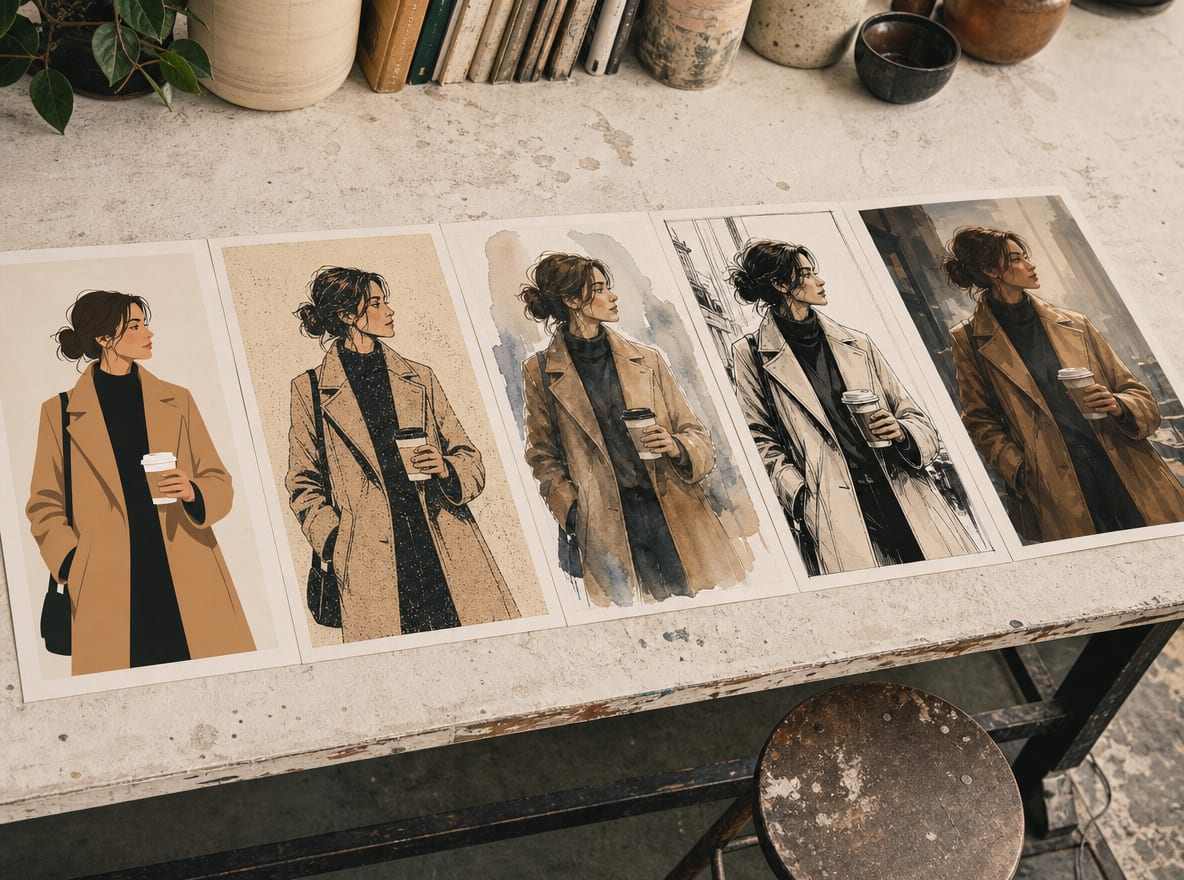
Five printed illustration sheets on a long worktable, each rendering the same character in a different style: flat vector, grainy print, watercolor, graphic-novel ink, painterly digital.
Where it is won

Style development. The step that matters most.

A senior illustrator builds three to five style directions. Real artworks against the brief, not mood boards. One is picked, or two are fused, and the visual system is locked.

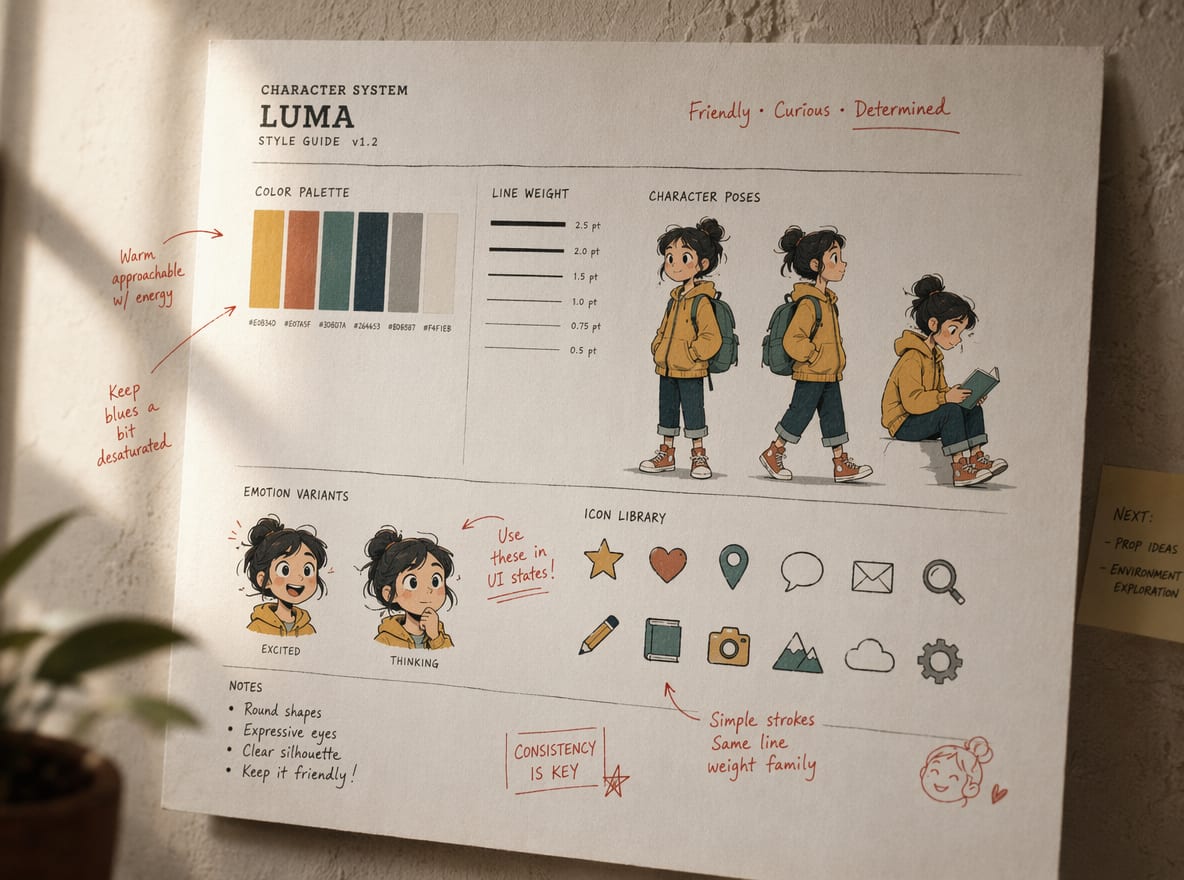
A printed illustration style guide on a plaster surface: palette swatches, line-weight samples, character poses and emotion variants annotated in red marker.
The rest is execution

System build.

Palette, line weight, texture, composition logic, character or icon library, motion behavior where relevant. The spec that lets us produce at volume without drift.

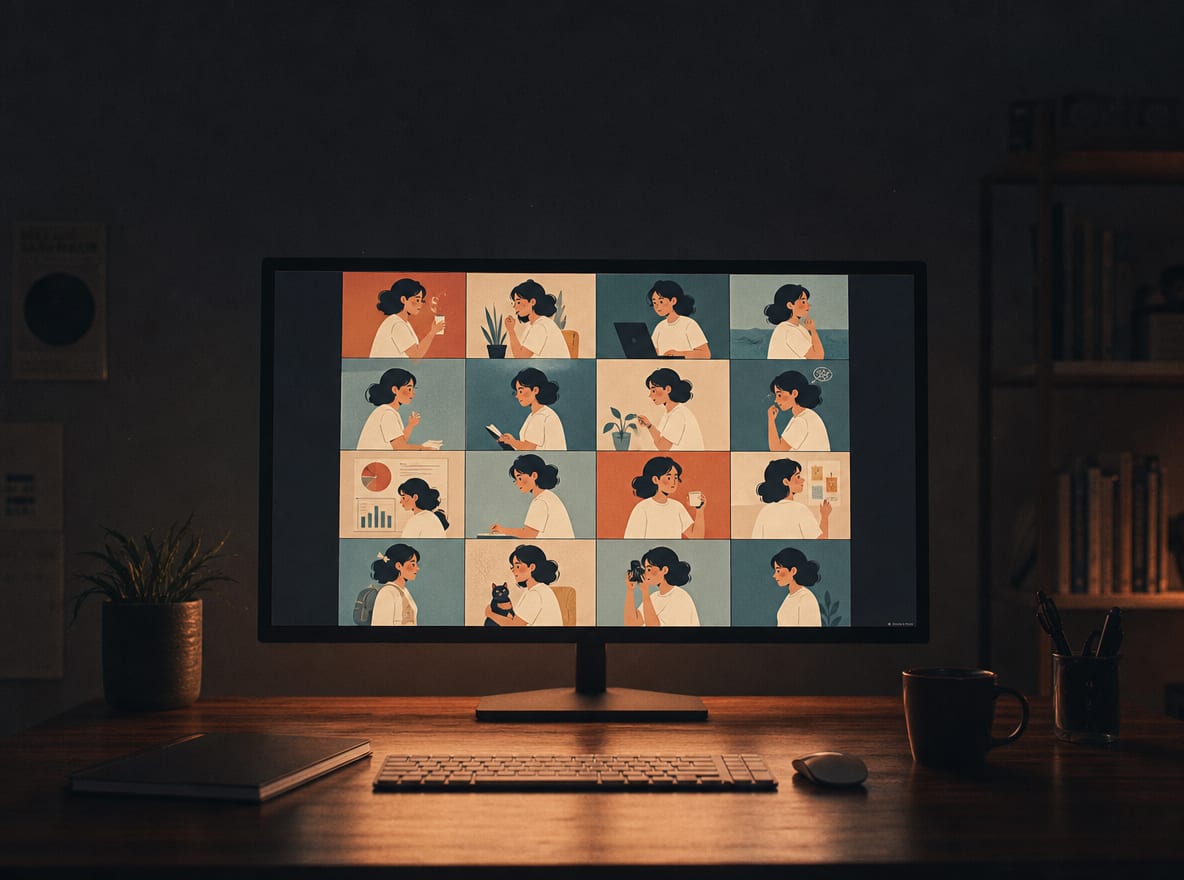
A grid of sixteen variant editorial illustrations of the same character, all in the same flat-vector style, on a wide studio monitor.
The rest is execution

AI-led production.

Hundreds of variants in parallel, all inside the locked system. Photoreal mockups in the world the work will live in, so you approve in context.

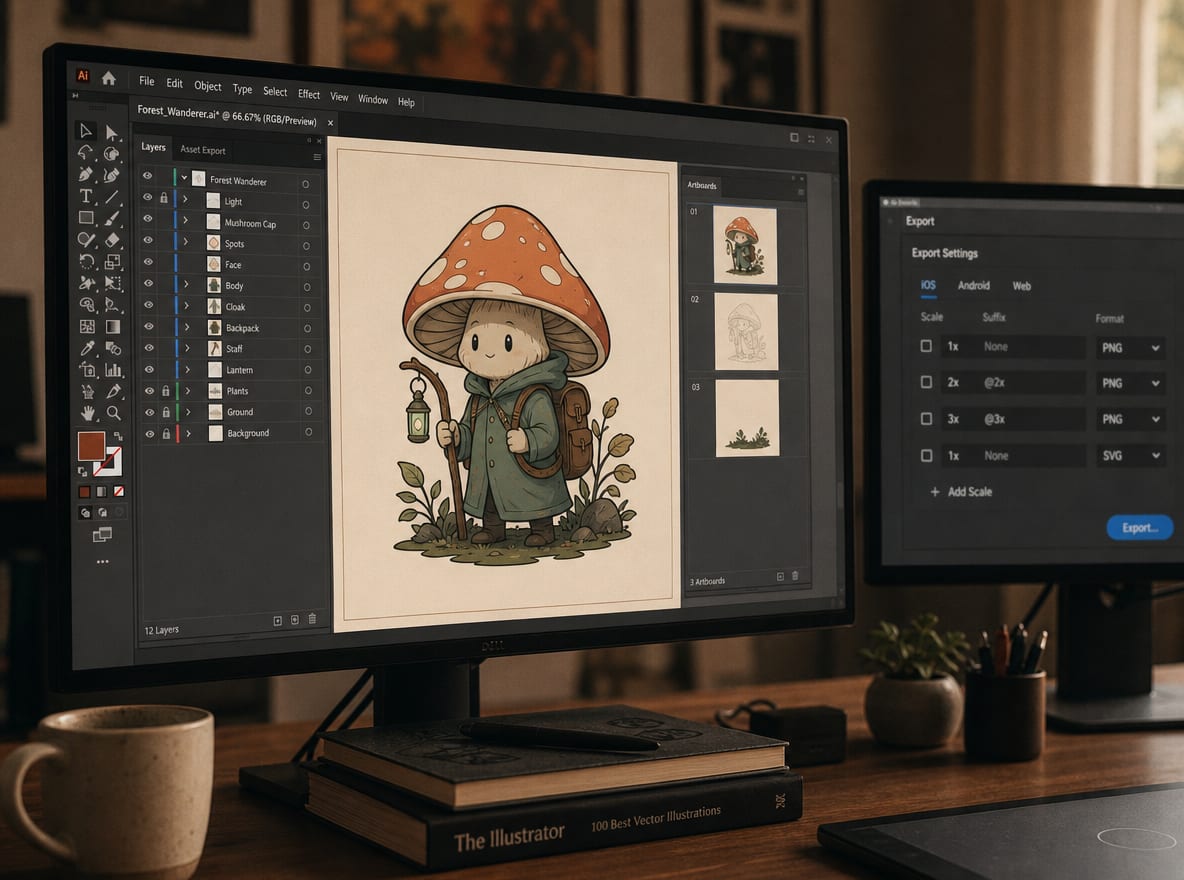
A designer's monitor showing an illustration source file in a vector design app with layer and artboard panels, finished character artwork on the artboard.
The rest is execution

Finishing and source files.

Vector and raster, layered source files, font outlines, color profiles, market variants. Ready for your brand-asset DAM on the first pass.

Where budget moved

Brands buying back
illustration share.

Three documented commissions since 2025. The money moved sharply, fast, and toward the visual world that reads as authored.

Filed 2025 / Burger King · packaging
70s Diner illustration · Gen Z + millennials

Chunky illustration, on a fast-food carton.

Burger King leaned into chunky 70s diner illustration on packaging and cut through with both Gen Z and millennials. A category where every competitor still leans on flat photography.

Filed 2025 / Tesco Finest · tea range
1 Illustrator, the whole shelf

One hand, a whole tea range.

Tesco commissioned a single illustrator across its Finest tea range and turned a commodity into a premium experience. The wordmark stayed; the illustration sold it.

Filed 2026 / Visa · FIFA World Cup
48 Host cities, local artists

A global art collection, market by market.

Visa built its 2026 FIFA World Cup campaign around a Global Art Collection, with each host city illustrated by a local artist. Authored, not assembled.

Ten days for the first three style directions on a fresh brief. Two to three weeks for a full visual system build with the first batch of finished artwork. Faster on a brand we already have a trained model for. Rush is available when the calendar is tight.

Project-based for one-off systems. Monthly retainer for ongoing volume across editorial, social and campaign work. Quarterly advance billing for retainer clients. We quote firm after the first call once the brief and deliverable count are clear.

Two ways. First, the style direction is approved before any production starts, against real artworks, not mood boards. Second, the brand-trained model layer sits on top of the base systems and pulls everything toward your locked references. If the output starts drifting toward the generic AI aesthetic, we redo it on our time, not yours.

Three. Most projects close inside two, because the style direction is locked in step two of the process. Beyond round three we quote hourly.

Brand guidelines if you have them. Style references from inside and outside your category, both for what you like and what you want to avoid. Audience description. Surface list, where the work will live. Deliverable count, format and aspect ratios. Market variants, and any regulatory or accessibility constraints. If brand guidelines do not exist, we work from what does and flag the gaps.

Senior illustrators with agency backgrounds (Publicis, Ogilvy, WPP, plus illustration-only studios) own the style direction. AI specialists run the production volume against the locked system. No junior teams running the brief alone, no generic AI output shipped as finished work.

Full commercial rights, worldwide, in perpetuity, for any medium. Source files included. No additional licensing fees if you reuse the artwork in a different market, format or campaign later.

You own the final deliverables. We use commercially safe model bases, layer brand-trained models on top, and document the workflow. Under current US, EU and UK guidance, human creative contribution (style direction, selection, editing, finishing) is what supports copyright eligibility, and that is structurally how the process is built. Full detail in our Copyright and AI guide .

A kill fee covers the work completed up to the cancellation point, plus a share of the remaining scope depending on how far in we are. We document each stage so the calculation is transparent. Anything we have already shipped is yours to keep regardless.

Both, though the system is where we earn our keep. Some clients come for a single key visual. Others arrive with 400 editorial spots, 80 packaging illustrations, 12 OOH heroes and a mascot system, all in one consistent style across four markets. The workflow scales either way.

It will. The brand-trained model built for you is yours and is not used on other clients. The base models are shared (everyone in the industry uses them), but the trained layer on top, the prompt library, the seeds and the locked style references are exclusive. That is what makes the work read as yours.

Yes. Send us one brief. Inside ten days you get three style directions and one finished piece in your preferred direction. No retainer, no commitment, the work is yours either way.

Try us

Try it on a real
brief.

Send us an illustration brief. Inside ten days you get three style directions and one finished artwork. No retainer, no commitment. Whatever we produce is yours to keep regardless of whether you go ahead with us.