Design service / Motion

Motion Design.

Animated assets that hold the brand, at the speed the feed eats them.

A skincare client signs off on a 60-second hero on Monday. By Friday the growth lead is back, asking for 14 Meta cutdowns, six vertical hooks, three homepage loops, and a Mandarin Douyin version three weeks out.

That call now lands almost every week. Two animators on After Effects can't keep up. We work it differently: senior direction on the hero, AI-assisted production on the variants.

Shanghai studio / Hero direction + variant pipeline

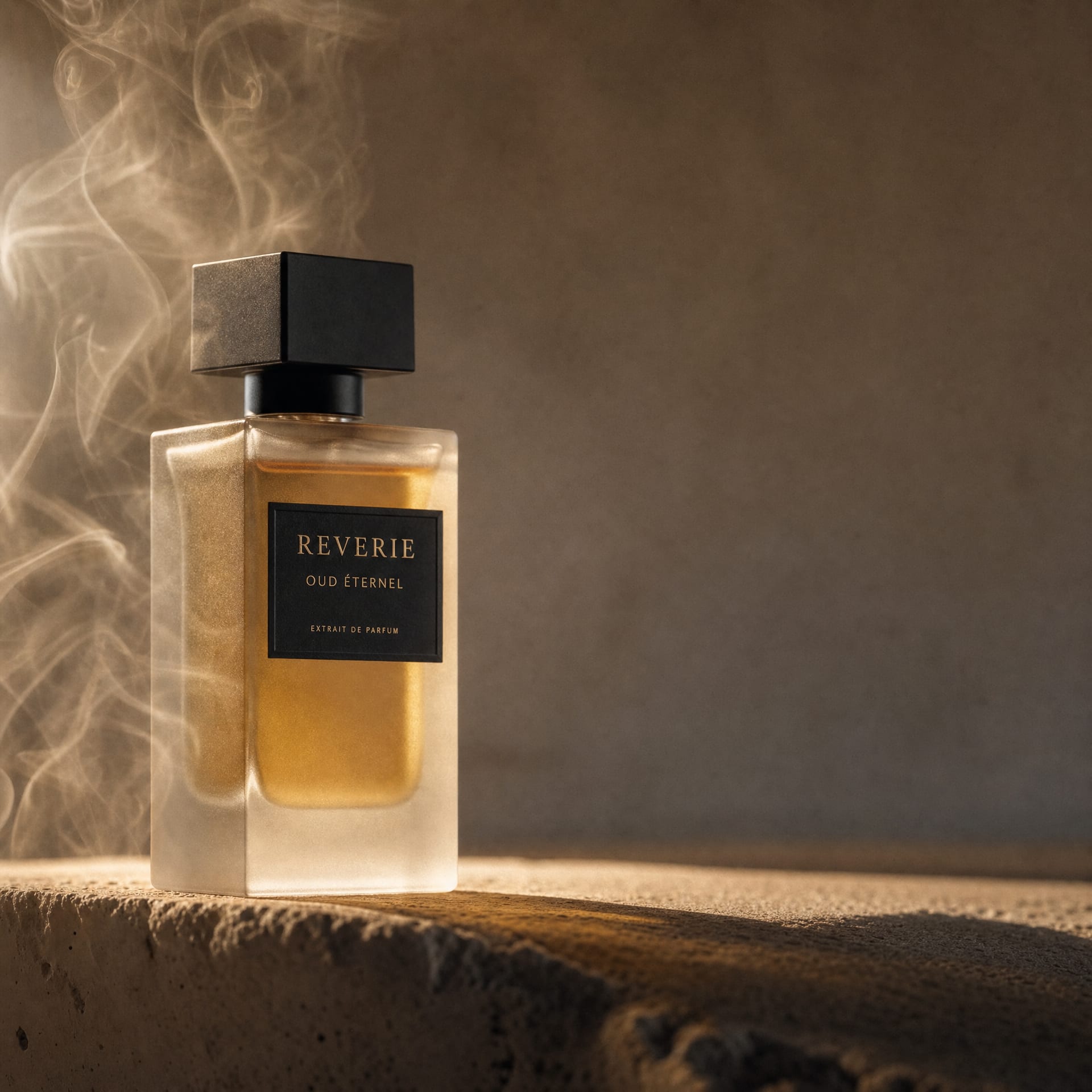
Single hero frame from the Aerith fragrance ident, a frosted glass bottle wrapped in drifting incense smoke under a single warm sidelight. Studio work / Aerith

Why it matters

Why the feed eats
so much creative.

Meta's Andromeda rollout has rewritten the feed. Brands shipping 20-plus new ads a month see 65 percent higher ROAS than brands shipping under 10. Static creative on its own no longer earns the impression.

The top third of advertisers on Meta now run roughly 395 live ads at any time. Fatigue windows have collapsed from six weeks to two or three, and creative operations now make up around 80 percent of performance work.

Source: Segwise, Meta Andromeda Creative Strategy Playbook, 2026.

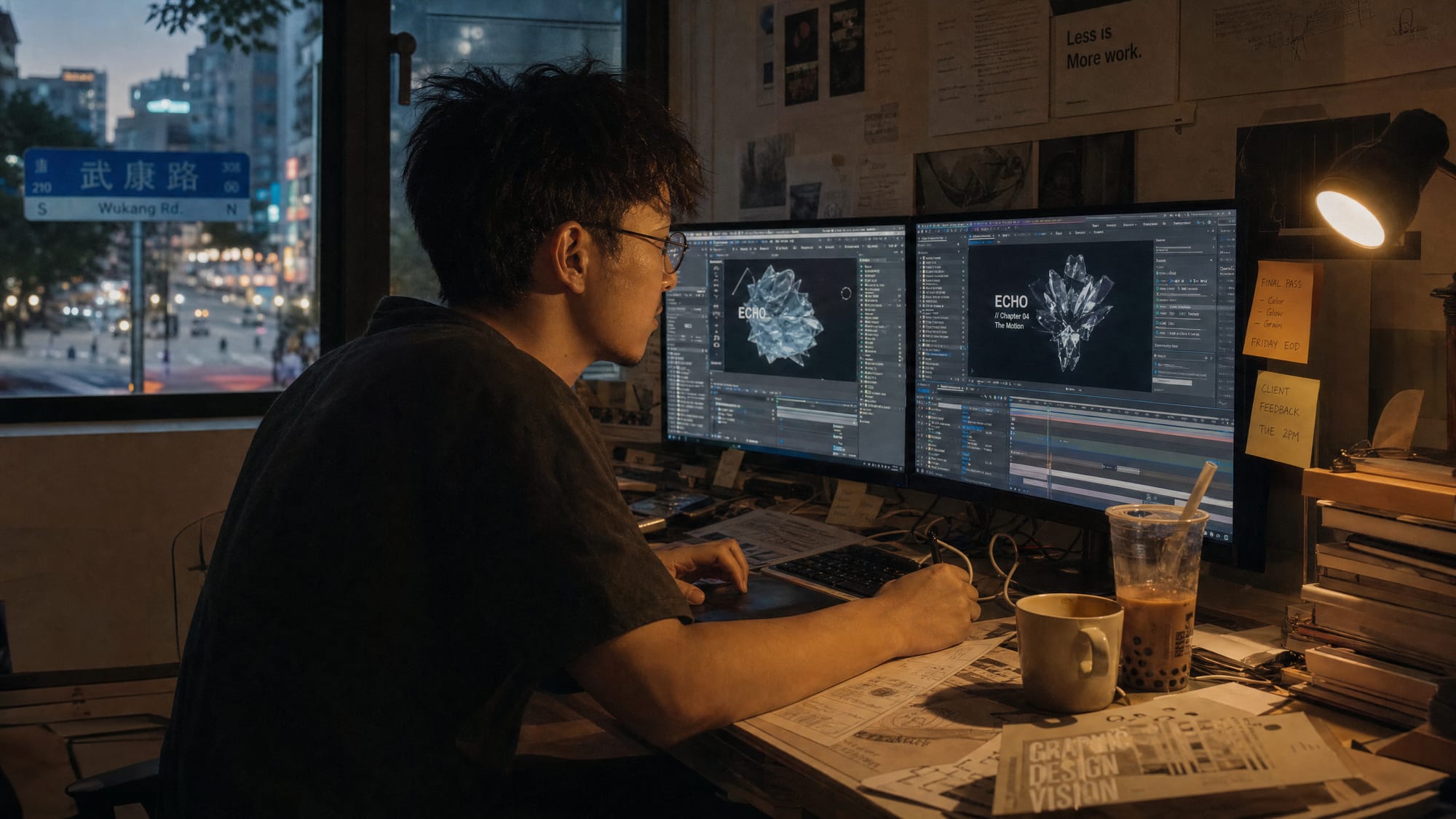
A motion designer at a dim studio workstation, dual monitors glowing with motion frames in progress under a single warm desk lamp.
Shanghai studio, evening shift

Across roughly 60 motion engagements over the last two years, clients report faster turnarounds, lower cost per asset, and far higher output. Averages, not single-project highs.

0x Faster delivery On multi-format campaigns
0% Lower cost per asset On recent social campaigns
0x Cutdowns per hero Without a single new hire

The work, defined

Every format, one motion system.

A 15-second hero and a 6-second bumper share almost nothing in how they earn attention. So we staff each format with motion designers who have shipped it before, all working off one motion system.

A still frame from the Aerith fragrance ident, an example of brand motion work.
Brand & broadcast

Coverage

What we cover on brand and broadcast.

Logo idents, brand stings, title sequences, conference openers. Explainer and product animation for SaaS demos, fintech walkthroughs, pharma, app onboarding, and the looping hero animations at the top of a homepage. Broadcast covers TV commercials, branded content and conference films. 3D and hybrid is where photoreal product animation, character work, and live-action plus motion graphics come together.

Out-of-home animation runs from 6-second airport DOOH to programmatic billboards and Times Square LED. Built to network specs, silent by default.

In scope

  • Brand idents
  • Title sequences
  • Explainer & product
  • SaaS demos
  • Homepage loops
  • TV commercials
  • Branded content
  • 3D & hybrid
  • OOH animation
  • Programmatic DOOH
A still frame from the Vellis beauty cutdown system, an example of social motion work.
Social & retail

Coverage

What we cover on social and retail.

The volume lane, where the feed eats every asset you ship.

Vertical hooks for TikTok, Reels and Shorts. Square Meta cutdowns. YouTube bumpers. Douyin and Xiaohongshu native variants. eCommerce and retail is the long tail: PDP loops, packshot-to-motion, marketplace creative for Amazon, Tmall and Douyin Shop, and the SKU variant flow that never really stops.

If your format isn't on the list, ask. We've probably shipped it.

In scope

  • TikTok & Reels
  • Meta cutdowns
  • YouTube bumpers
  • Douyin & Xiaohongshu
  • PDP loops
  • Packshot-to-motion
  • Marketplace creative
  • SKU variants
  • Vertical hooks
  • Stories formats

Contact sheet

Selected frames.

Single frames pulled from recent motion work: FMCG explainer series, luxury fragrance ident, SaaS onboarding suite, consumer tech launch trailer, beauty social cutdown system, beverage OOH across six markets.

Single hero frame from the Aerith fragrance ident, a frosted glass bottle wrapped in drifting incense smoke under a single warm sidelight.
Aerith Luxury fragrance ident
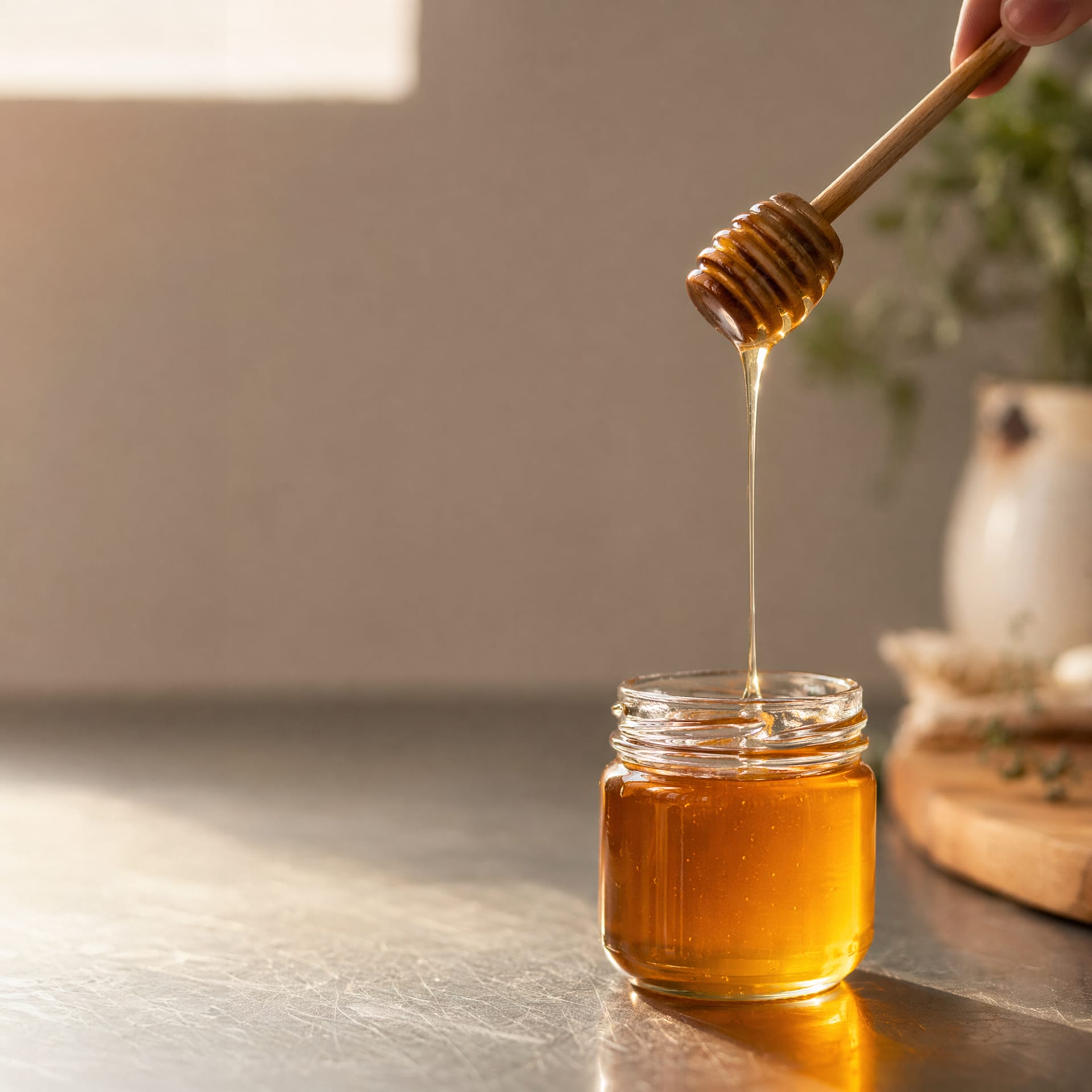
Hero frame from the Nordel honey explainer, a craft glass jar on brushed steel with a strand of honey caught mid-drizzle.
Nordel FMCG product explainer
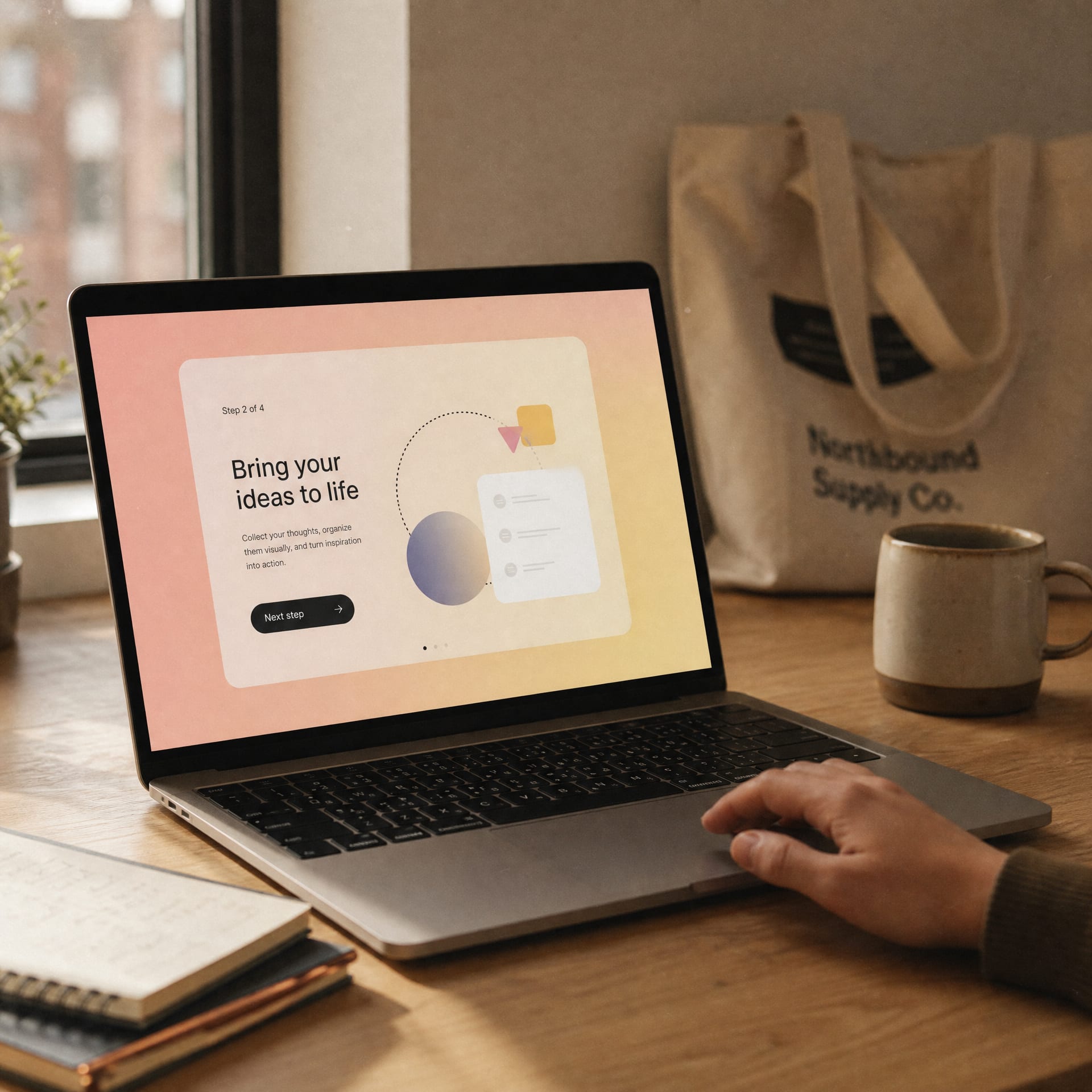
Hero frame from the Glasshouse onboarding sequence, an aluminium laptop on a pale oak desk showing a soft pastel product walkthrough.
Glasshouse SaaS onboarding suite
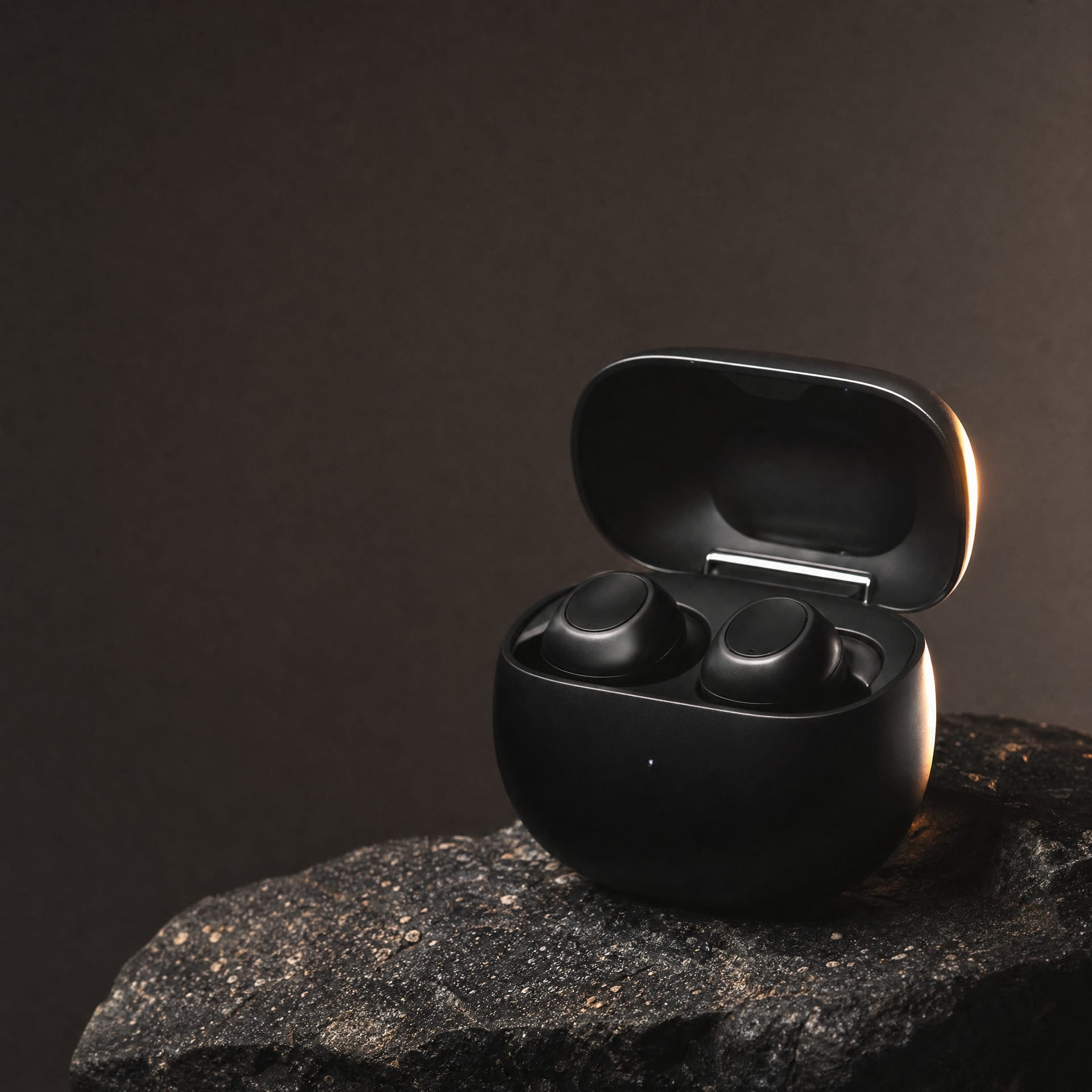
Hero frame from the Korai launch trailer, a matte black earbuds case on dark stone under hard rim light.
Korai Consumer tech launch trailer
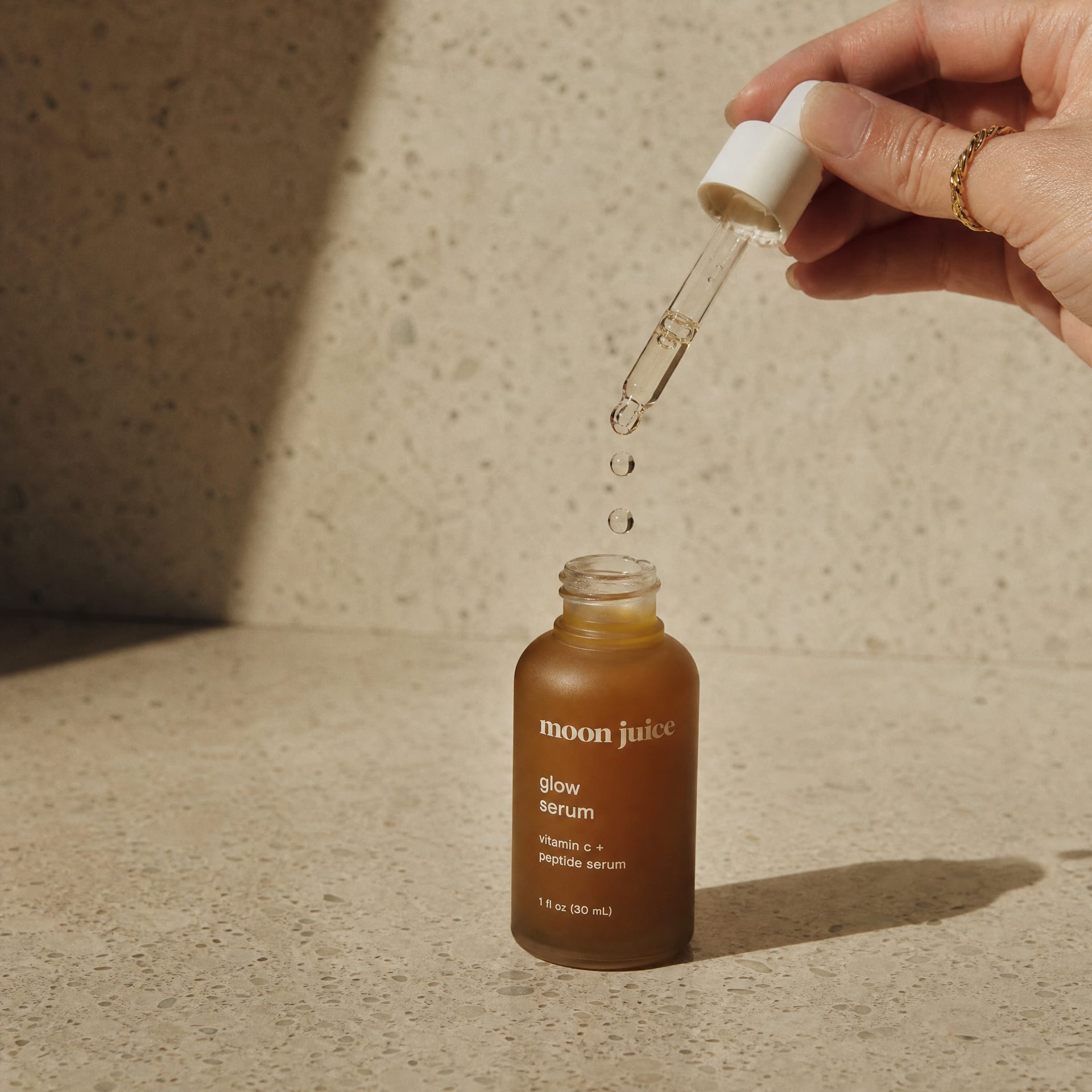
Hero frame from the Vellis cutdown system, a frosted serum dropper with two clear oil droplets caught mid-fall above the bottle.
Vellis Beauty social cutdown
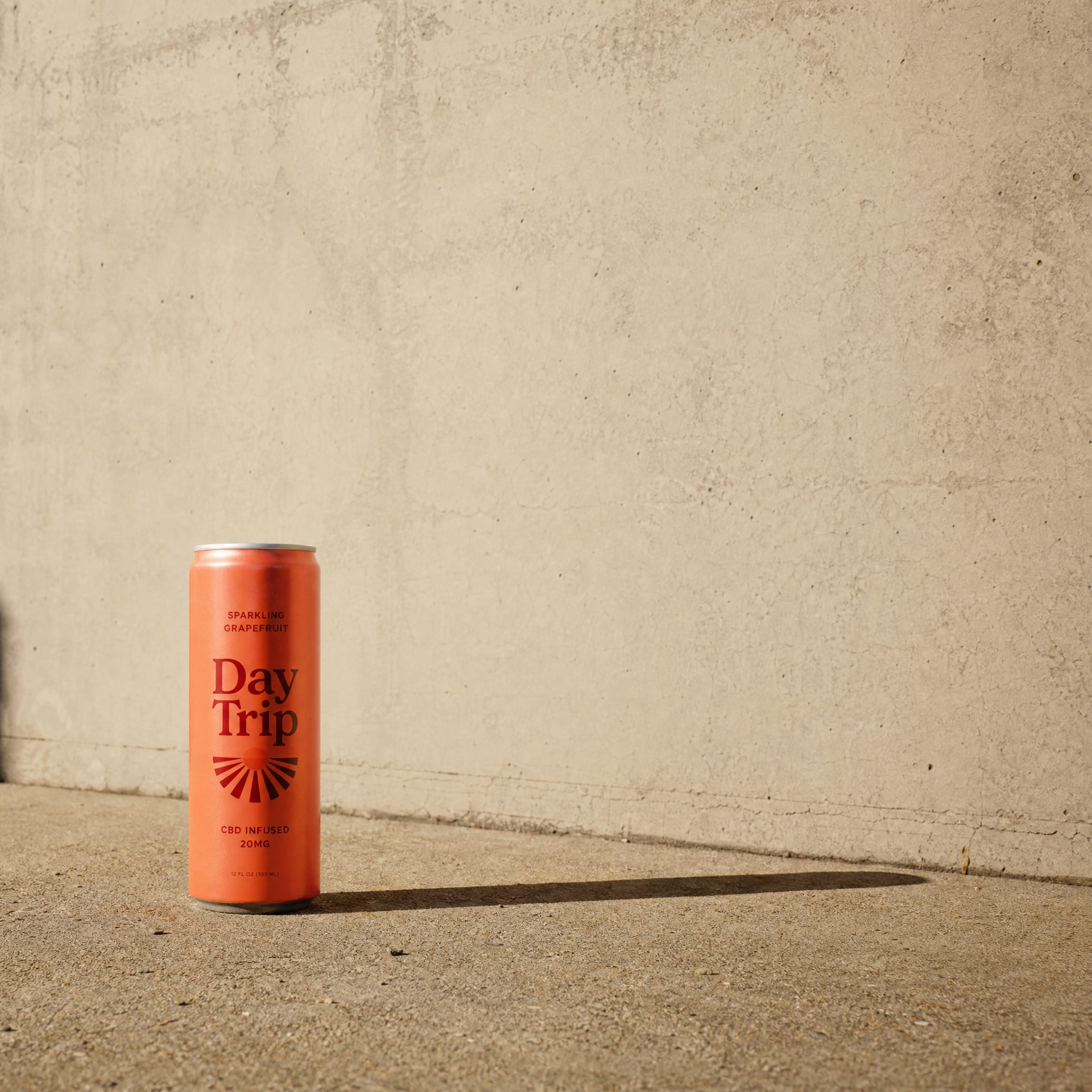
Hero frame from the Murra OOH campaign, a coral-orange sparkling drink can casting a long shadow across a pale concrete wall.
Murra Beverage OOH animation
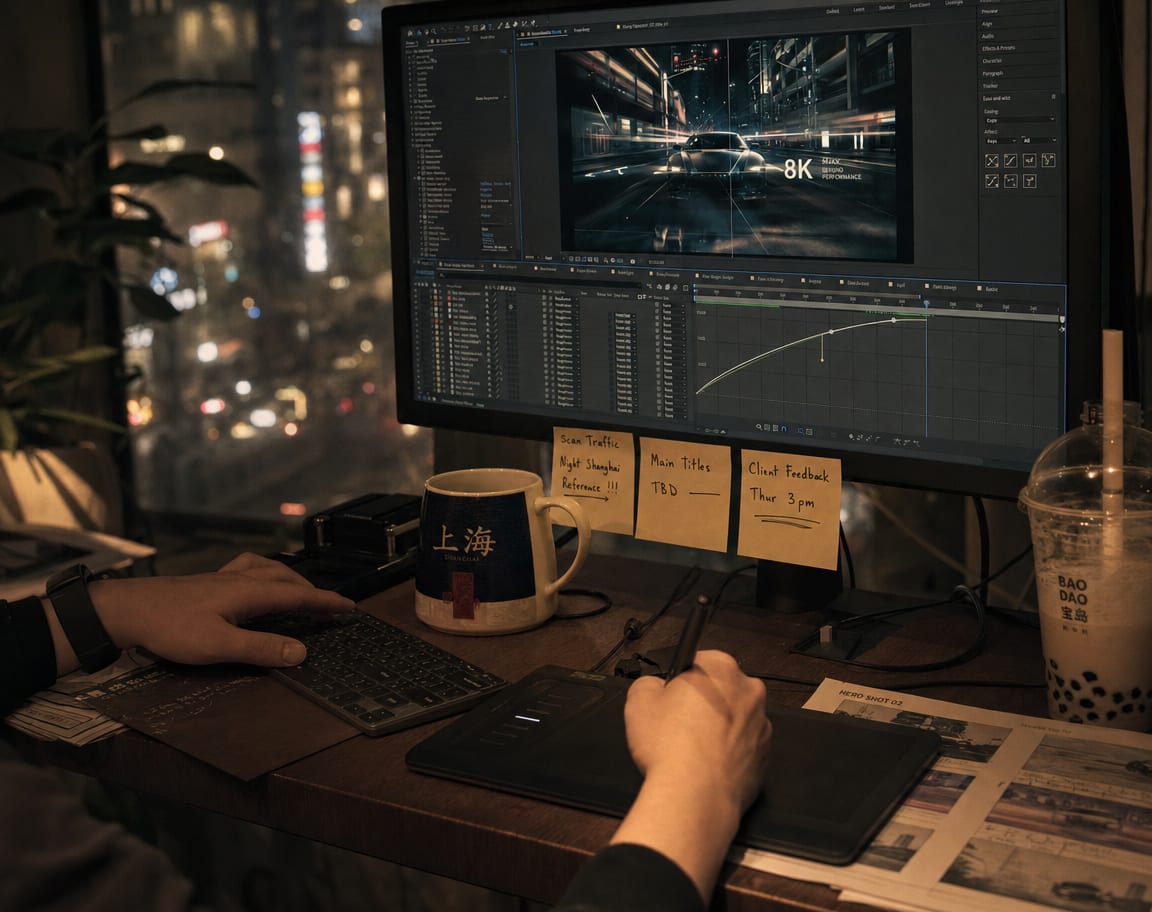
Close-up of a motion designer's hands at a pen tablet, keyframing a hero shot in a dim studio under the warm glow of the monitor.
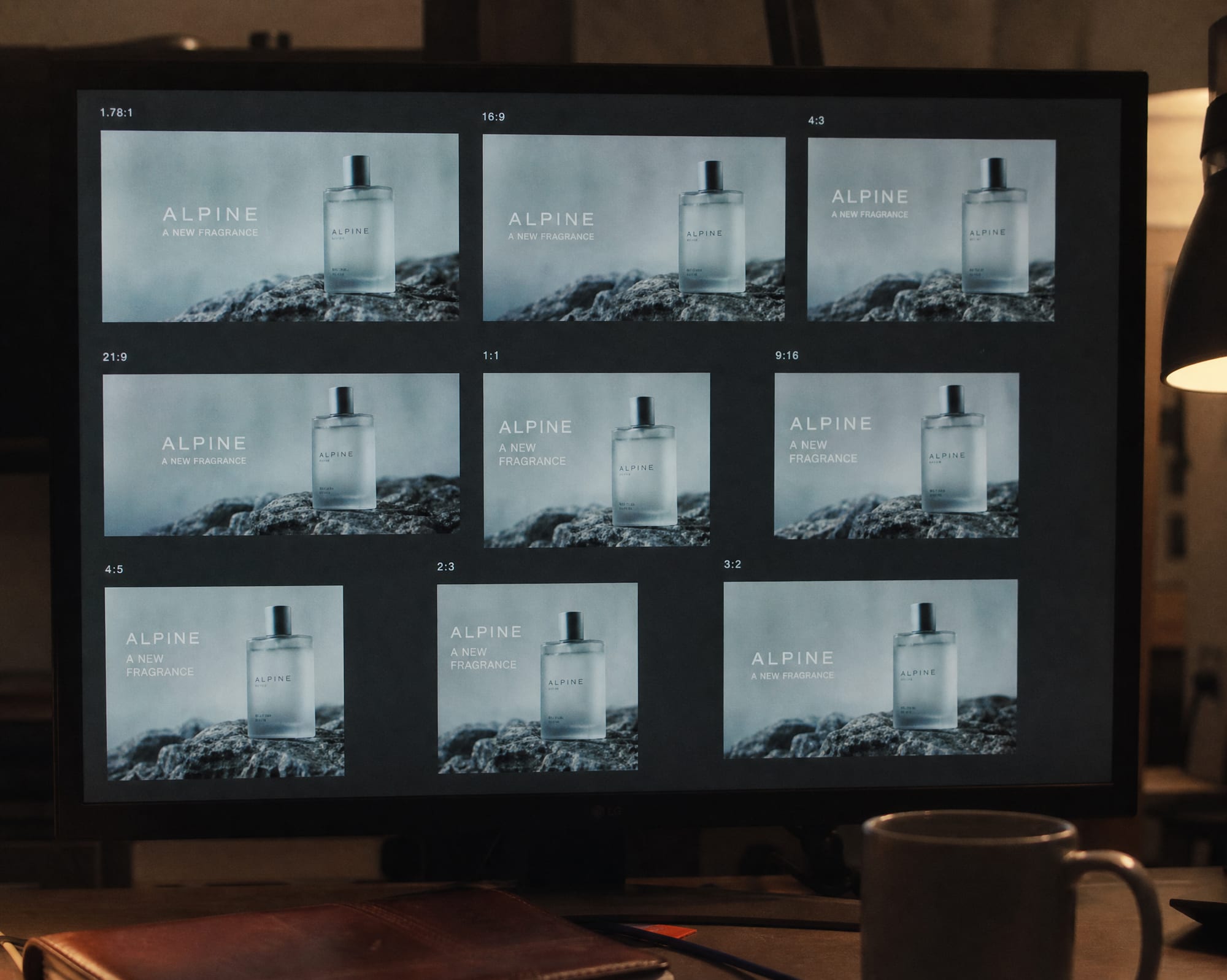
A secondary monitor in the same studio, showing a grid of nine variant motion thumbnails cut to different aspect ratios.
1 + many One hero, every cutdown on a pipeline

The craft

The hero is animated by hand.
The variants ride a pipeline.

Most studios still hand-keyframe every cutdown. By the 12th vertical the timing has drifted, typography no longer matches the master, and the brand looks slightly different in every version.

We work it the other way. The hero is built in After Effects 2026 and Cinema 4D by senior designers. The brand system, easing curves and grade are locked into a master project. Variants then run through AI-assisted pipelines that respect what the hero set up.

What we actually use. After Effects 2026 and Cinema 4D for hero builds, Houdini for simulation. Kling 3.0 and Seedance 2.0 for image-to-video and motion transfer. Wan 2.6 and Hunyuan Video for high-volume product motion. Runway Gen-4.5 when precise camera direction matters. Veo 3.1 when integrated audio belongs in the generation. ComfyUI for brand-trained pipelines. Lottie and Rive when motion lives in a product UI. The tool depends on the brief.

  • After Effects 2026
  • Cinema 4D
  • Houdini
  • Kling 3.0
  • Seedance 2.0
  • Wan 2.6
  • Hunyuan Video
  • Runway Gen-4.5
  • Veo 3.1
  • ComfyUI
  • Lottie & Rive

Where we don't fit: a one-off sting for next week isn't where our setup pays off. Volume is.

Our process

Most of the work happens
before the first frame.

Three rounds of revisions included. Beyond that we quote hourly. Cutdown matrix, captions and end cards built in from the brief.

First two steps are where it's won or lost. The rest is execution.

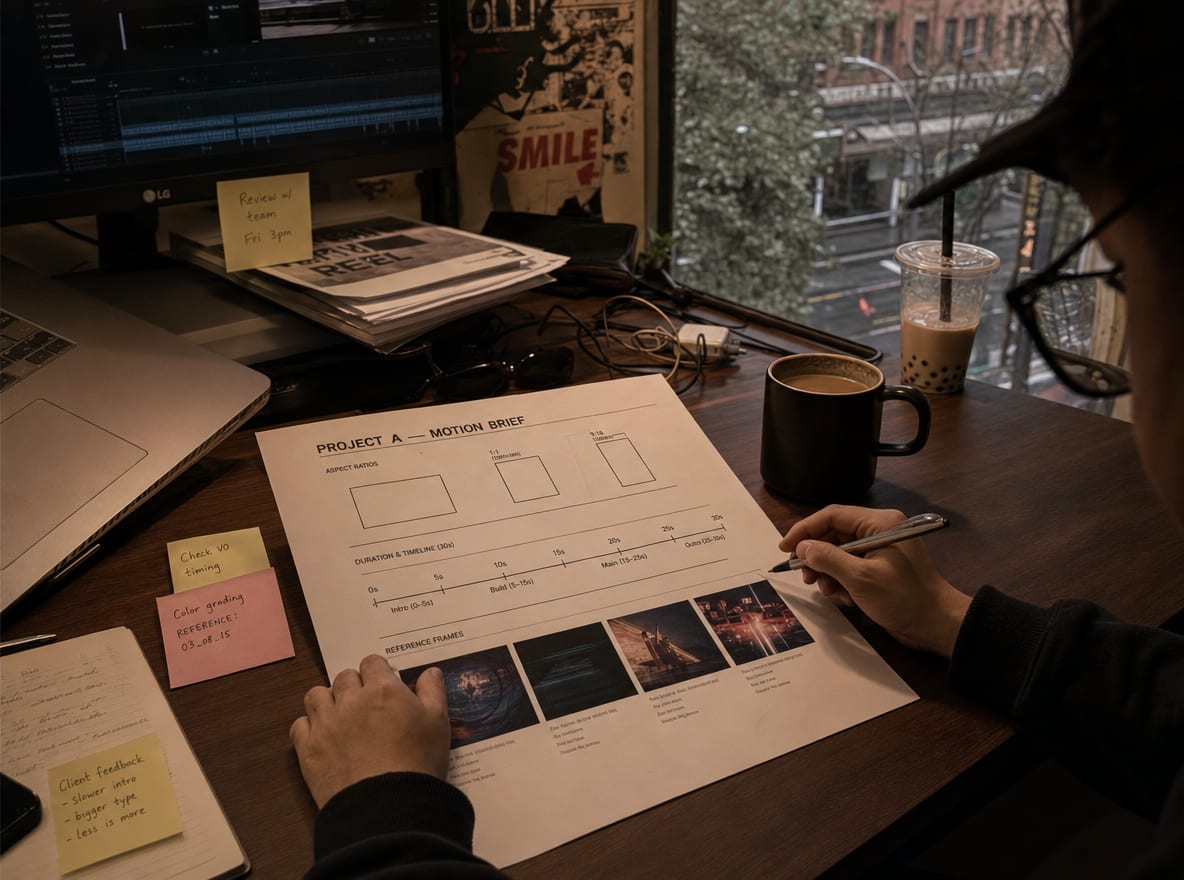
A printed motion brief sheet on a wood worktable with aspect ratio diagrams, duration timelines, a coffee cup and reference frames.
Where it is won

Brief and motion spec.

Format list, durations, aspect ratios from 16:9 to 9:16 to 1:1 to 4:5, platform specs, voiceover plan, cutdown matrix from day one.

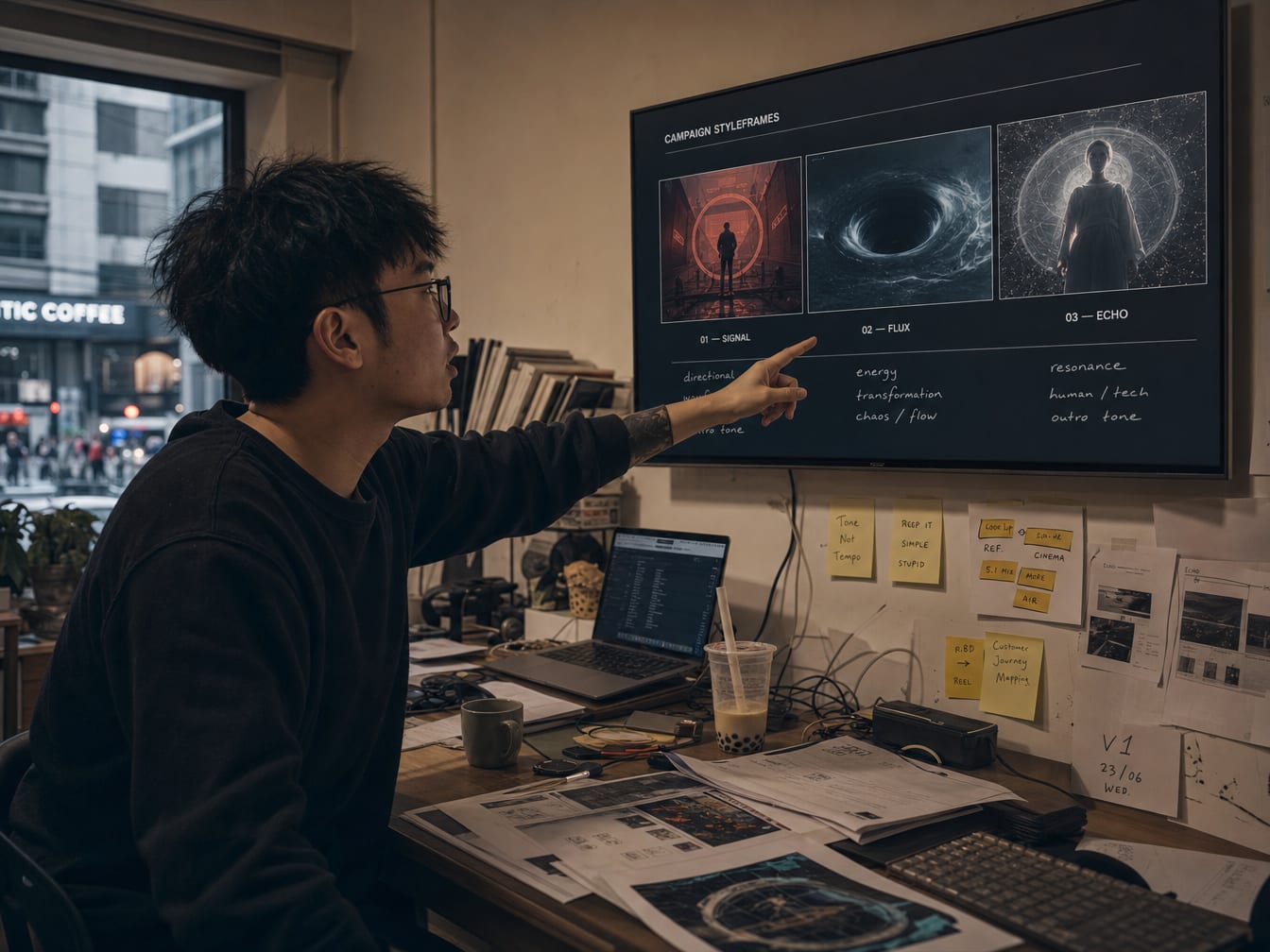
A motion designer in profile gesturing at a wall-mounted screen showing three campaign styleframes in a row.
Where it is won

Creative direction. The step that decides the project.

Motion designers set the visual language, timing system, and the hero edit the rest of the campaign earns its way around.

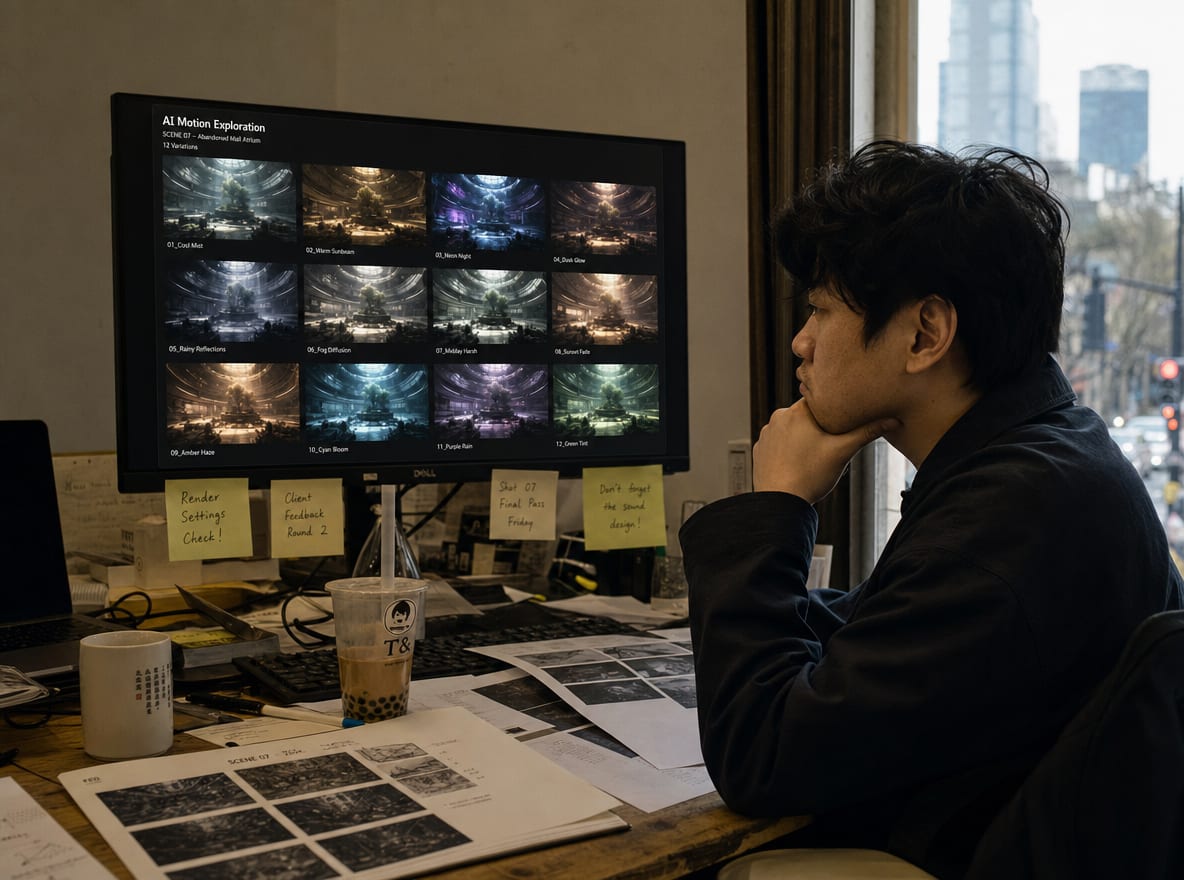
A studio monitor showing a clean grid of twelve AI motion exploration thumbnails, each a colour and lighting variation of the same scene.
The rest is execution

AI exploration.

Style frames and motion tests in parallel, often a dozen directions inside the first week.

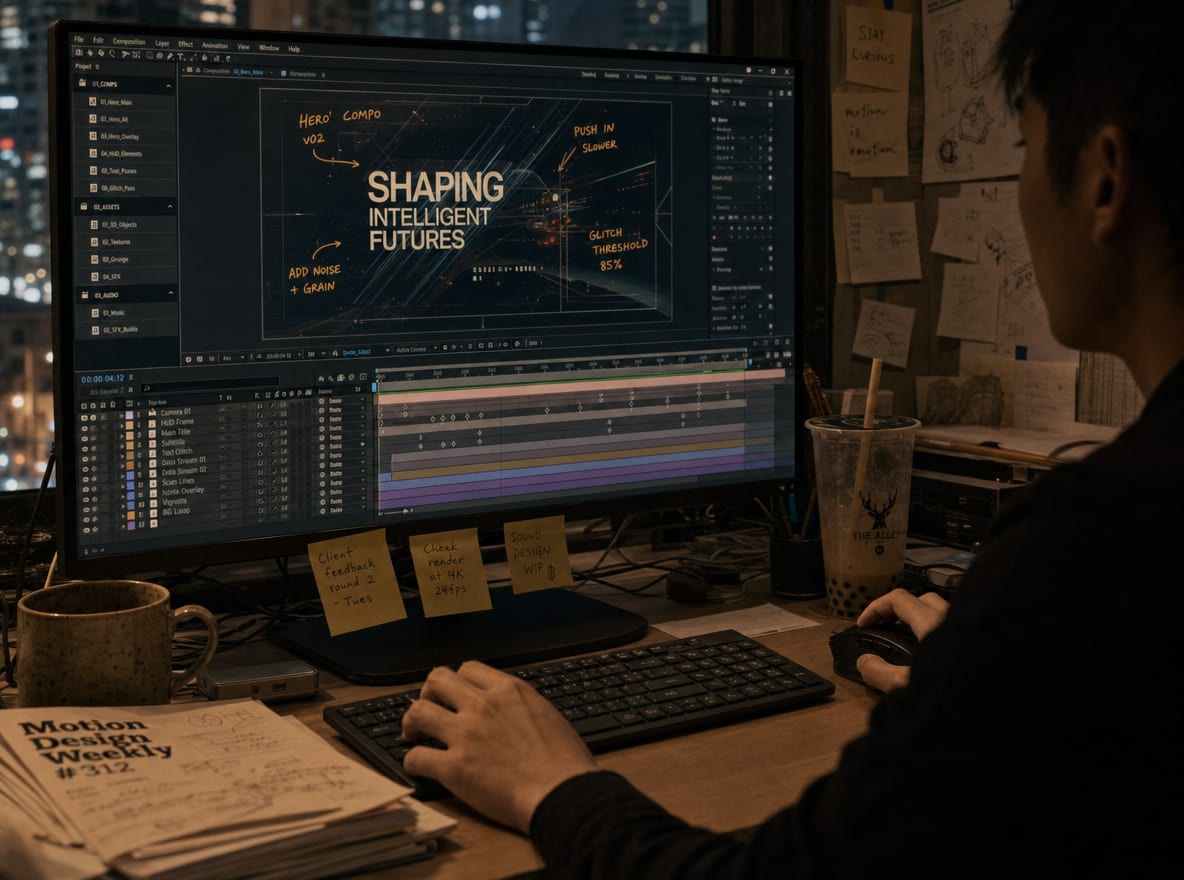
A close detail of a motion software timeline on a large monitor in a dark studio, with the hero composition frame visible above the keyframed tracks.
The rest is execution

Hero build and refinement.

Three rounds on timing, easing, sound, and grade.

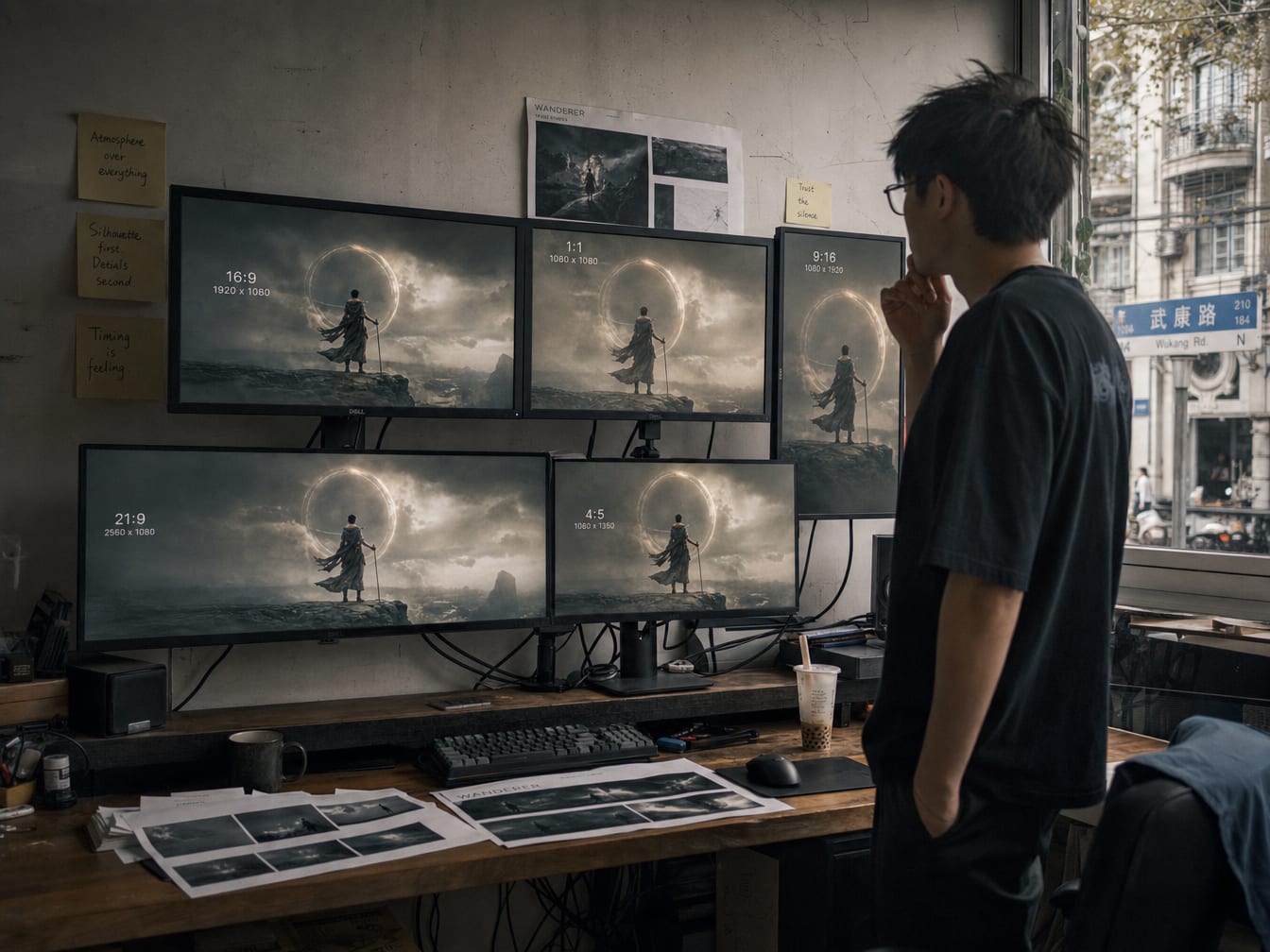
A studio wall of five monitors at different aspect ratios, each showing the same hero scene adapted to fit.
The rest is execution

Variant production at scale.

Cutdowns, aspect ratios, language localisation, regional swaps, all through the brand-trained pipeline. Captions and end cards built in.

The new math

How AI rewrote
motion.

One hero, 14 Meta cutdowns, six vertical hooks, three homepage loops, and a Mandarin Douyin version. The same brief, run two ways.

The old workflow Six weeks
Hero animation Two weeks Cutdowns by hand Three weeks Localisation One week

Brief an agency, two weeks on the hero, three more for cutdowns by hand, a final week for language localisation. By the time the variants ship the fatigue window has already closed on the hero. Two animators on After Effects, one tired team.

Our workflow Two weeks
Hero + pipeline Two weeks

Senior direction locks the hero in week one. The brand-trained pipeline turns the variant matrix, every aspect ratio and every language, in days, not weeks. Coca-Cola's Fizzion and Unilever's Sketch Pro run on the same logic: concept-to-asset inside two hours, motion roughly three times faster than the old TV-first model.

Two to three weeks for a single hero piece from brief to final master. Three to four weeks for a campaign with a full variant matrix across formats and markets. Faster on extensions of an existing system. Rush available when the launch calendar demands it.

Five to seven business days for a hero, two to three days for a variant pack off an approved master. Rush adds to the project quote since it usually means weekend hours and a tighter team. We'll tell you upfront whether the timeline is realistic or whether something in the brief has to give.

Yes. We deliver into Frame.io, Wipster, Workfront, Bynder, Brandfolder, and most major DAMs. For brands on a custom stack, we can push masters and variants into whatever ingestion format your system expects. Review and approval runs through whichever tool your team already uses.

Three pricing models depending on scope. Project-based for one-off heroes or short campaigns. Monthly retainer for brands shipping ongoing volume across social, eCom, and OOH. Quarterly advance billing once the retainer has been running a few months, since it stabilises the burn rate on both sides. We quote firm after the first call once the brief, format list, and cutdown matrix are clear.

Rule of thumb. One hero plus its first cutdown wave is a project. A monthly cadence of new heroes, refreshes, and a continuous cutdown pipeline is a retainer, and the per-asset cost drops noticeably under it. If you are not sure, we will model both off your actual format list and you pick.

Three. Most projects close inside two. Beyond round three we quote hourly, but it's rare on motion work since the hero direction is locked in step two.

That's why senior motion designers run the brief, not the model. Anything that ships goes through a human QC pass on brand consistency, motion logic, hand and finger detail (still the classic AI tell), and any frame artifacts. If a generation cannot carry the hero, we cut it in After Effects instead. The pipeline serves the brand, not the other way around.

Brand guidelines, including any existing motion system if you have one. Final script, voiceover plan, music direction. Format and spec list with durations, aspect ratios, and platform targets. Reference work you like or want to avoid. If a motion system doesn't exist yet, we build one as we go and hand it over with the masters.

Motion designers from agency and broadcast backgrounds lead every project. AI specialists handle the variant production volume. Sound and mix runs through people who've shipped broadcast spots, not designers guessing at loudness standards. No junior teams running the brief alone.

Like you. We train our AI pipelines on your existing brand assets, so the variants stay inside your visual and motion system, not ours. For brands without a documented motion system, we build one and hand it over.

You own the final deliverables. We use commercially safe models, and we document the workflow. For the legal side in full, see our Copyright and AI guide .

You do. After Effects projects, Cinema 4D scenes, ComfyUI workflows, master ProRes files, the lot. We archive a copy for six months on our side in case you come back for variants. Beyond that we will hold it if you ask, or wipe it if you don't.

Yes. We sign NDAs before any brief shares technical detail. For brands working on pre-launch products, we run the whole pipeline behind a need-to-know wall on our side and don't use the work in our own portfolio without written sign-off.

Both. Some clients come to us for one hero film. Others come with a hero plus 200 cutdowns across 12 markets, 8 languages, and 30 SKU variants. Workflow scales either way.

Both, and we treat them as different jobs. ProRes 422 and ProRes 4444 or DNxHR HQX masters for broadcast and OOH networks, with R128 loudness on the audio side. H.264 and HEVC for digital and social, sized to each platform's current spec. Lottie and Rive when motion has to live inside a product UI. Captions, alt-text and accessibility passes included where required.

Our production team is based in Shanghai. We ship motion work for clients into the US, EU, UK, Middle East and APAC. For brands going into China, we produce native Douyin, Xiaohongshu and Tmall creative with local voice and culturally adapted hooks, not subtitled Western edits, which generally underperform by 60 to 70 percent on conversion. Local-language voice and regulatory copy are handled in-region.

Yes. Send us one brief. Inside two weeks you get three direction frames, a 15-second hero animatic, and a production estimate for the full variant matrix. No retainer, no commitment, the work is yours either way.

Try us

Try it on a real
brief.

Send us a motion job. Inside two weeks you get three direction frames, a 15-second hero animatic, and a production estimate for the full variant matrix. No retainer, no commitment, and whatever we produce is yours to keep regardless of whether you go ahead with us.