TV and broadcast
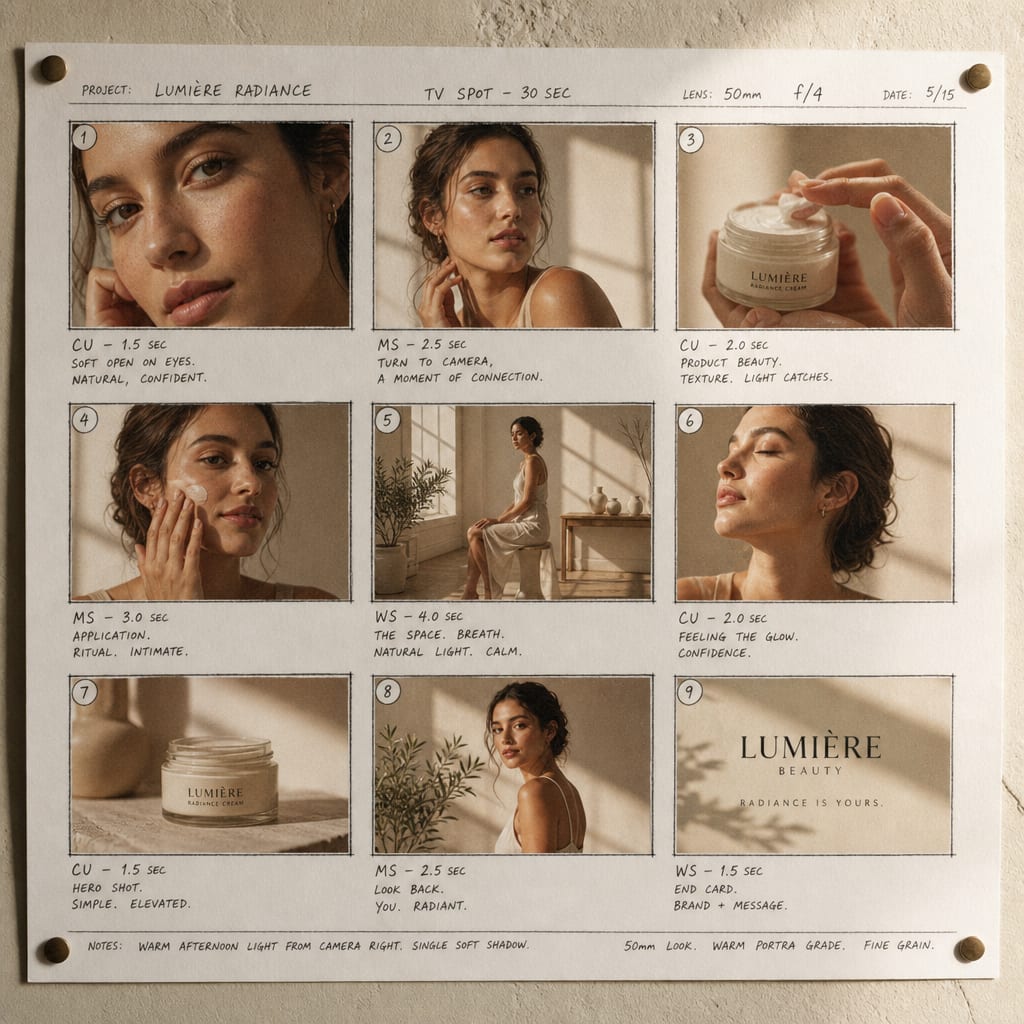
15, 30 and 60-second spots, anthem films and full campaign systems with cutdowns.
Boards built to broadcast specs, with regulatory copy by market and talent guidelines locked into frame one.
From a single social post to a full campaign system: every format your brand needs, produced in days, not weeks.
Content & Social
Video & Motion
Commerce & Web
Strategy & Direction
Brand Identity
Sales & Communications
Who we work with, the consulting we run, and the platforms we produce for, matched to your market.
Clients
Consulting
Platforms
Brand
Who we are, how we work, and why brands move their content operation here.
All of The Studio →Perspectives, practical guides, and the legal ground rules for AI-native content.
Learn
Legal
Services / Pre-production
Shoot-ready frames. Cinematic intent. No surprises on set.
The call comes Thursday afternoon, three days into a four-day shoot. The director says the board never showed the hero product in the wide. The cutdowns will not assemble. Six figures of crew time on the line because the board went to set with a missing beat.
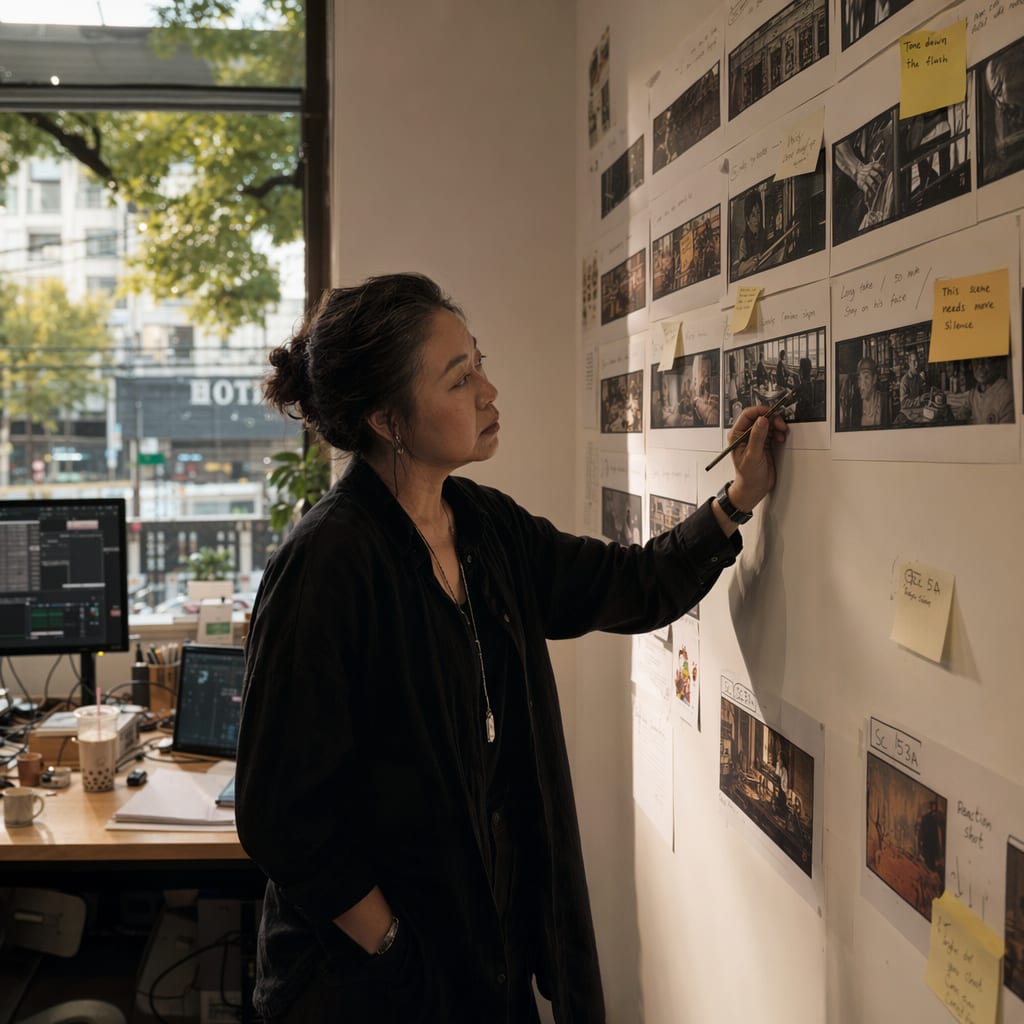
We hear some version of that story from new clients most quarters. The board, in our setup, is a working document that travels with the spot from brief to delivery.
 Studio work / Pre-production
 The results
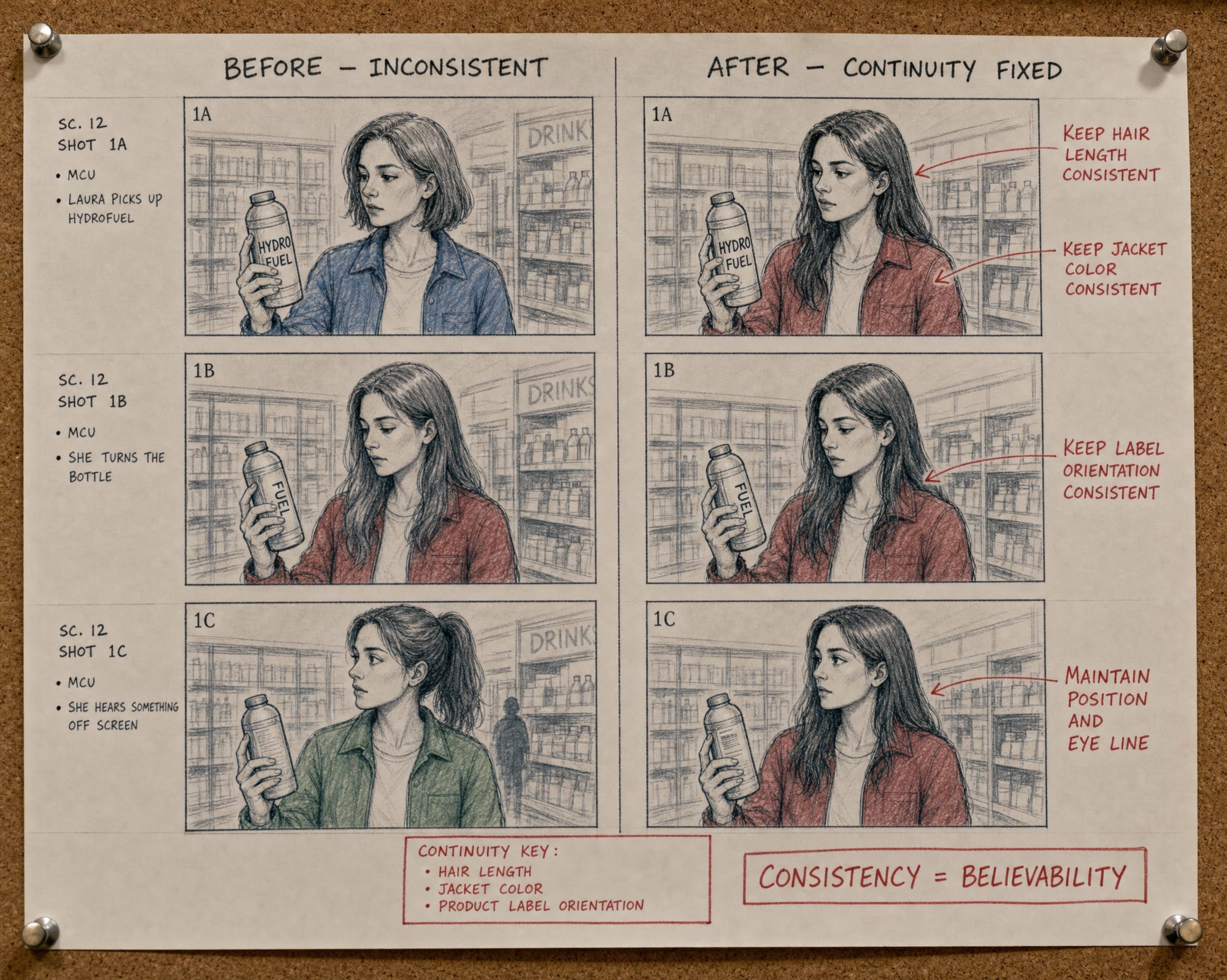
Most boards die in the gap between panels. The hero wears a red jacket in frame four and a blue one in frame six. The product label faces left in the wide, right in the close. None of it gets caught in review. All of it gets caught on set, around lunchtime, when the light is starting to go.
We start from the opposite end. Character sheets, product reference and location plates locked before frame one. Shot grammar called out frame by frame in the vocabulary the DP recognises. Timing in seconds and frames on every panel.
Across roughly 30 storyboard engagements in the last two years, clients have reported faster sign-off, fewer reshoots and stronger pitches.
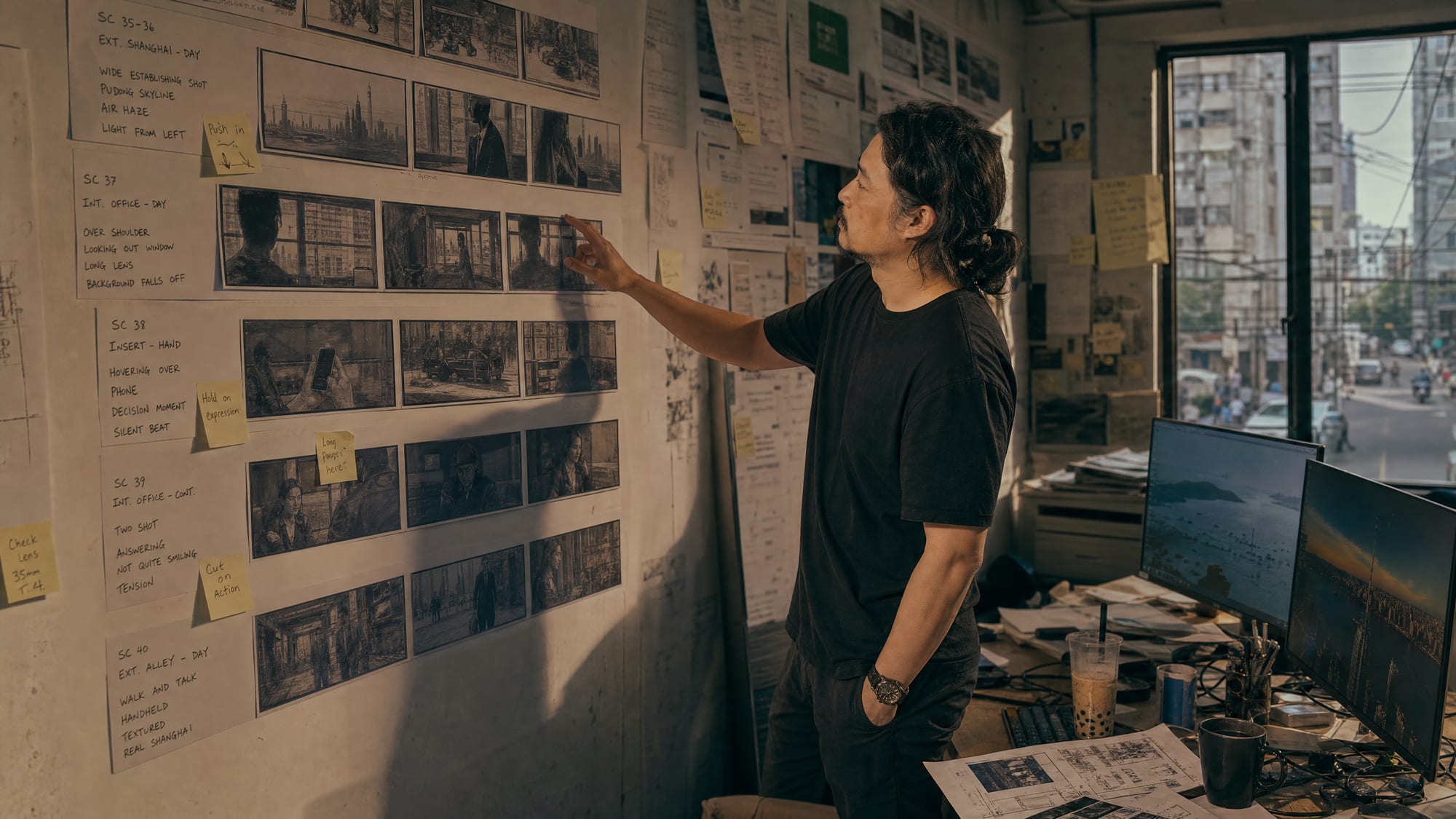
On a 30-second spot we deliver a first cut in three to five days, against a two to three week traditional benchmark. Reshoots forced by missing shots on boards we delivered last year: zero.
The work, defined
A 30-second TV spot, a 6-second YouTube bumper and a 90-second anthem film share almost nothing in their pacing. We staff each format with art directors who have boarded it before, all working off one campaign system so the assets hold together when they land in market the same week. The work breaks into six lanes.
15, 30 and 60-second spots, anthem films and full campaign systems with cutdowns.
Boards built to broadcast specs, with regulatory copy by market and talent guidelines locked into frame one.
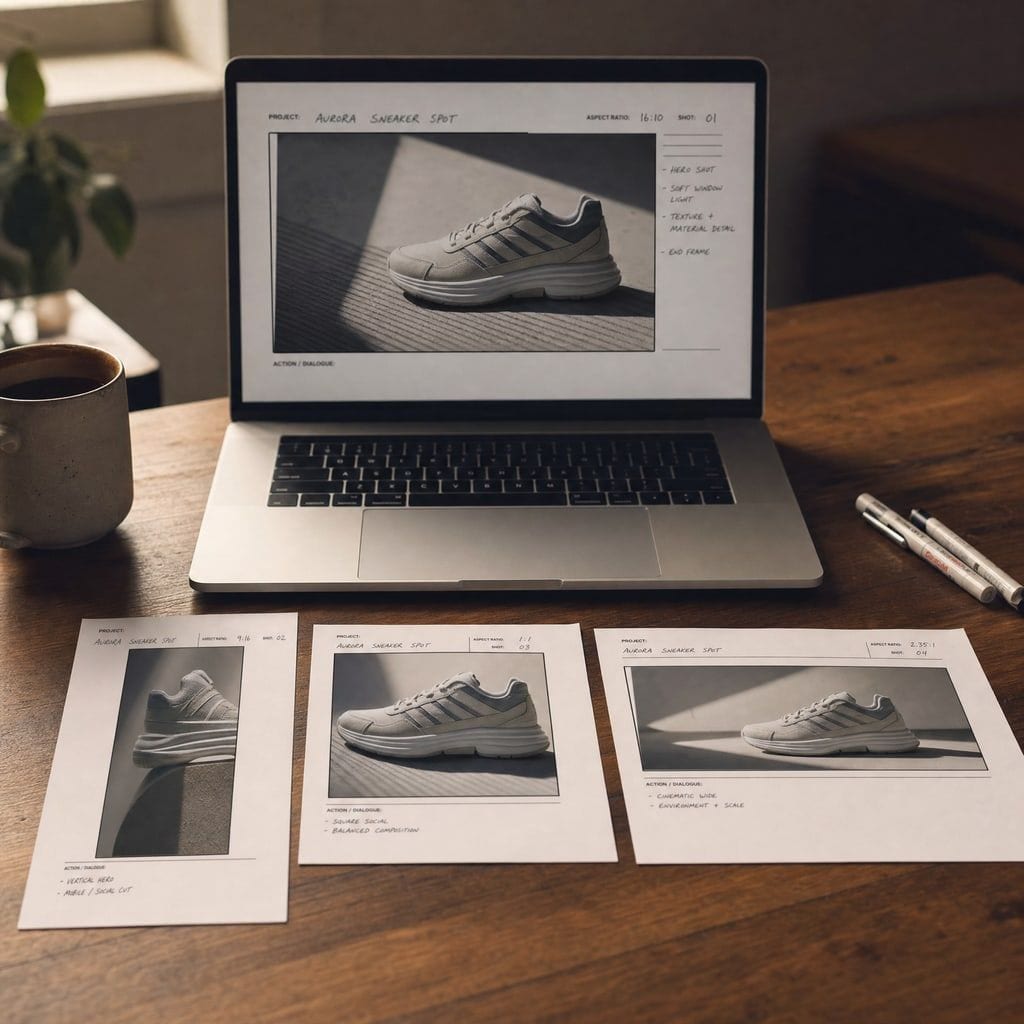
The highest-volume lane we run. A single concept ships in every ratio the platform demands.
9:16 vertical for TikTok and Reels, 1:1 square for in-feed, 16:9 for YouTube and CTV, 4:5 for the scroll. Each ratio gets reboarded, not just cropped.
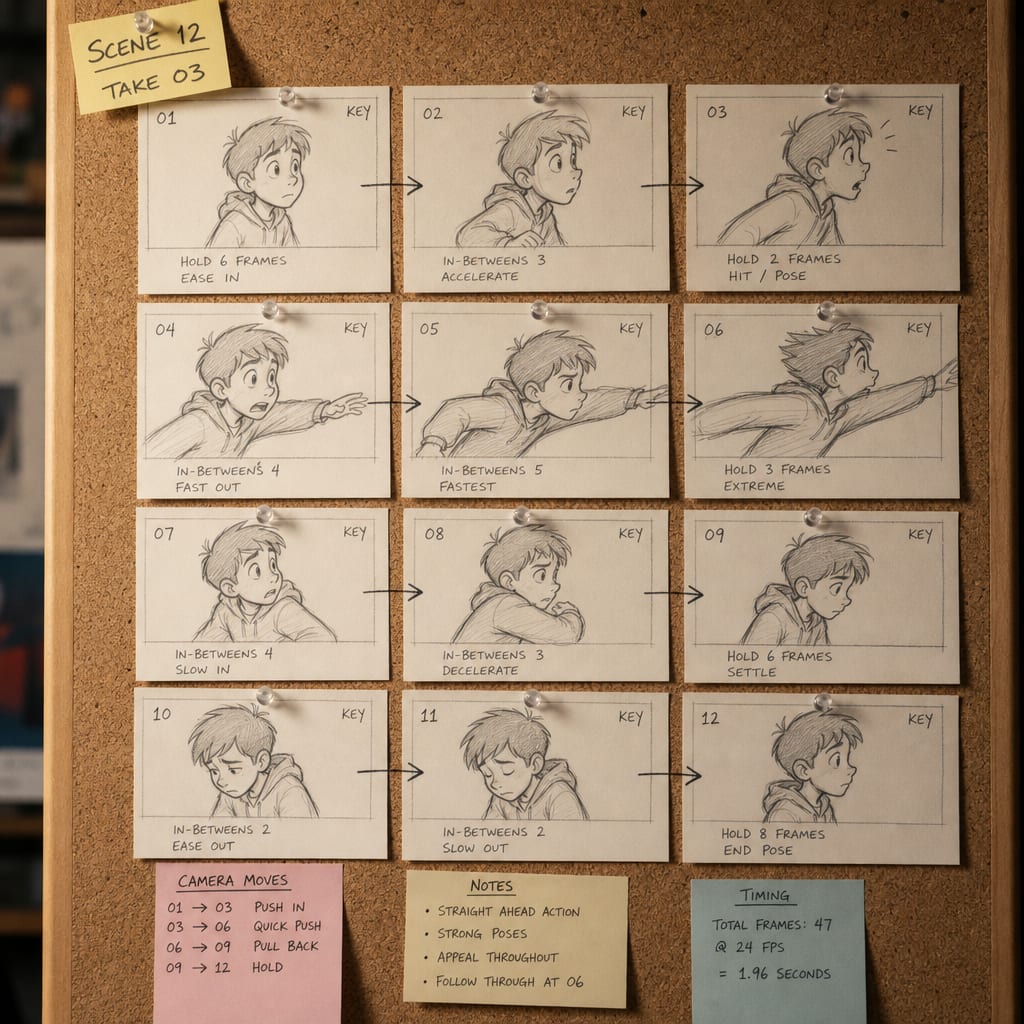
Full-cel 2D and 3D animation, motion graphics, kinetic typography, explainer animations.
Boards in this lane carry keyframe poses, in-between counts, camera-move notation and pacing notes for the animatic.
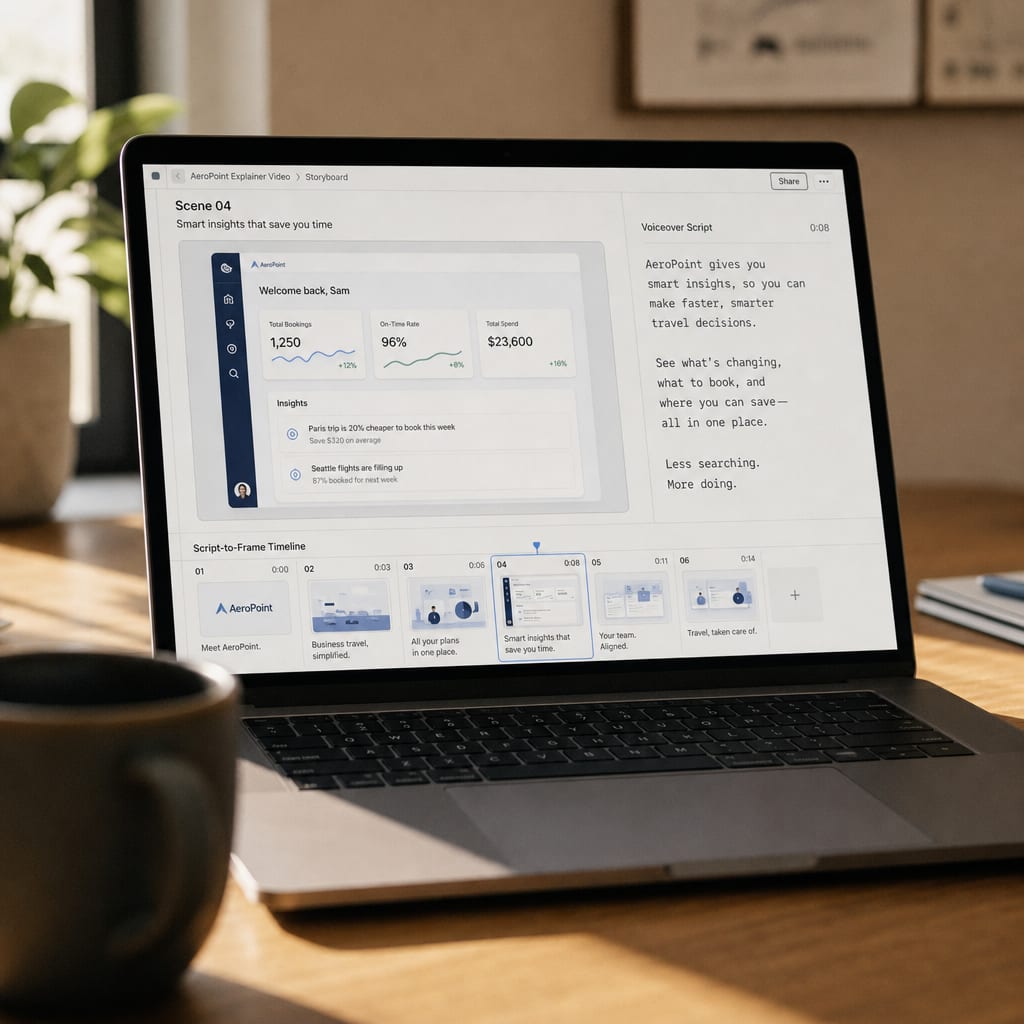
Where most B2B and SaaS work lives. Voiceover-driven, with UI screen states or product visualisation at the centre.
Boards carry script-to-frame sync down to the syllable, so the editor cuts to the word and not around it.
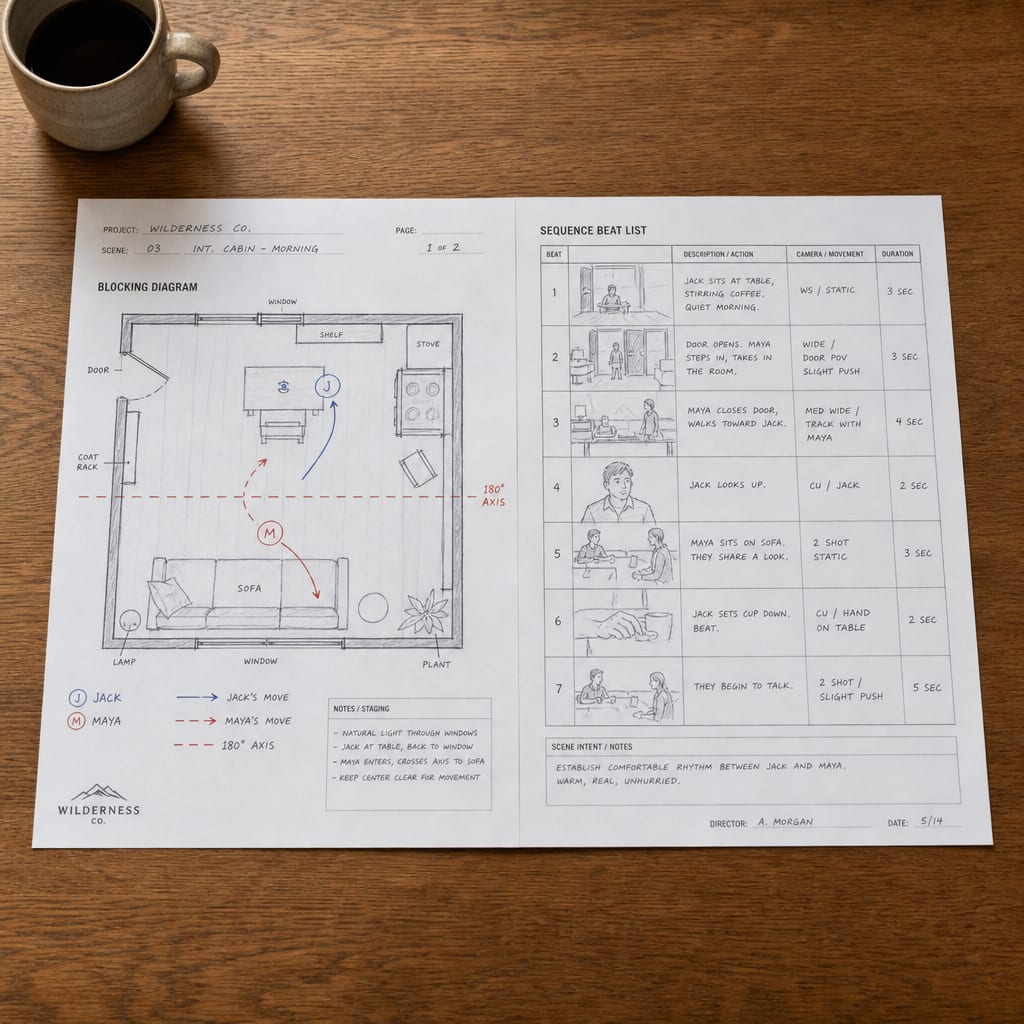
Brands are buying actual short films now, not long commercials. We board them like short films.
Scene blocking diagrams, sequence beat maps, a director-treatment companion document, and a pitch-deck cut for the marketing team to share internally.
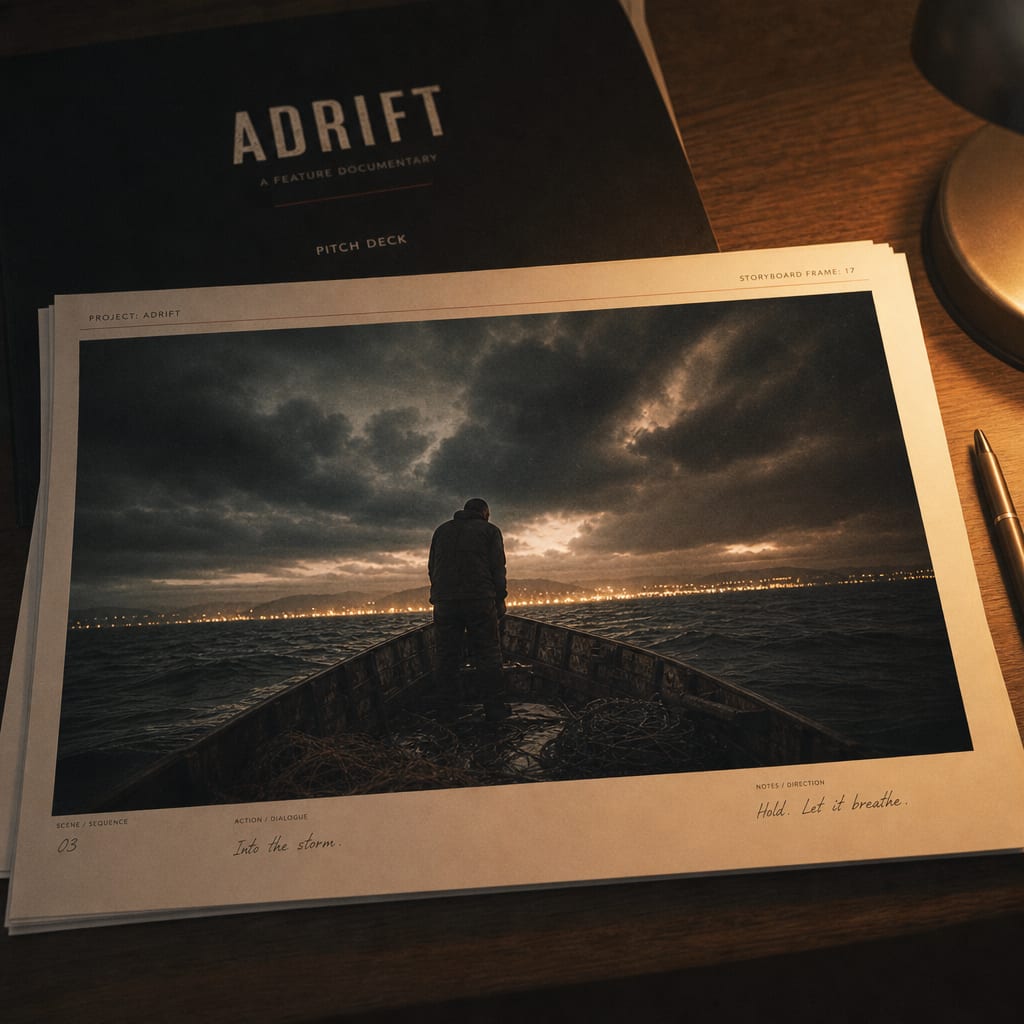
Shortest shelf life. Highest stakes for the agency. A board that does not sell in three frames loses the pitch.
Designed to read as a presentation document first, a production document second, with the production-quality version held in reserve for the win.
If your format is not on the list, ask. We have probably boarded it once.
Contact sheet
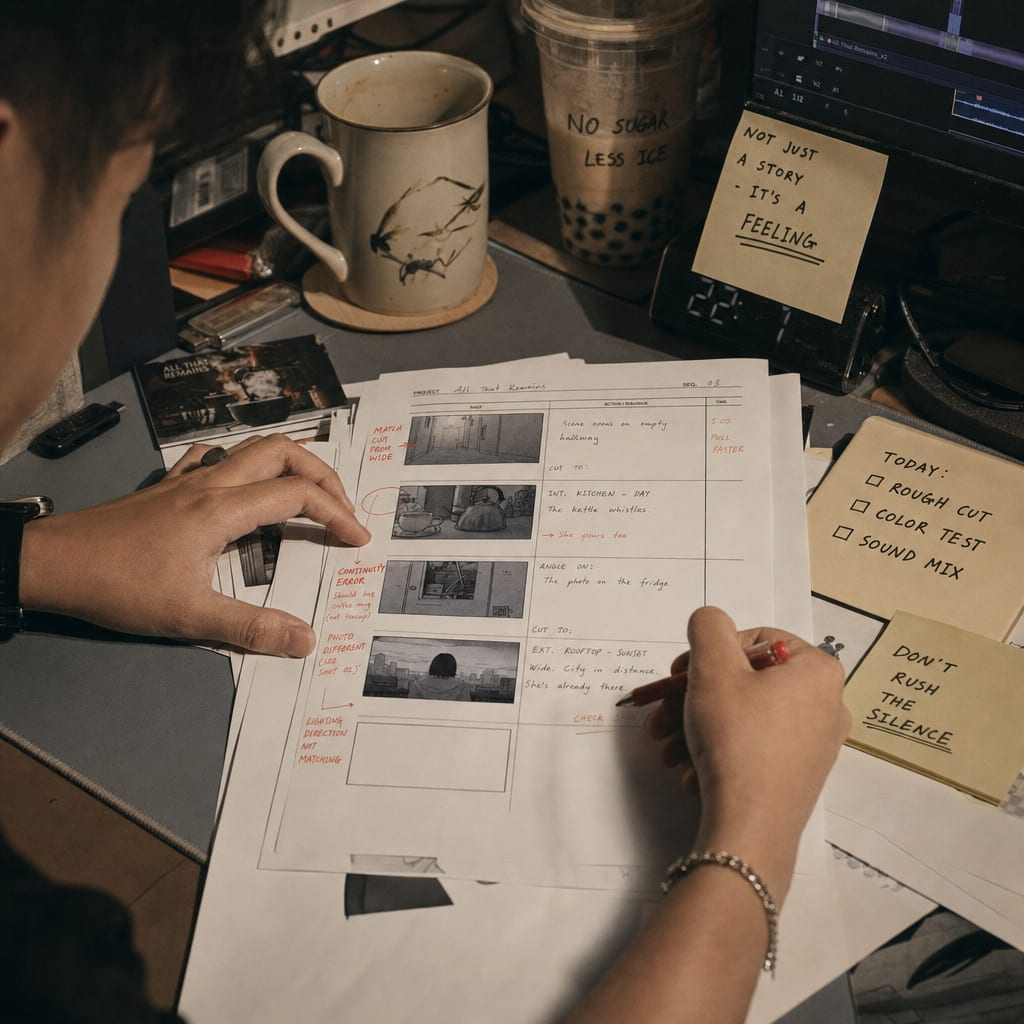
Frames and ratio variants from recent boards, authored in the studio. Every panel is hand-finished work, not a stock pull.
Where AI breaks
Image models are probabilistic by design. Without a tight reference setup they drift between frames. Facial features morph. Hair changes colour. Product labels rotate on their own.
That is the failure mode you cannot ship to a director. Our setup answers it with locked character sheets before any frame gets generated, fixed reference packs per scene, seed control across the whole board, and a senior art-director hand-pass on every frame before it goes into a client deck.
This is what we mean by AI-native rather than AI-only. The iteration runs on the model. The picks come from the art director.
Where we do not fit: one-off thumbnails for an internal review. Our setup pays off on full campaigns and multi-format ship lists, work that has to survive client review, legal review and three rounds of brand approval.
Our process
AI made the visual generation side cheap and fast for everyone. Picking the frame that actually sells the spot, and the cut that carries the story, is still the hard part.
The first two steps are where it is won. The rest is execution.
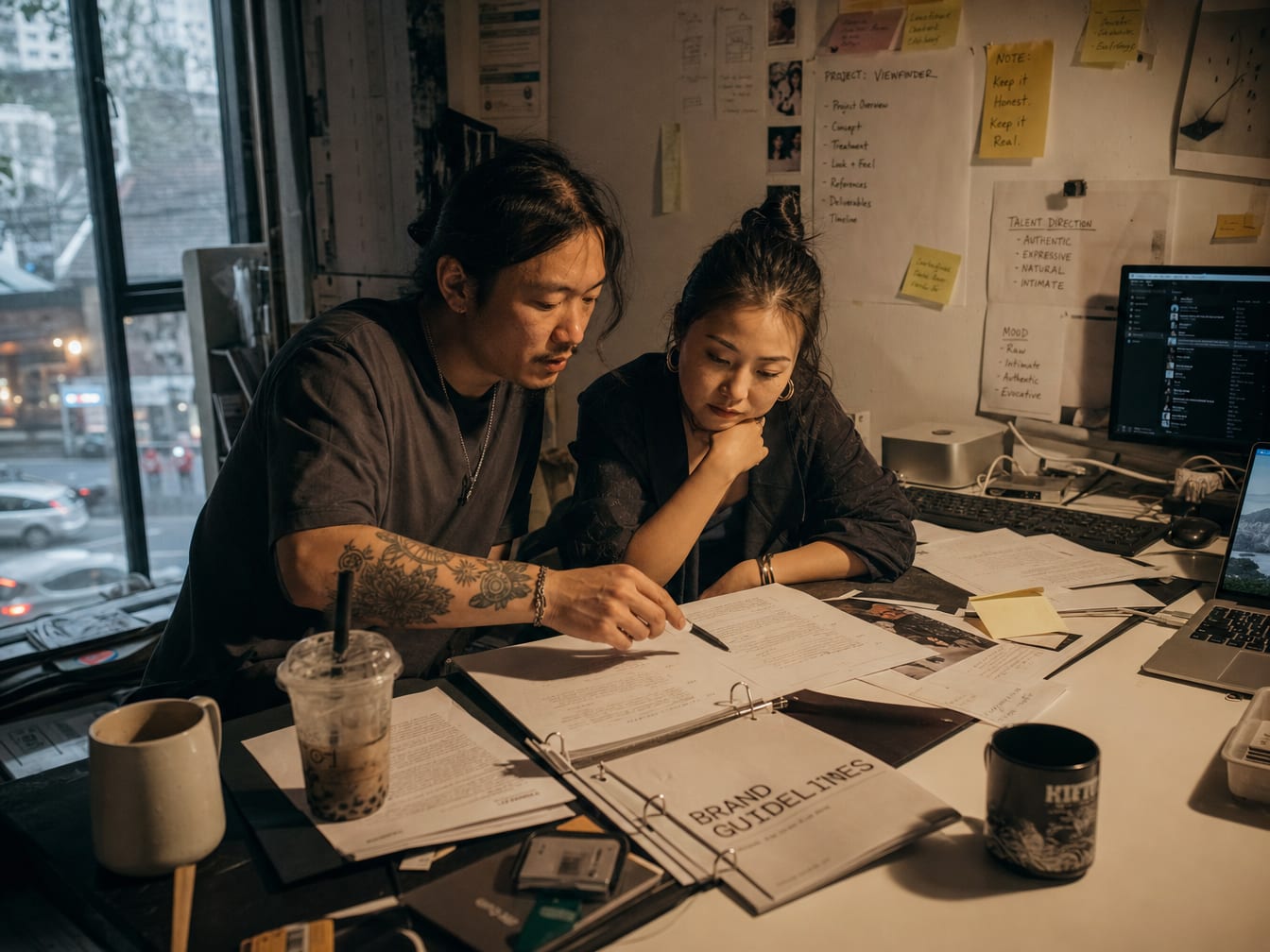
Final script, format list, delivery duration, brand guidelines, talent rules, product reference, regulatory copy by market.
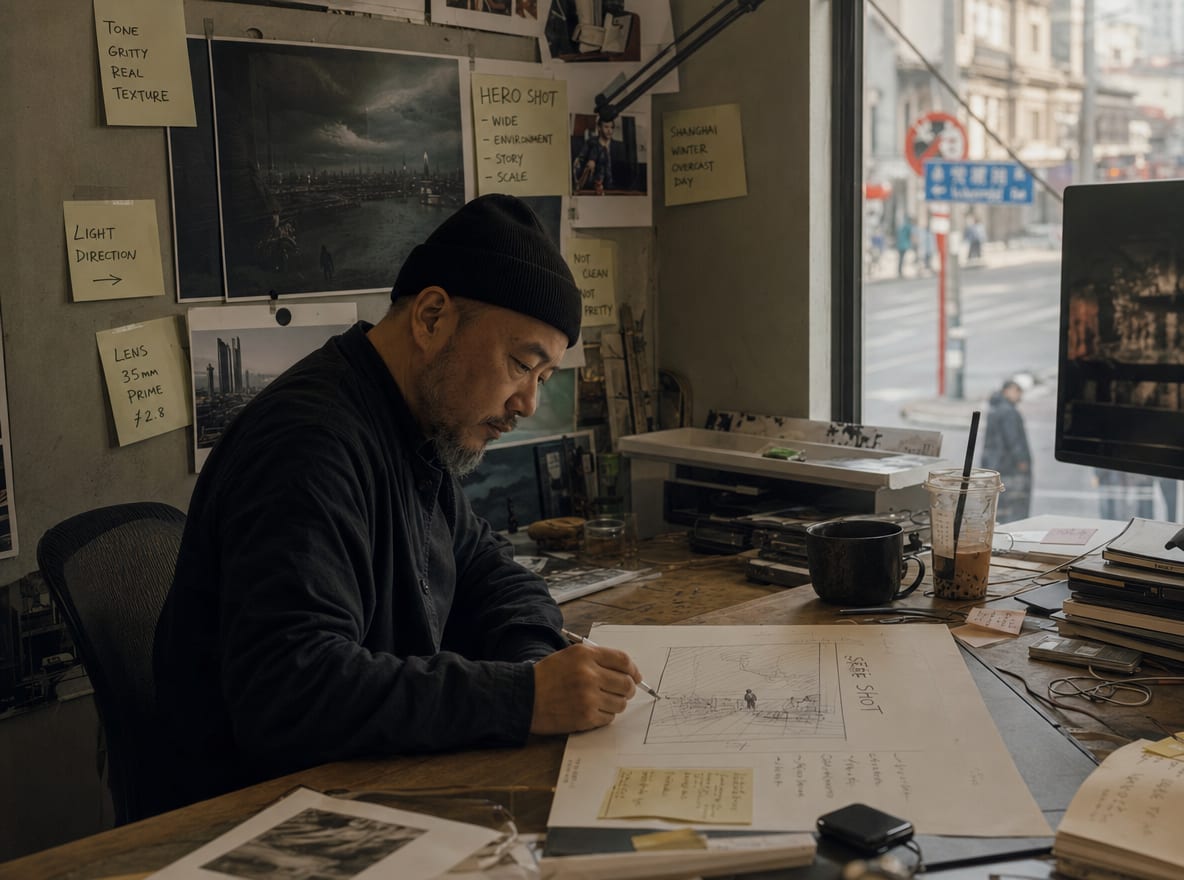
Art directors set the shot grammar, the camera language, the visual hook, the cuts, the line of the scene.
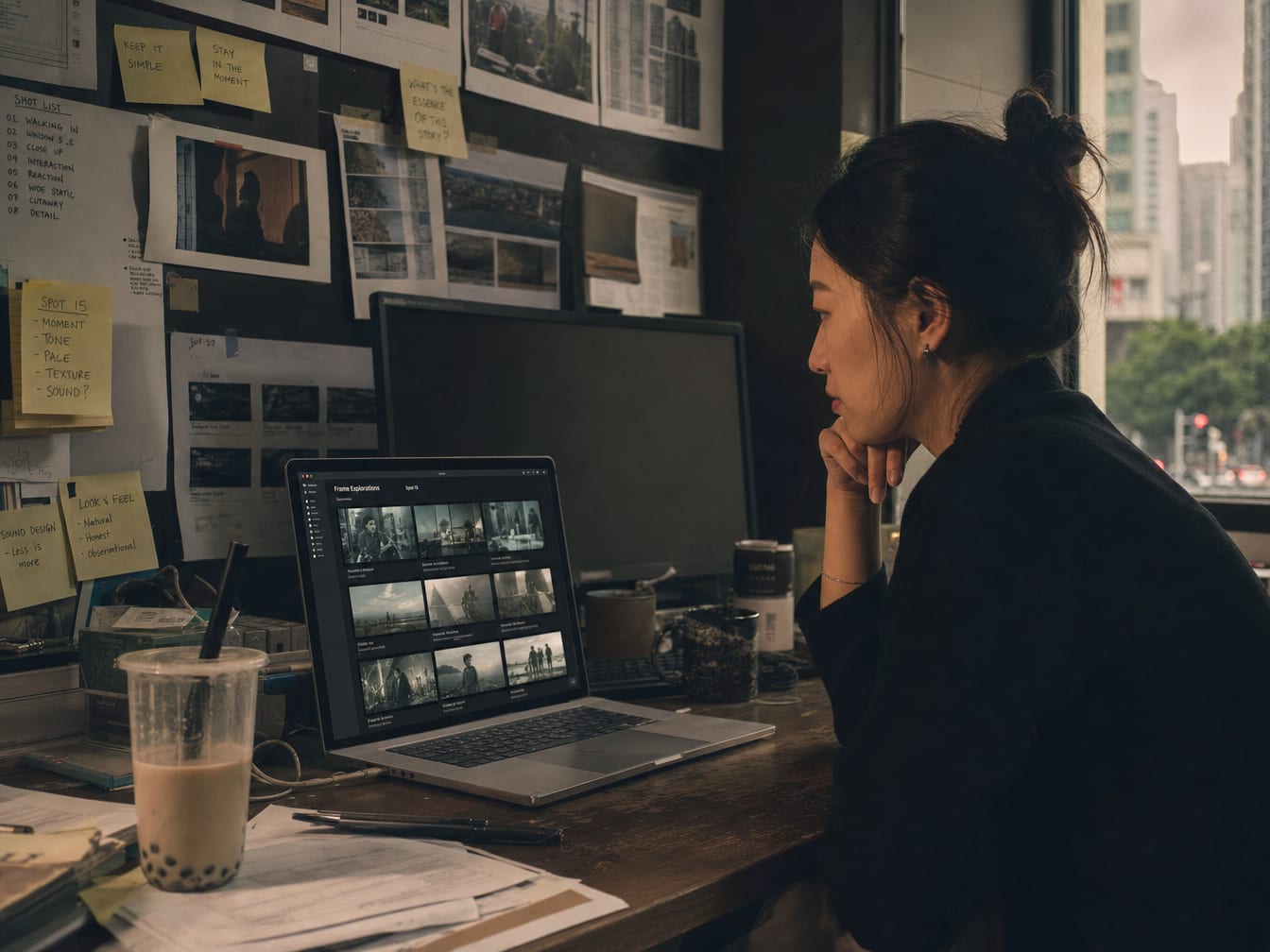
Dozens of frame directions in parallel, with character and product consistency locked through reference sheets.
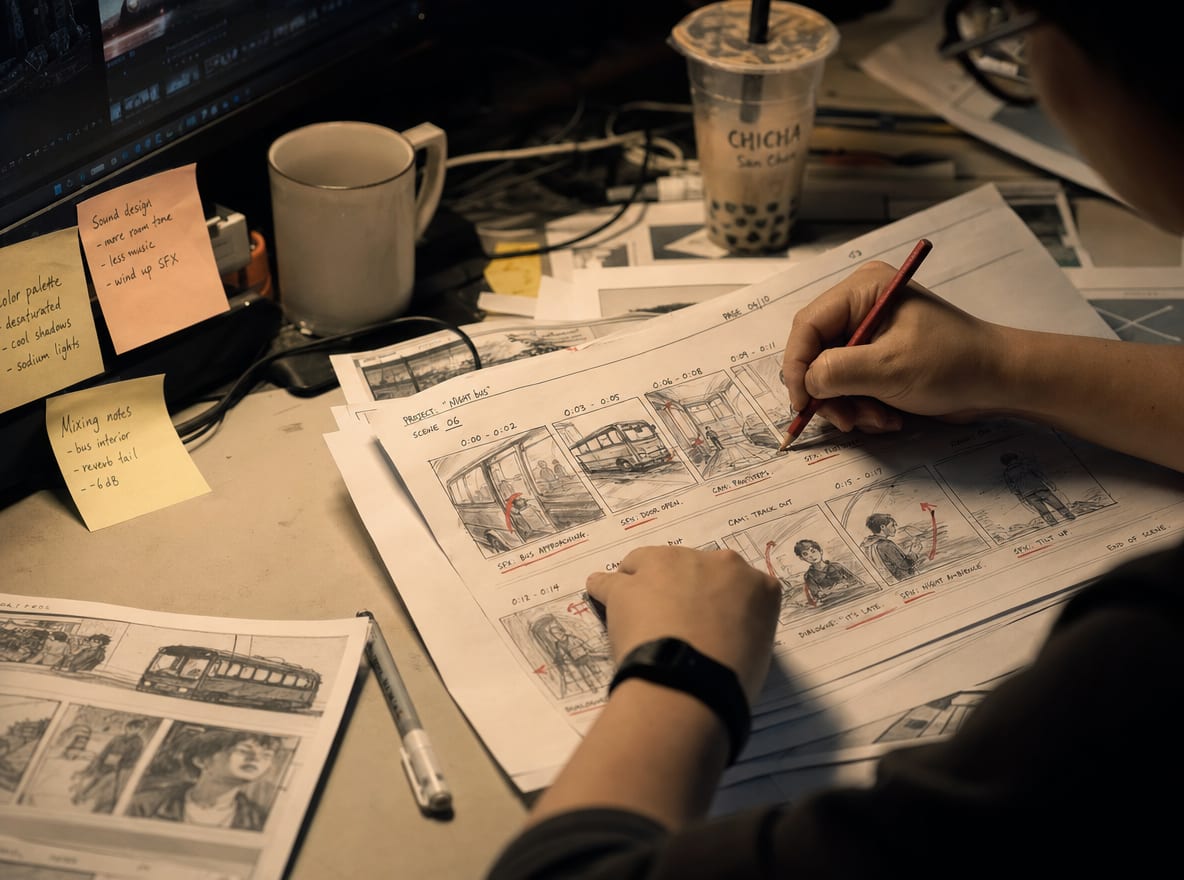
Frame-by-frame layout, timing in seconds and frames, camera-move notation, audio cues, ratio variants, shot list export.
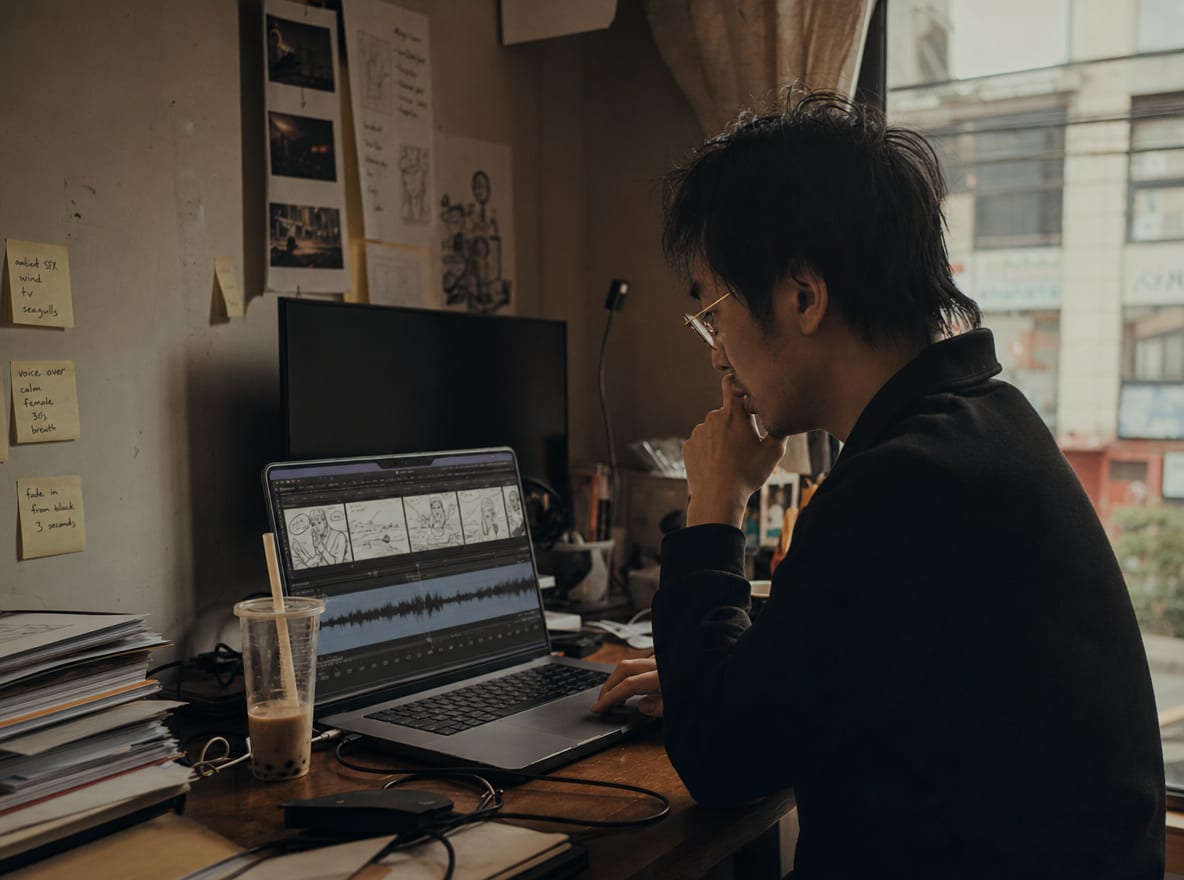
Timed sequence with rough VO and music, exported as video for director and client review.
The new math
A 30-second TV spot, run two ways. Same brief, same script, same ship list.
Brief an agency, wait a week for a treatment, another week for first-pass boards, a few more days for revisions. Two to three weeks before a frame is approved, three or four rounds of redraw, and a board that is dated by the time it lands on set.
Dozens of frame directions explored in parallel on day one. Character and product consistency locked from reference sheets. Ratio variants reboarded from the same system, not cropped. Animatic on demand. Three rounds of revisions included.
Roughly 70% of production delays trace back to pre-production oversights, with storyboarding and shot-listing among the most cited weak points.
Three to five days for a first cut on a 30-second spot. One to two weeks for a multi-format campaign with cutdowns. Three to seven extra days if you need a full animatic. Faster on extensions of an existing system.
Project-based for one-off boards. Monthly retainer for ongoing volume, common for brands with rolling content calendars. Quarterly advance billing for retainer clients. We quote firm after the first call once the brief, formats and frame count are clear.
A freelancer quotes per frame on the work as drawn. Our setup includes creative direction from a senior art director, AI iteration that puts ten directions in front of you in the time it takes a freelance artist to draw one, character and product consistency tooling, animatic-ready file structure, and the handoff to the production company. For a single thumbnail, we are not the cheap option. For a campaign that has to ship across multiple formats and markets, the per-frame math usually works out in our favour.
If your team has a senior art director and a workflow that already handles character consistency, AI tools alone will get you most of the way. If you are new to the stack, the first three projects will look more like the consistency problems described above than like finished boards. Brands that hire us are usually past the point of running that experiment.
Final or near-final script. Brand guidelines if you have them. Talent guidelines and product reference. Delivery format list with durations and ratios. Production company contact if one is booked. Reference work you like, and work you want to avoid. If brand guidelines do not exist, we work from what does and flag the gaps in the first brief response.
Art directors with TV and broadcast credits (Publicis, Ogilvy, WPP and named production-company alumni) lead every project. AI specialists handle the iteration volume. The senior on the brief stays on it from brief to final hand-off.
Like your brand. We train on your existing assets, talent guides and product reference so the output stays inside your visual system, not a generic AI aesthetic.
Both. Static boards are the standard deliverable. Animatics are an optional add-on when timing matters, which is most of the time for any spot under 30 seconds. Output formats include PDF for static boards and MP4 for animatics, plus source files on request.
You own the final deliverables. We use commercially safe models and document the workflow. Boards are reference for production, not the final film, so the legal questions are different from generative video. For the full picture, see our Copyright and AI guide .
Yes, and we prefer it. About two-thirds of our work plugs in alongside a production company the brand already has on retainer. We deliver boards, shot lists and animatics matched to their pipeline. Where we add the most value is the gap between the script and the production company first treatment, which is where most timelines slip.
Our production team is based in Shanghai, with senior creative leads across Asia and Europe. We have delivered boards into the US, EU, UK, Middle East and APAC. Languages we have worked in include English, French, German, Spanish, Mandarin, Cantonese, Japanese, Korean and Arabic.
Yes. Send us one script. Inside one week you get three frame directions on the opening sequence and a board estimate for the full spot. No retainer, no commitment, the work is yours either way.
Try it on a script
Send a script. Inside one week you get three frame directions on the opening sequence and a board estimate for the full spot. No retainer, no commitment. Whatever we produce is yours to keep, regardless of where the conversation goes.