

Turning AI video up to 10: how AI video learns to sound alive
AI video looks sharp but often sounds flat. New audio models let us add Foley-grade sound to AIGC at scale.
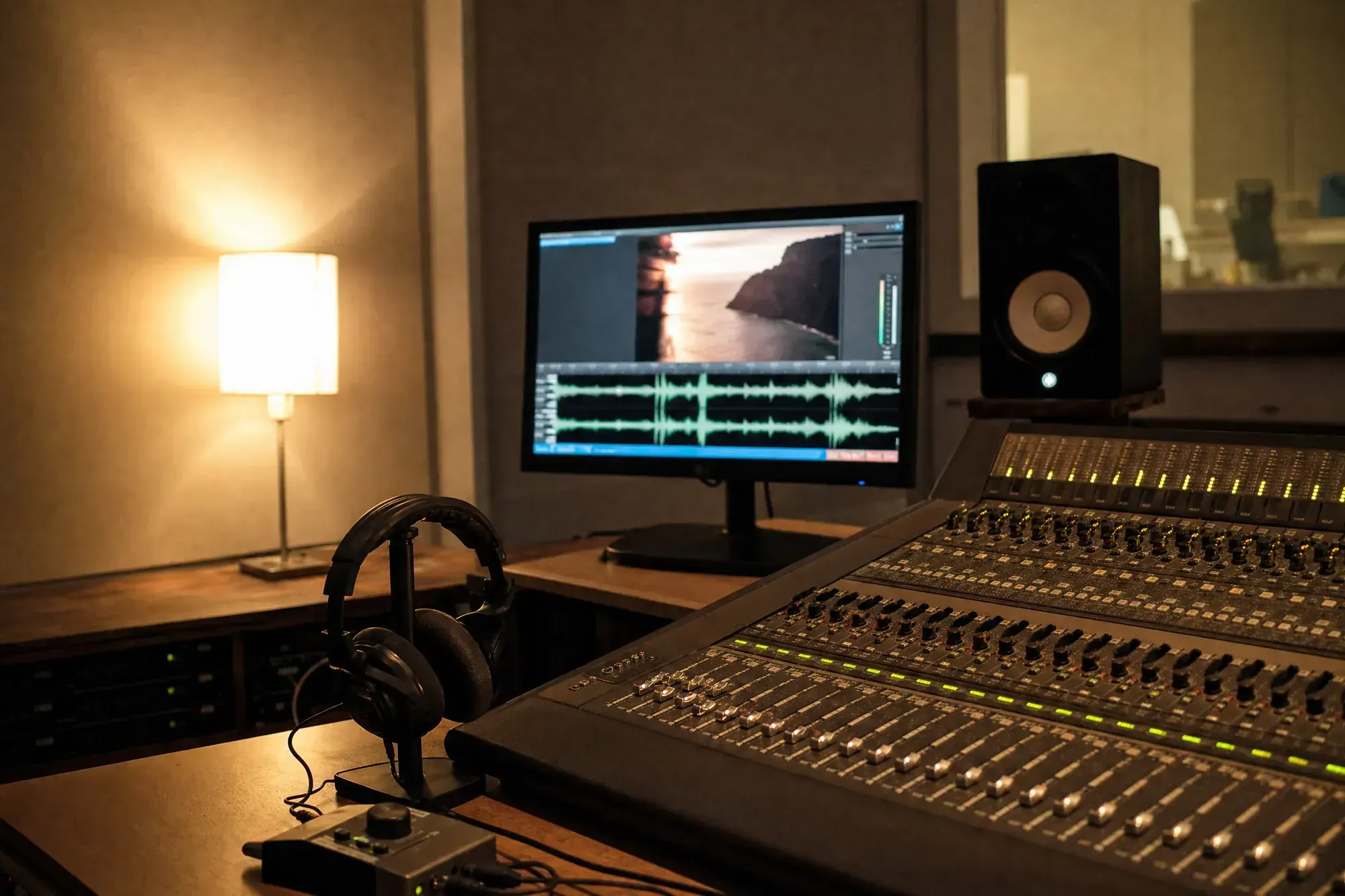
AI video has advanced visually, but most AIGC films still feel like watching a beautiful spot on mute: stunning frames, thin or generic sound. That gap between visual and audio quality has kept AI-generated content in prototype territory. A new class of audio models is closing it.
What was missing and why it mattered
Previous video-to-audio models prioritized text prompts over the actual visual content. Specify "ocean waves" and the system would generate ocean waves even if the scene showed footsteps on a wooden floor and birds passing a window. The disconnect was fundamental: the model was not really watching the video; it was illustrating a caption.
Tencent's Hunyuan lab addressed this with HunyuanVideo-Foley, a model that generates synchronized, high-quality sound by analyzing video content frame by frame. The result is AI-generated audio that actually corresponds to what is happening on screen, not just what the prompt describes.
How the technical approach is different
The Hunyuan team made three changes that matter in practice:
- Better training data. A 100,000-hour dataset combining video, sound, and text, filtered to exclude silent, degraded, or poorly synchronized clips. The model learned from material where sound and picture actually matched.
- Visual-first attention. The architecture synchronizes picture and sound frame by frame before applying text for mood and context. The video leads; the prompt shapes, rather than dictates.
- Quality guidance built in. A representation alignment technique compares output against high-grade audio references, improving richness and stability across the full duration of a clip.
Human listeners consistently rated the output as more realistic and better synchronized than competing models. The perceptual gap that previously separated AI audio from produced Foley work has narrowed significantly.
Audio quality strongly influences how viewers perceive the visual. Synchronized sound and action turn a six-second clip from experimental to finished.
Why this matters for brands producing at scale
Three shifts become possible once sound generation matches visual generation quality:
- Content that feels premium, not prototype. Audio quality shapes viewer perception of the entire piece. When sound and action are synchronized properly, an AI-generated clip reads as a finished asset rather than a rough cut. That distinction is the difference between content that can ship and content that cannot.
- Sonic memory enters the optimization loop. Sound creates stronger brand recall than visuals alone. Generative Foley enables testing multiple sonic versions against the same visual: measuring attention, recall, and sharing behavior as a function of audio choices rather than treating sound as a fixed afterthought.
- Scale without sameness. Instead of the same royalty-free track across every video, context-tuned soundscapes can be produced at scale. Morning versus late-night versions of the same product story. Different city ambience for one campaign running across markets. Everyday versus festival variants that use local sonic cues to feel genuinely placed.
New creative passes this enables
For AI spots, concept films, e-commerce loops, and social assets, sound is now a creative variable rather than a post-production afterthought:
- Add scene-accurate sound to silent or music-only cuts within minutes
- Version audio by platform, adjusting intensity and density for short-form versus longer formats
- Prototype sonic branding elements inside finished scenes before committing to full sound design
- Apply sound grading as a final creative refinement pass, the way color grading works in visual post-production
Localized audio without reshoots
The visual stays consistent; the sound shifts for the market. Swap city-specific ambiences to reflect where the story is set. Integrate regional rituals and textures through sound design without reshooting the product. Test how different audio approaches affect perceived price point and category positioning. Bring audio into the transcreation strategy rather than treating it as a separate track.
Building sonic systems, not one-offs
The most durable use of generative audio is not the individual asset; it is the system behind it. Define sonic palettes with recurring textures and patterns that identify the brand across formats. Encode that identity into prompt packs and negative prompts so output stays consistent at scale. Optimize against performance metrics where audio is treated as an actual variable. Build recognizable sonic signatures that accumulate across hundreds of assets rather than dissolving into generic music beds.
Audio was the missing piece keeping many AIGC videos in "experiment" territory. With lifelike synchronized sound available at production scale, the path from silent prototype to immersive, shippable story is now a workflow decision, not a technical barrier.
How hubStudio builds this into production
The operating principle is amplification, not replacement. AI should extend creative intent, not substitute for it. In practice, that means determining where generative audio adds genuine value versus where human sound design leadership is required; translating brand guidelines into sonic rules precise enough to govern AI output consistently; and using performance data to refine both visual and audio generation together as a coupled system rather than treating them as independent variables.
Creators can now move from silent prototypes to immersive, shippable stories that match campaign timelines. The technical barrier is gone. What remains is the creative intelligence to use that capability deliberately.
Sound creates stronger brand recall than visuals alone. The brands that treat audio as a strategic variable, not a production line item, will compound that advantage at scale.