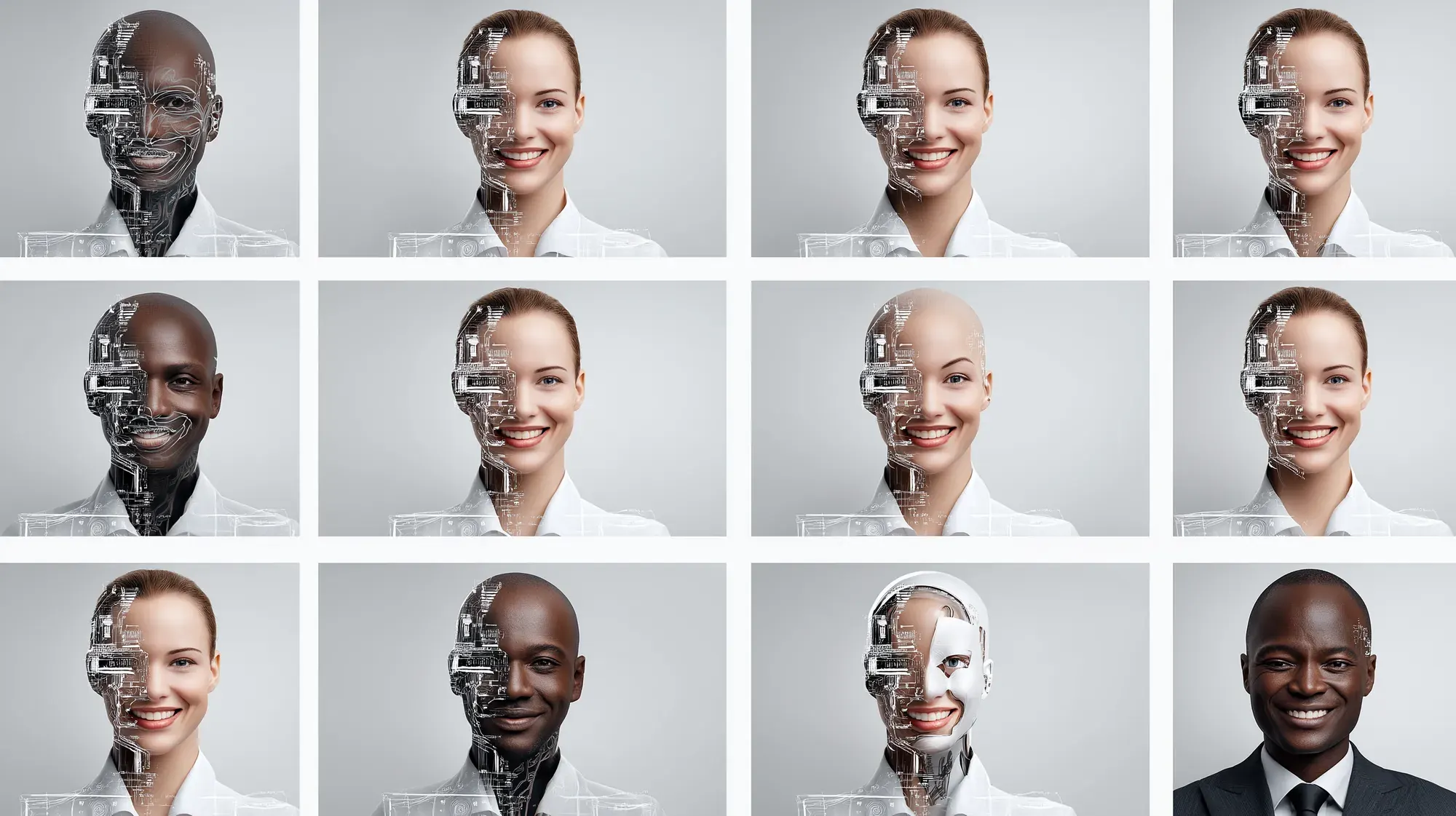

Why Adobe didn't miss the AI revolution, it just chose the wrong side
Adobe chose aggregation over innovation. AI-native production changed the architecture of content creation.

Adobe did not miss the AI revolution. It chose the wrong side of it. Integrating OpenAI, Google Gemini, and Flux models into Firefly reveals a company that is no longer building the future of creative production. It is curating other companies' intelligence, which is a strategic retreat dressed as partnership.
When the category leader becomes the aggregator
Adobe generated 22 billion assets with Firefly. That is an impressive number. It also conceals a harder truth. Adobe retrofitted generative AI onto tools designed for manual, pixel-by-pixel work dating back to 1988. Photoshop revolutionized creative production when craft skill was the primary bottleneck. The bottleneck has moved. Skill is still valuable, but it is no longer scarce in the way it was when Photoshop's dominance was established.
Adobe's response to that shift, integrating the models it could not build itself, tells the story plainly. When a platform's answer to competitive pressure is to aggregate competitors' technology, it has stopped competing on the dimension that originally gave it advantage.
The models Adobe chose not to compete with
- Tencent Hunyuan Image 3.0. Ranked first on LMArena with 80 billion parameters, the largest open-source image model released. It outperforms Adobe's native portfolio across the standard benchmarks.
- Google Gemini 2.5 Flash Image. Previously the top-ranked model, dominant in image editing, character consistency, and multi-image fusion. Adobe integrated it into Firefly precisely because matching it internally was not viable.
- Alibaba Qwen-Image. Renders complex text and Chinese characters with a precision Adobe's tools cannot reach. For brands operating across Asian markets, this is not a marginal difference.
- Alibaba Wan 2.2. A leading video generation model on VBench, with full directorial control over lighting, camera angles, and composition, producing finished assets without any Adobe software in the loop.
These are not features added to Photoshop. They are full-stack generative systems that produce finished, production-ready assets entirely outside Adobe's architecture. The integration in Firefly acknowledges that gap without closing it.
Adobe did not fall behind because its technology is inferior. It fell behind because its architecture was built for a different era of creative production.
The real problem is architectural
Adobe built its empire on a specific assumption: that content creation follows a sequence. Open software, manually craft, export a file, repeat. Every product in the Creative Cloud reflects that assumption. The tools are powerful precisely because they are optimized for granular manual control.
AI-native production works on a different logic. The question is no longer how to add AI assistance to an existing manual workflow. It is what becomes possible when AI is the foundation and the workflow is designed around it from the start. The answer involves unified intelligence across creative direction and production execution, natural language as the primary interface for specifying what is needed, and scale that does not require proportional increases in headcount or production time.
While Adobe has spent years adding AI features to tools designed for another era, newer systems were built from scratch around those principles. The gap between retrofitting and redesigning from first principles is not a feature gap. It is an architectural one, and architectural gaps do not close through integration partnerships.
The five-year question
Adobe will probably still exist in 2030. The more useful question is whether anyone under 30 will learn Photoshop as their primary creative tool, the way previous generations did. The answer will shape Adobe's long-term relevance more directly than any product release.
Creative production is separating into two distinct models. One relies on skilled operators using complex software to craft each asset manually through repeated iterations. The other relies on creative directors orchestrating intelligent systems that generate, adapt, and scale content at speed. One requires expensive specialists and weeks of production time per campaign. The other requires creative vision and the right AI-native infrastructure.
What Adobe cannot fully embrace
Adobe's difficulty is structural. Its business model depends on selling software licenses for tools that take months to master. That model works when the barrier to high-quality creative production is mastery of complex software. AI-native production does not require that mastery. It requires clear creative thinking and the ability to communicate intent effectively.
Fully embracing AI-native production would mean cannibalizing the installed base of licensed creative professionals who have invested years in mastering Adobe's tools. That is the kind of strategic pivot that is very difficult for a company of Adobe's size to execute without destroying a significant portion of its existing revenue.
The creative suite era is closing. Not because Adobe failed, but because the fundamental architecture of content creation changed. When the architecture changes, old tools become museums, whatever their market position was at peak.
The lesson for brands watching this shift
The relevant question for brands is not whether to feel sympathy or schadenfreude about Adobe's position. It is whether their own creative production infrastructure was designed for the current era or the previous one. Teams still organized around manual production workflows, measured on asset count, and dependent on software mastery as the primary production bottleneck are facing the same architectural shift that has caught Adobe in an awkward position. The difference is that brands can redesign their creative infrastructure without unwinding a software licensing business in the process.